BWSSB Water Cut Survival Guide: How to Protect Your Tank and Water Quality
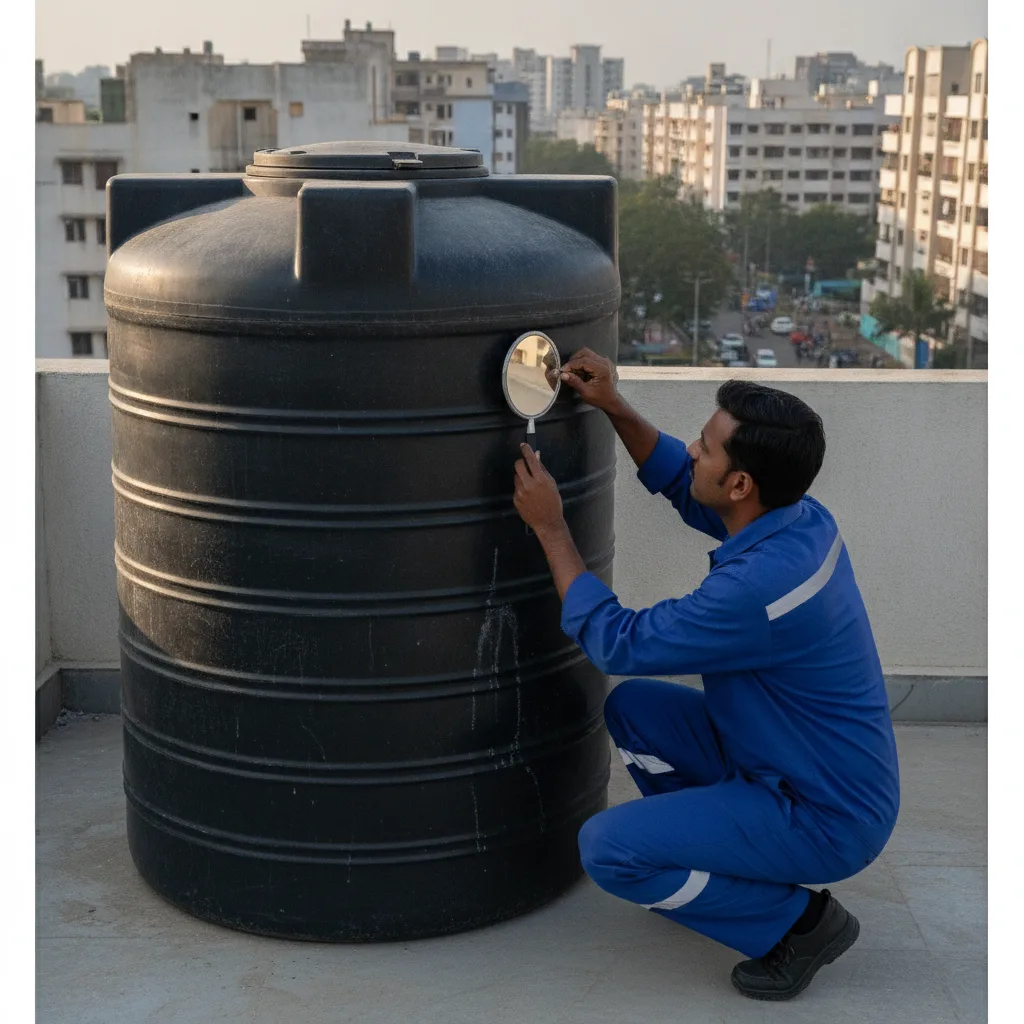
When BWSSB announces a water cut in your area, most homes switch to tanker deliveries or lean harder on their borewell and sump storage. That shift changes what's sitting in your tank, and not for the better. Tanker water often carries more silt, and a sump that's suddenly working overtime accumulates sediment faster than usual.
This isn't about panic. It's about knowing what actually happens to stored water during a cut, and what to do about it.
Why water cuts make your tank dirtier, faster
Under normal supply, your tank refills regularly and sediment gets flushed out with the flow. During a cut, water sits still for longer stretches. Still water is exactly where algae and bacteria get comfortable, especially if your tank isn't fully sealed from sunlight.
Tanker water is the bigger issue though. It's often drawn from borewells with higher mineral content, and tankers aren't always cleaned between loads. That means every delivery can introduce fresh silt, rust flakes from old pipes, or occasional microbial contamination straight into a tank that was already due for a clean.
If your tank hasn't been cleaned in the last six months and you're now relying on tanker water, it's worth booking a professional home cleaning service sooner rather than later, before sediment builds into a layer you can't rinse away with normal flushing.
What settles at the bottom during a cut
Anyone who's opened a sump after a few weeks of tanker dependence knows the look: a fine grey-brown silt layer, sometimes with a slight film on the water surface. That film is usually organic matter, algae spores or biofilm, reacting with warmth and stagnant conditions. It's not always visible from the top, which is why relying on "the water looks clear" as your only check is risky.
Simple steps to protect your tank during a cut
- Keep the lid sealed at all times. Sunlight is the single biggest driver of algae growth. A cracked or missing lid during a water cut, when you're topping up more often, is an open invitation.
- Check tanker water before it goes in. If it looks visibly muddy or has a strong chlorine or sulfur smell, ask the supplier questions before accepting the load. It's a fair ask, especially if you're paying for it.
- Rotate stored water instead of topping up over old stock. Adding new water on top of water that's been sitting for two weeks just dilutes the problem, it doesn't solve it. Where possible, use down existing storage before refilling fully.
- Run your taps for a few seconds before drinking or cooking use if the tank hasn't been used in a while. This clears out water that's been sitting in the pipe closest to the tap, which picks up the most sediment.
- Get the tank cleaned as soon as regular supply resumes. This is the point where sediment that built up during the cut is easiest to remove, before it compacts further.
Tanker water versus BWSSB supply: what changes for your tank
| Factor | Regular BWSSB supply | Tanker water during cuts |
|---|---|---|
| Sediment level | Low, consistent | Variable, often higher |
| Source consistency | Same treated source | Can vary by tanker/borewell |
| Cleaning frequency needed | Every 3 to 4 months | Every 6 to 8 weeks during extended cuts |
The frequency jump isn't arbitrary. It comes from the simple fact that tanker-sourced water introduces more unknowns each time it enters your tank, and repeated top-ups without proper cleaning compound whatever's already sitting there.
Signs your tank needs attention right now
Don't wait for a visible problem before checking. A few practical signs to watch for during any extended water cut:
- A faint musty or earthy smell from tap water, even after running it for a bit
- Slight discoloration, a yellowish or brownish tint, especially in the first draw of the day
- Slower drainage from the tank outlet, often a sign of sediment partially blocking it
- Visible film or particles when you fill a clear glass and let it sit for a minute
None of these are emergencies on their own. But together, they're a clear signal that it's time for a proper clean rather than another top-up.
After the cut ends: don't skip the reset
Once BWSSB supply resumes, there's a temptation to just move on. Don't. The period right after a cut is when tanks carry the heaviest accumulated sediment from weeks of irregular refills. A full clean at this point, not just a rinse, resets your storage before regular supply patterns settle back in.
This is also a good moment to inspect for rust or cracks that tanker water pressure or handling might have caused, particularly in older sumps.
- Water cuts increase reliance on tanker water, which typically carries more sediment and variable source quality
- Keep tank lids sealed, sunlight is the main driver of algae during stagnant periods
- Inspect tanker water on delivery, don't assume it's clean by default
- Clean your tank every 6 to 8 weeks during extended cuts instead of the usual 3 to 4 month cycle
- Schedule a full clean right after regular BWSSB supply resumes to clear accumulated sediment
Water cuts are unpredictable, but what happens inside your tank during them doesn't have to be. If your sump's been running on tanker water for a while now, get it inspected and cleaned properly with Book Home Cleaning Service, our team has seen exactly what these dry spells do to storage tanks across Bengaluru and knows what to look for.
Want this handled by professionals in Bengaluru? Book Deep Home Cleaning, or message us on WhatsApp.