BWSSB Water Quality Report 2026: When to Schedule Tank Cleaning in Your Bangalore Ward

BWSSB tests water quality across Bengaluru wards every quarter, and the 2026 reports show something most homeowners never check: contamination levels aren't uniform across the city. Some wards show turbidity and coliform spikes right after the first monsoon showers, others stay stable most of the year. If you're relying on a fixed six-month cleaning calendar without looking at what's actually coming through your pipes, you're either cleaning too often or not often enough.
What the 2026 ward reports actually measure
BWSSB's water quality monitoring checks a handful of parameters at distribution points: residual chlorine, turbidity, total dissolved solids, and coliform presence. Turbidity is the one that matters most for tank cleaning decisions. It's a direct measure of suspended particles, silt, and organic matter in the water supply, and high turbidity readings mean more sediment is entering your tank with every fill cycle.
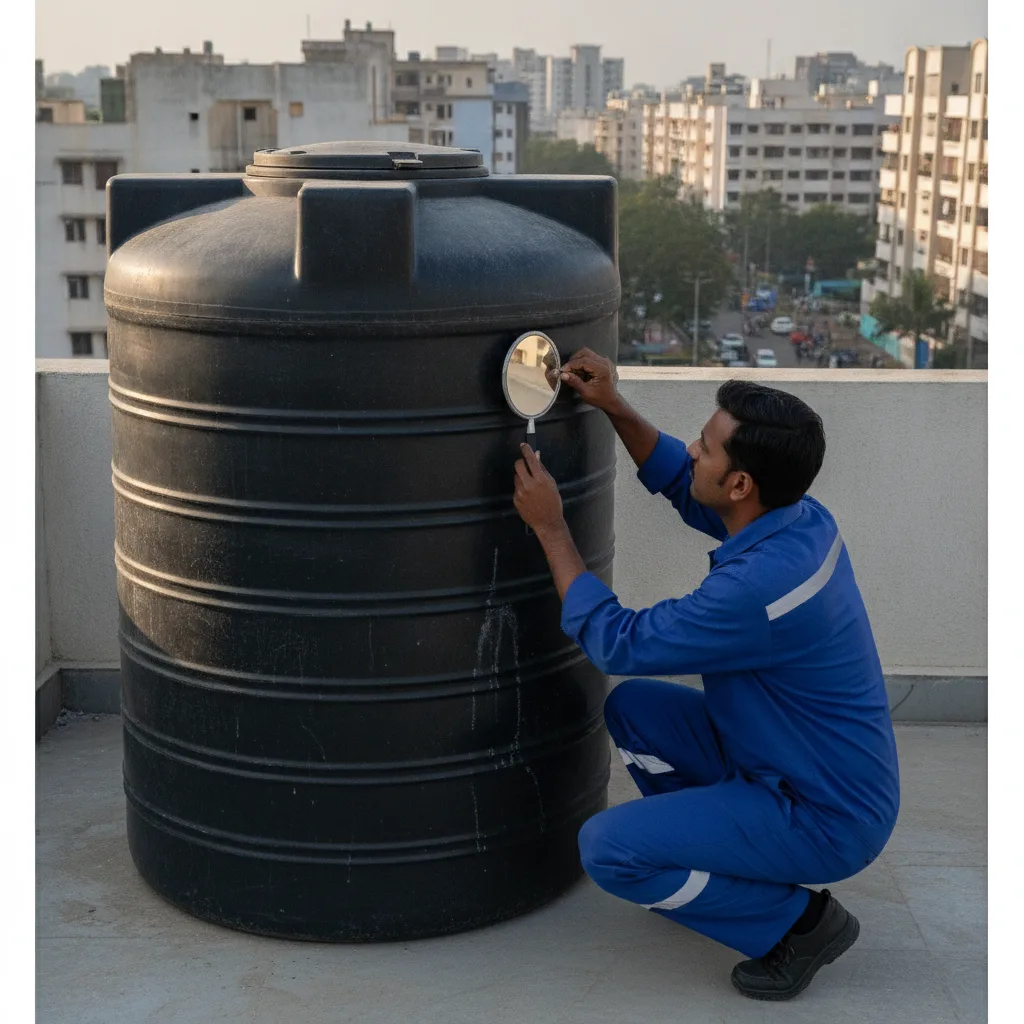
When turbidity climbs in a ward's report, that's your signal the tank needs attention sooner, not later. This is also where it helps to bring in a professional deep cleaning service rather than a quick DIY rinse, because sediment that settles at the tank base during high-turbidity months tends to compact and needs proper scrubbing, not just draining.
Why ward-level variation happens at all
Bengaluru gets its water from two very different sources depending on the area: Cauvery pipeline supply and borewell extraction. Wards on borewell-heavy supply see far more mineral load, mainly calcium and iron, because groundwater picks up dissolved minerals as it passes through rock layers. Cauvery-fed wards deal more with monsoon-linked turbidity spikes since river water quality dips when silt washes in upstream.
This is why a one-size cleaning schedule doesn't work. A borewell-dependent household might see scaling on tank walls within four months. A Cauvery-supplied home might have clean walls but a sediment layer building at the bottom after heavy rain weeks.
Reading your own ward's signals without waiting for a report
You don't need to track down the BWSSB PDF every quarter. Your tank tells you directly if you know what to look for.
- Water that looks slightly yellow or has a metallic taste usually points to iron content, common in borewell-supplied wards.
- A white, chalky residue on tank walls or tap fixtures is calcium scaling, which builds faster in hard water zones.
- Cloudy water right after heavy rain, even if it clears in a day, is a turbidity spike and means silt is settling in your tank right now.
- A musty smell when you open the tank lid usually means algae or bacterial growth has started, especially if the tank's had a lid gap letting in light.
A realistic cleaning calendar based on supply type
Instead of guessing, match your schedule to your actual water source and what the reports show for it.
| Supply type | Main issue | Recommended cleaning frequency |
|---|---|---|
| Cauvery pipeline | Monsoon turbidity, occasional silt | Every 6 months, plus a check after heavy monsoon weeks |
| Borewell only | Mineral scaling, iron deposits | Every 3 to 4 months |
| Mixed (BWSSB + borewell backup) | Both scaling and turbidity | Every 4 months |
Areas like water tank and sump cleaning in Hebbal often fall into the mixed category, where borewell backup kicks in during summer shortages, so scaling shows up faster than in purely Cauvery-fed neighbourhoods.
What happens if you skip a cycle based on the report
Sediment doesn't just sit quietly at the bottom. Once a layer builds past a certain thickness, usually visible as a soft, dark sludge when you shine a torch in, it starts breaking down and feeding bacterial growth. That's when chlorine's disinfecting effect drops off, because chlorine gets consumed reacting with organic matter instead of pathogens.
A tank that's overdue by even one cycle beyond what the ward data suggests often needs double the scrubbing time to get back to a clean baseline. It's a small maintenance gap that turns into a bigger job.
- Turbidity in BWSSB reports is the clearest signal for sediment buildup risk.
- Borewell-supplied wards need cleaning roughly every 3 to 4 months due to mineral scaling.
- Cauvery-fed areas should watch for post-monsoon silt even on a standard 6-month schedule.
- Yellow tint, white scaling, or a musty smell are all signs to move your cleaning date up.
- Skipping a cycle lets sediment compact, which usually means a longer, harder clean later.
If your ward's latest report shows rising turbidity or you've noticed any of these warning signs at home, it's worth getting ahead of it. KBS has been reading Bengaluru's water patterns for 8plus years and cleaned tanks for 15,000plus households across the city, so give us a call and Book Home Cleaning Service before the next monsoon cycle adds to the load.
Want this handled by professionals in Bengaluru? Book Deep Home Cleaning, or message us on WhatsApp.