Best Practices for Water Tank Maintenance in Bengaluru (May 2026 Guide)

In a city where most homes depend entirely on stored water, tank maintenance is about more than cleanliness, it is about your family's health and a steady, safe supply. Whether you store Kaveri water from BWSSB or hard borewell water, a simple routine keeps the tank in good shape year-round. Here are the practices that matter most.
What a Proper Clean Involves
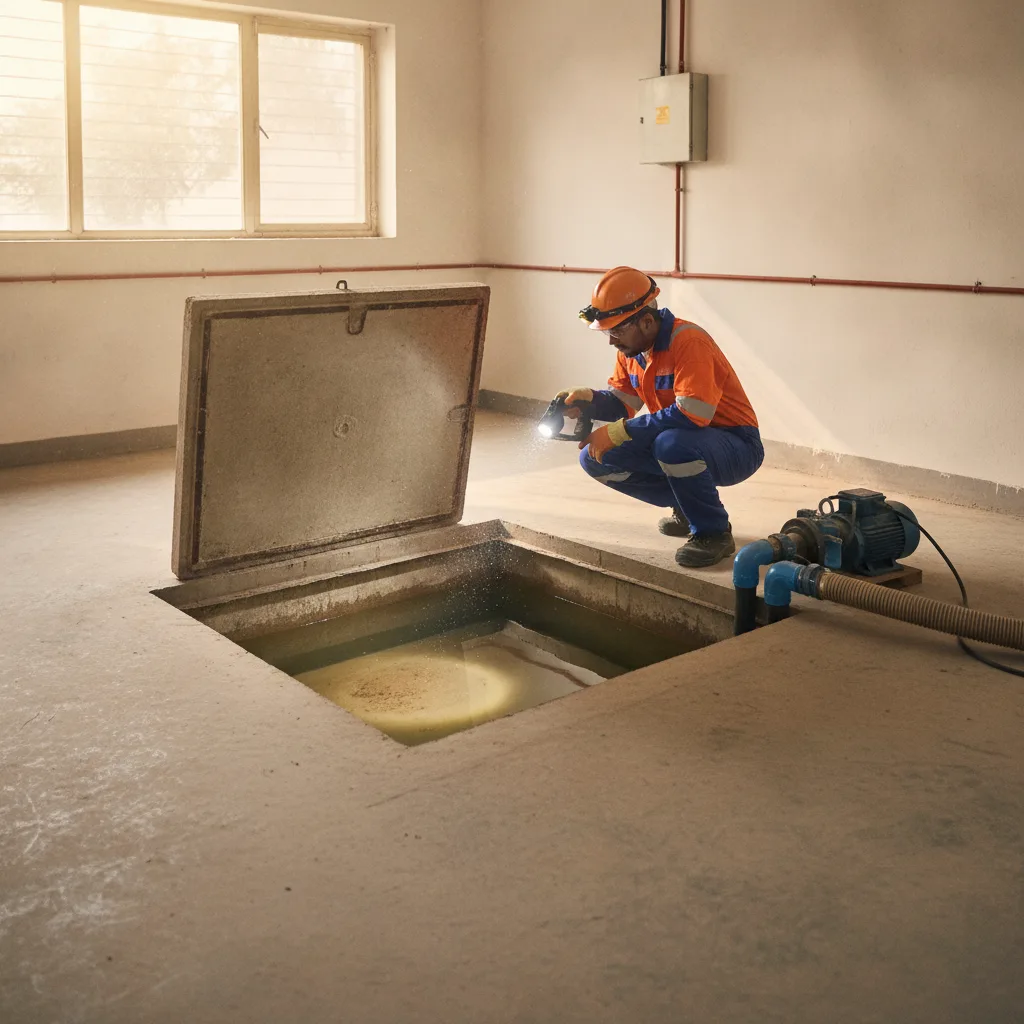
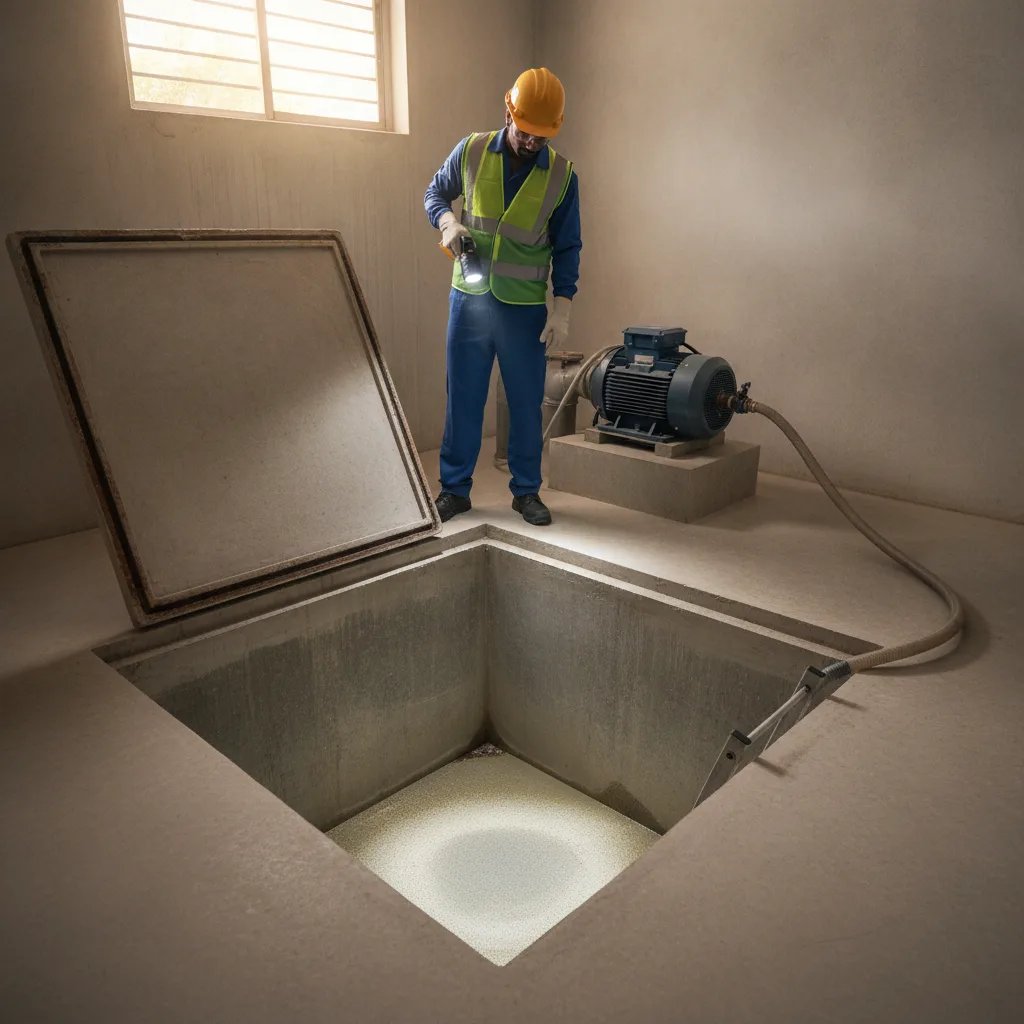
A thorough clean is more than draining and rinsing. A good service should:
- Drain the tank fully, with connected taps closed to prevent backflow
- Manually scrub biofilm, algae, and scale from the walls, floor, and ceiling with food-grade agents
- High-pressure jet the corners and inlet and outlet areas that scrubbing misses
- Disinfect with chlorine or an approved sanitiser at the correct concentration
- Rinse through several cycles to clear all residue before refilling
- Inspect for cracks, leaks, and a damaged lid that could let in contamination or mosquitoes
Booking a clean before and after the rainy season handles the two riskiest windows, when summer sediment and incoming rainwater both raise contamination risk. A proper water tank cleaning covers every step above.
A Simple Monthly Check
Regular checks prevent big problems and extend the tank's life. Once a month:
- Draw a sample in a clear glass and look at the clarity; cloudiness means trouble
- Check the lid is sealed and the vent screens are intact against mosquitoes
- Clean the inlet mesh filter that traps debris from the supply
- Test pH (ideally 6.5 to 8.5) and TDS, especially on borewell water
- Look for cracks, rust in concrete tanks, or coating wear
Handling Hard Water and Scale
Borewell water high in calcium and magnesium leaves scale on the tank walls that becomes a base for bacteria. Descale during each deep clean, twice a year. If scaling is heavy, a whole-house water softener before the overhead tank reduces it and protects your fittings and appliances, which offsets the upfront cost over time.
How Often, by Tank Type
| Tank | Clean every |
|---|---|
| Overhead tank | 3 to 4 months |
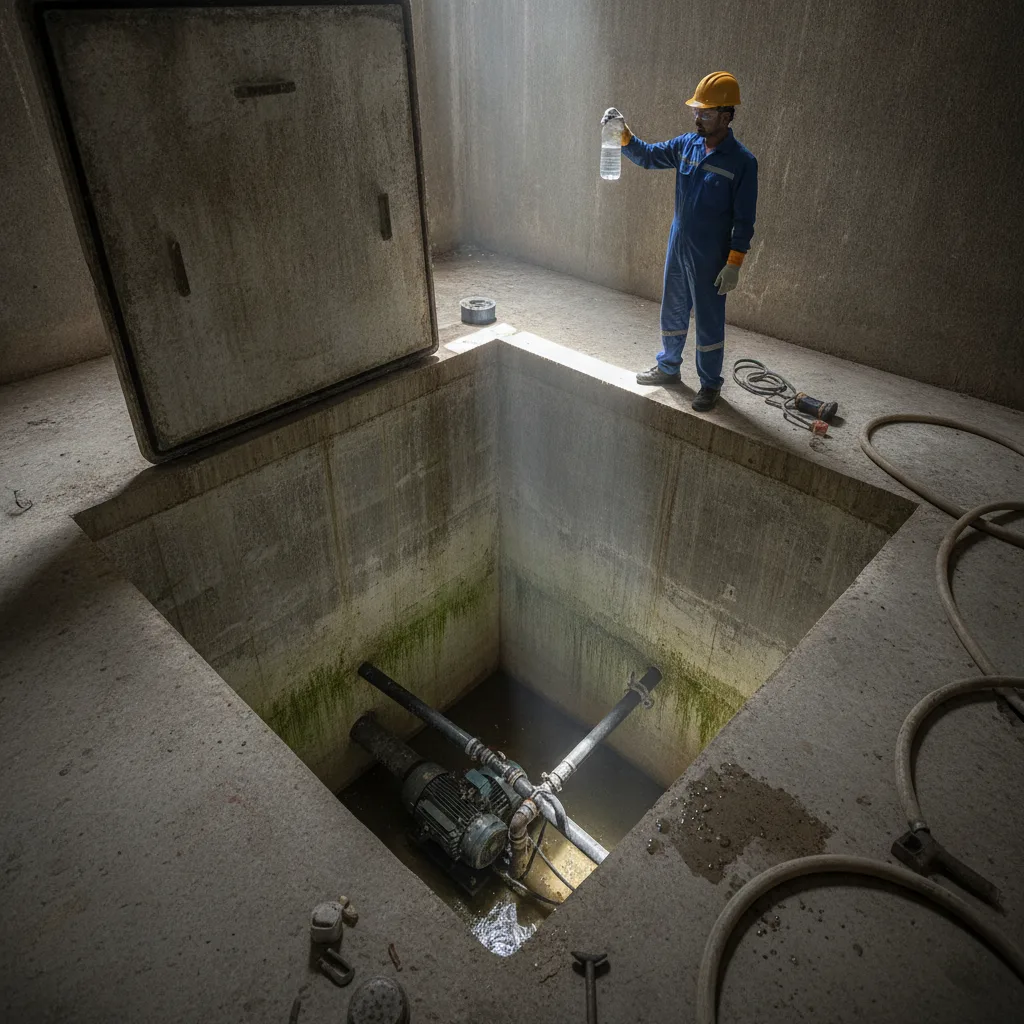
| Underground sump | 5 to 6 months |
Overhead tanks sit in the heat and light, which speeds bacterial and algae growth, so they need attention a little more often. Sumps are cooler but collect more sediment. Plastic tanks are easier to maintain than concrete but grow algae faster if light gets in, so keep them opaque or properly covered.
What Your Tank Material Changes
The tank you have decides how quickly it dirties and how it should be cleaned. Plastic tanks, the common Sintex-style overhead ones, have smooth walls that scrub clean easily, but any translucence lets sunlight through and algae blooms within weeks, so they must stay opaque or shaded.
Cement and RCC tanks are rougher and slightly porous, so biofilm and scale grip harder and need firmer manual scrubbing. They also develop hairline cracks over the years that trap grime and can seep, which is why they are quoted after a look rather than by size alone. Stainless steel resists both but still gathers sediment at the base, and on borewell water every material scales faster because of the dissolved calcium and magnesium.
Why the Disinfection Step Has to Be Done Right
The reason a rinse alone does not make a tank safe is biofilm, a thin living layer that bacteria build on the walls to shield themselves. Scrubbing breaks that layer open, and a food-grade disinfectant at the correct concentration then kills what is exposed. Skip either step, or use too weak a solution, and the film simply regrows within days.
This is also why contact time matters. The disinfectant needs a few minutes on the surface before the final rinse, and the rinse then has to be thorough enough that no chemical taste or smell carries into the stored water. A team that drains, scrubs by hand, disinfects, rinses through several cycles, and checks the water at the end is following the sequence that actually works.
What a Clean Costs and How Often
Cost tracks tank size, and having it confirmed before the team arrives saves surprises. As a guide, KBS charges ₹599 for an overhead tank up to 1,000 L, ₹699 for 2,000 L, ₹799 for 3,000 L and ₹1,199 for 5,000 L, all-inclusive with no GST. Underground sumps start from ₹1,249, priced after a short remote look since access and depth vary a lot. Cement and RCC tanks are quoted after a look because their condition differs so much.
On the timing, aim for every six months on BWSSB Kaveri supply and every three to four months on borewell water, which carries more sediment and scale. KBS has cleaned 15,000+ tanks, sumps and homes across Bengaluru since 2019, and that pattern holds across almost every home.
Health and Hiring
Neglected tank water can carry the bacteria behind typhoid and gastroenteritis, which is reason enough not to skip maintenance. When hiring, ask for a post-clean water quality check and confirm the team uses only food-grade, approved disinfectants. A provider that follows municipal guidelines and shares a post-clean report is the one to trust.
- A proper clean is a defined process, not just draining and rinsing
- Overhead tanks suit a 3 to 4 month cycle, sumps every 5 to 6 months
- A quick monthly check catches problems long before they grow
- Hard water leaves scale; descale during each deep clean
- Always get a food-grade disinfectant clean and a post-clean water check
Due for a maintenance clean? You can book a water tank and sump cleaning with KBS and get a post-clean water check with it.
Want this handled by professionals in Bengaluru? Book Water Tank Cleaning, or message us on WhatsApp.