How to Check If Your Kitchen Has a Hidden Pest Problem in Bengaluru
By the time you see a cockroach walking across your kitchen counter in broad daylight, you're not looking at the start of a problem. You're looking at an established colony that's run out of hiding space. Most infestations build quietly for weeks in the gaps behind appliances and under sinks before they ever become visible.
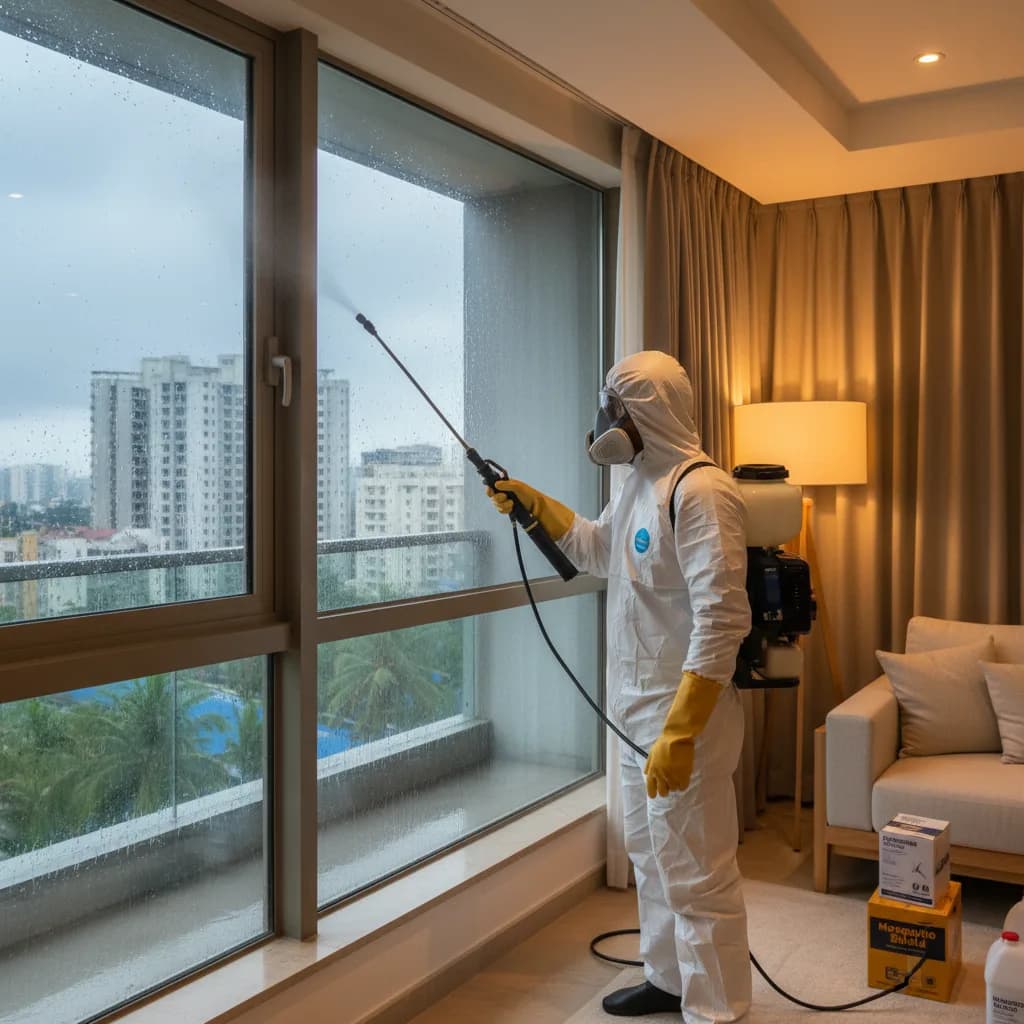
The good news is that pests leave evidence long before they show themselves. Grease-smeared walls, tiny dark specks near the stove, a faint musty smell under the sink. Once you know what to look for, a five-minute check can tell you more than weeks of just watching for bugs. If you already suspect something's off, it's worth getting a professional pest inspection and treatment done rather than guessing at the extent of it.
Start with the places you never clean
Every kitchen has three or four spots that get wiped around but never actually cleaned: behind the fridge, under the gas stove, inside the cabinet where you store onions and potatoes. These are exactly the spots pests head for, because nobody disturbs them.
Pull out the fridge once and look at the floor behind it. A fine layer of brown or black grit that wasn't there before is often roach droppings, not ordinary dust. Dust settles flat and even. Droppings tend to look like scattered pepper or coffee grounds, slightly raised, concentrated near the wall edge.
Check for these specific signs
- Grease-smear trails: Roaches travel along walls using the same path repeatedly, leaving a faint dark, slightly greasy line near skirting boards or cabinet edges. It wipes off easily but comes back within days if the colony is still active.
- Droppings in corners: Look in the back corners of cabinets and drawers, not just the front. German cockroach droppings look like fine black pepper; larger American cockroach droppings look like dark grain-sized pellets.
- Shed skins or egg cases: A small oval, brownish capsule (roughly 6-8mm) wedged into a crack behind a shelf is an egg case (ootheca), not just debris. Finding even one means a female has already laid there.
- Musty, oily smell: Heavy roach activity produces a smell some people describe as "oily" or "stale", especially noticeable when you open a cabinet that's been shut for a day or two.
- Gnaw marks on packaging: Tiny irregular holes in cereal boxes, atta bags or biscuit packets, often near a corner or seam, usually mean rodents or pantry moths rather than roaches.
- Fine webbing in grain containers: A silky, almost cobweb-like texture inside rice or dal containers is a telltale sign of pantry moth larvae, not just moisture clumping.
Why the kitchen specifically attracts pests
Kitchens offer three things pests need constantly: food residue, water, and warmth from appliances. A gas stove left slightly greasy, a dish rack with standing water, a fridge motor radiating heat under the unit. That's an ideal microclimate for cockroaches, which prefer warm, humid, dark spaces close to a food source.
During Bengaluru's monsoon months, humidity indoors rises even with windows shut, and that extra moisture is exactly what helps roach eggs hatch faster and survive longer. This is also when ants and silverfish tend to show up more, drawn in by dampness collecting near drain pipes and under sinks.
The under-sink check most people skip
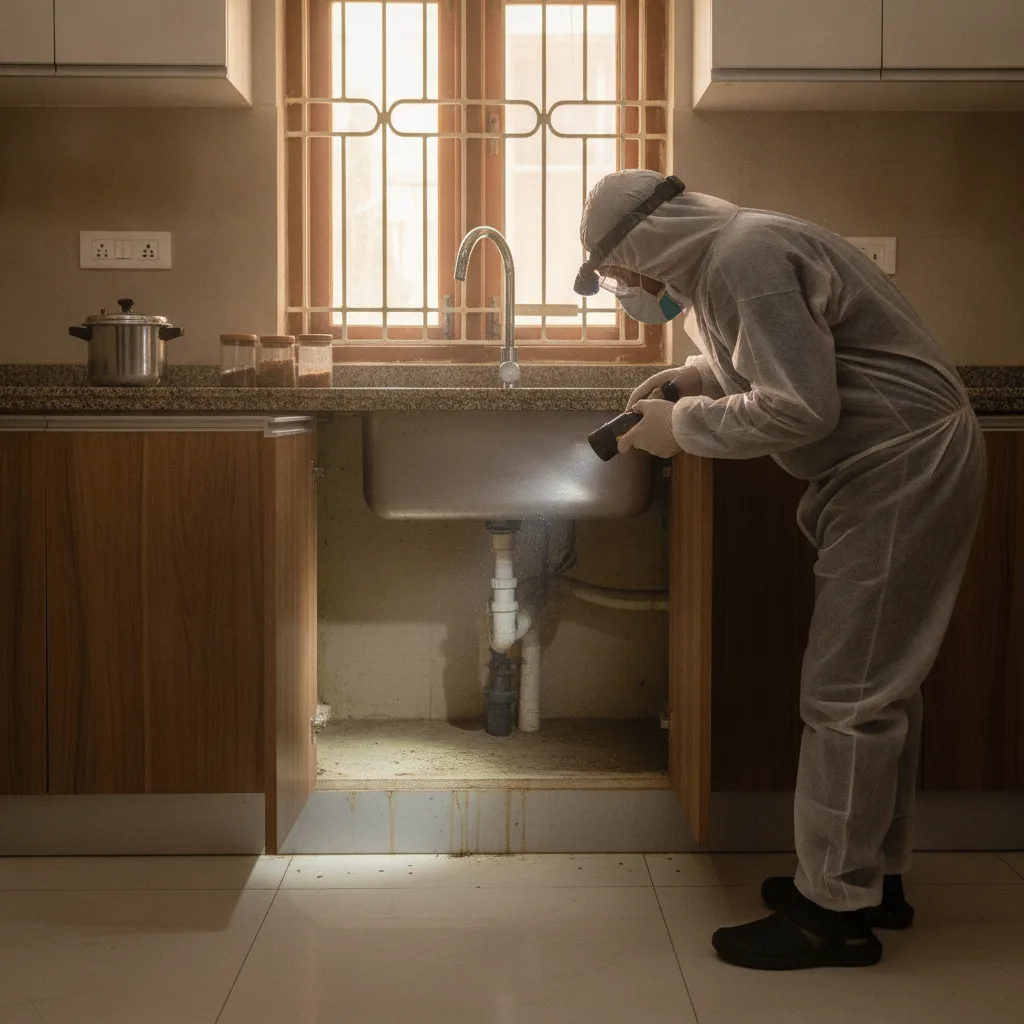
Open the cabinet under your kitchen sink and actually move things around, don't just glance in. Check the back wall where the pipe enters. A damp patch here, even a small one, is often the single biggest pest magnet in the entire kitchen.
Run your hand along the pipe joint. If it's slightly wet or has a white mineral crust from hard water, that's a slow leak feeding roaches and ants a constant water source. Fixing that leak alone often does more to reduce pest activity than any spray.
A simple test if you're still unsure
- Before bed, leave a small, flat piece of cardboard with a bit of jam or oil smeared on it near the suspected area (not in the open, tucked near a cabinet gap).
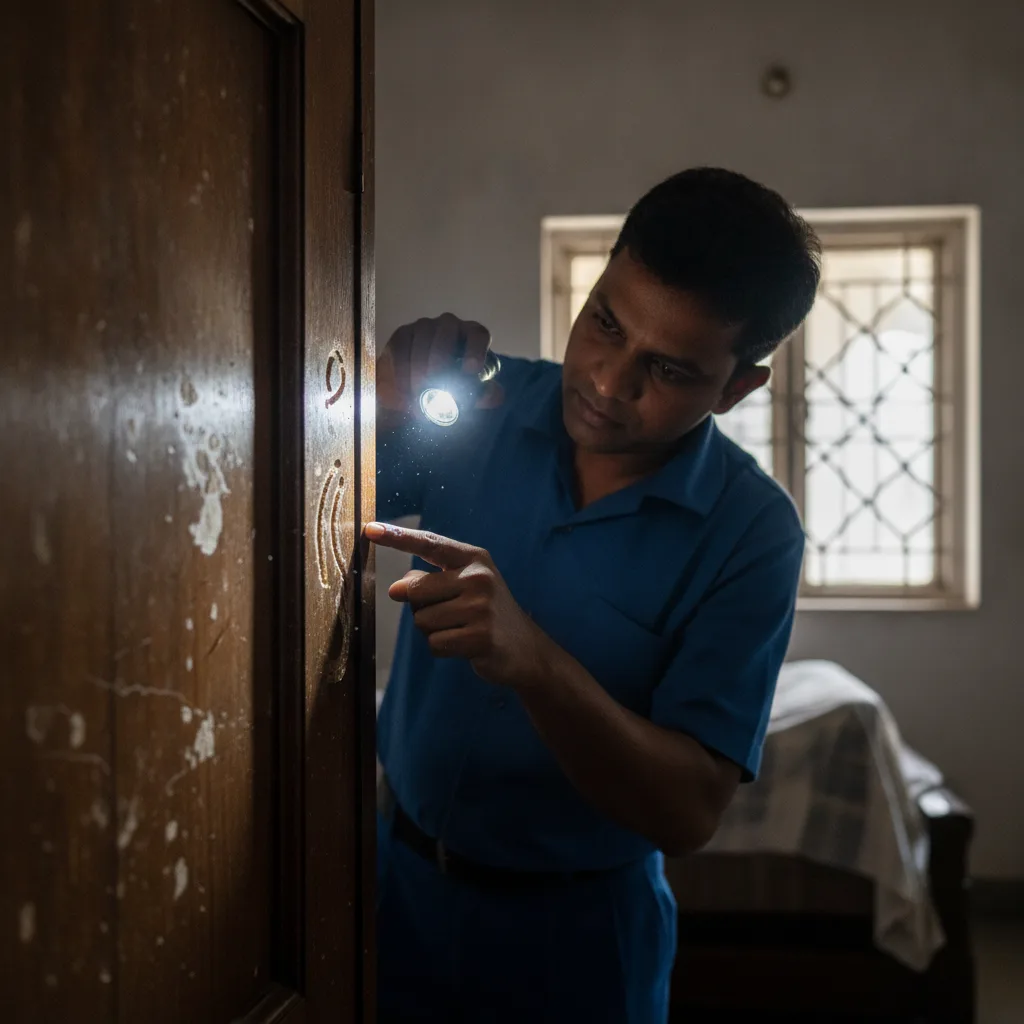
- Check it first thing in the morning with a torch, before any daylight movement sends roaches scattering back into hiding.
- Look for droppings, small bite marks on the smear, or actual insects still feeding (common with heavier infestations where the colony hasn't fully adjusted to light yet).
- If you find any of these after just one night, that's a strong enough sign to act rather than wait and watch for another week.
This sticky-trap style check is something our technicians often recommend before a first visit. It tells us more about which corner of the kitchen to focus treatment on than a general walkthrough does.
- Droppings look like pepper or coffee grounds, not ordinary dust, check corners and behind appliances
- A damp patch or pipe leak under the sink is often the single biggest pest draw in the kitchen
- An egg case behind a shelf means breeding has already started, not just passing activity
- Monsoon humidity speeds up egg hatching and draws in ants and silverfish too
- A simple overnight cardboard test can confirm activity before you call for treatment
If any of this sounds familiar, don't wait for the problem to announce itself in the middle of dinner prep. KBS has been handling kitchen and pantry infestations across Bengaluru for 8+ years, and a quick inspection usually settles the question either way. Book Pest Control Service and get it checked properly before it spreads further.
Want this handled by professionals in Bengaluru? Book KBS Pest Control Service, or message us on WhatsApp.