How to Identify Cockroach Droppings in Your Bengaluru Home (And What to Do Next)
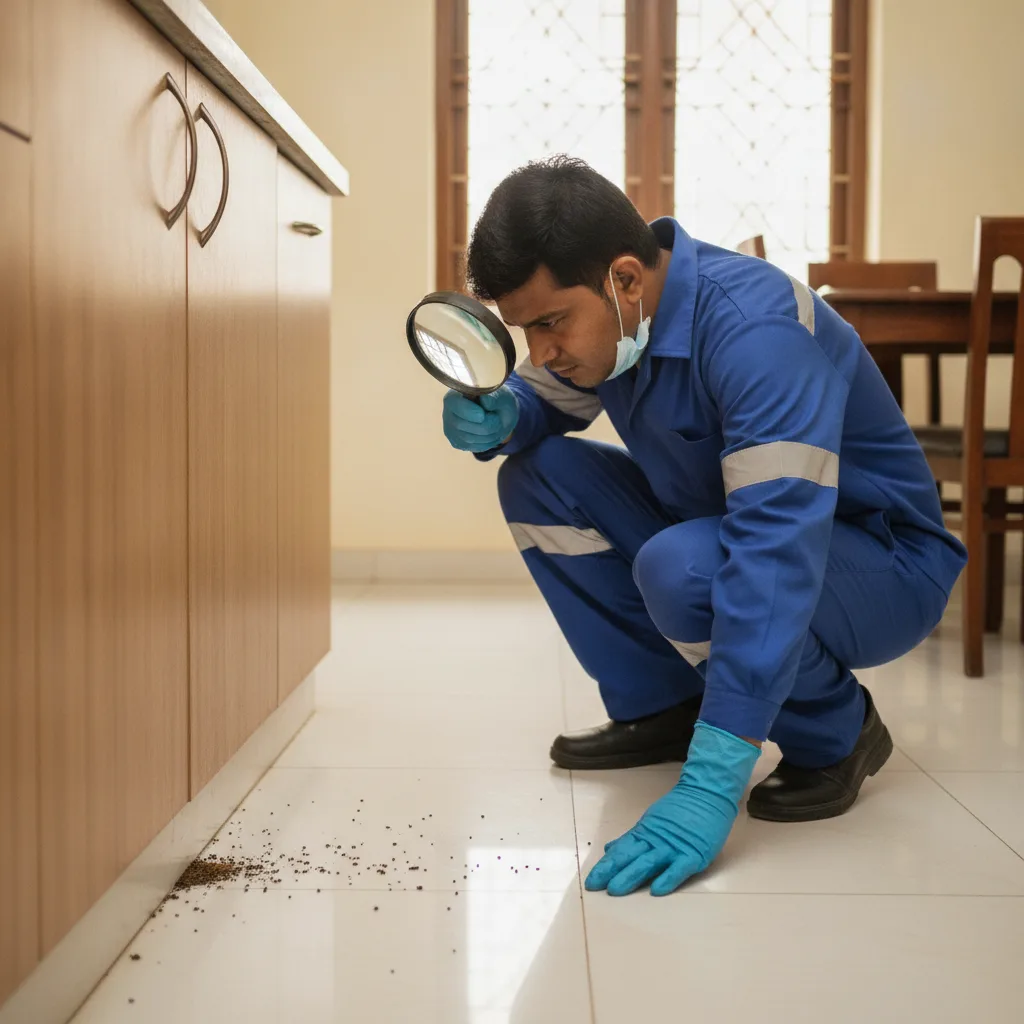
Most people find cockroach droppings by accident, usually while cleaning behind the fridge or wiping down a kitchen cabinet. They look like ground black pepper or coffee powder, and if you've ever wondered what those tiny dark specks near your stove actually are, there's a good chance you've already found some. Identifying them correctly matters because droppings tell you where roaches are hiding, how long they've been there, and how serious the problem has become.
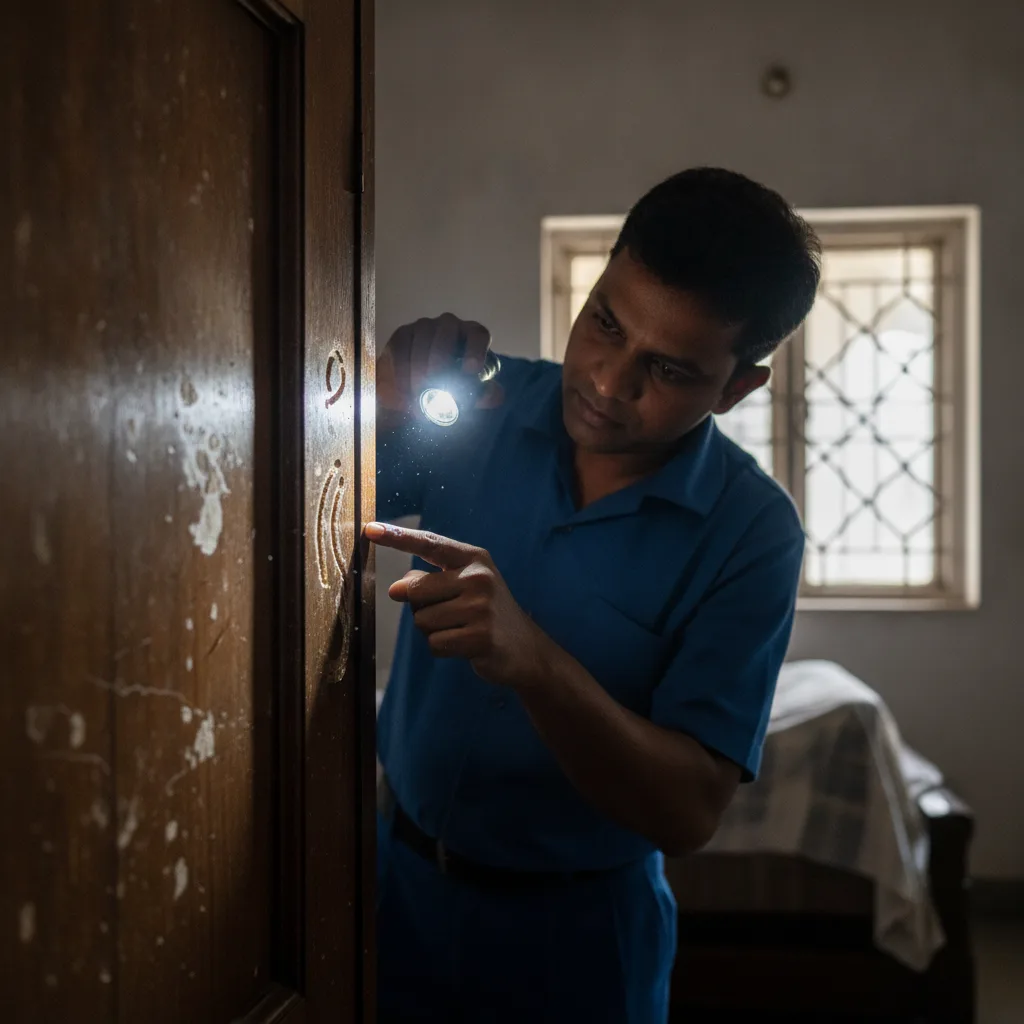
German cockroaches, the small tan ones that dominate Bengaluru kitchens, leave droppings that look like coarse black pepper, roughly 1 to 2mm long. American cockroaches, the bigger reddish-brown ones you find in drains and bathrooms, leave larger droppings, closer to 2mm with blunt ends and visible ridges on the sides if you look closely with a torch. Both types cluster droppings in the same spots they travel through night after night, which is actually the most useful clue you have.
Where to actually look
Droppings pile up where roaches feed and rest, not randomly across your kitchen. Check behind the refrigerator motor housing, under the sink where pipes pass through the cabinet wall, inside drawer tracks, and along the back edge of countertops where they meet the wall. In bathrooms, check around the base of the commode and behind loose tiles near drain pipes.
If you're seeing droppings in more than two or three spots in the same room, it's past the point of a quick wipe-down and worth booking a professional pest control service before the colony spreads further into cabinets and wiring.
Droppings vs. mouse droppings vs. just dirt
This confuses a lot of people, understandably. Mouse droppings are bigger, around 6 to 9mm, pointed at both ends, and scattered rather than clustered. Cockroach droppings are smaller, more uniform in size, and tend to sit in tight little piles because the roach is returning to the exact same resting spot repeatedly. Plain dirt or ground masala residue crumbles when you press it with a tissue; roach droppings don't, they stay firm because of the waxy coating on the outside.
| Sign | Cockroach droppings | Mouse droppings |
|---|---|---|
| Size | 1-2mm (German), ~2mm (American) | 6-9mm |
| Shape | Cylindrical, blunt or ridged | Pointed at both ends |
| Pattern | Tight clusters in one spot | Scattered along travel paths |
| Texture | Firm, doesn't crumble | Firm but larger and softer-looking |
Other signs that confirm it's roaches
Droppings alone are a strong clue, but a few other signs settle it completely.
- A musty, oily smell, especially near the stove or under the sink. This comes from pheromones roaches release to mark their path, and it gets stronger as the population grows.
- Egg cases (oothecae), small brown capsule-shaped casings tucked into corners or behind appliances. One case can hold 30 to 40 eggs.
- Smear marks along walls near drains, caused by roaches brushing against damp surfaces as they move.
- Shed skins, pale, roach-shaped husks left behind as nymphs grow into adults.
If you're finding two or more of these alongside the droppings, you're not dealing with one stray roach that wandered in. You've got an established population living and breeding somewhere close by, probably within a few feet of where you're standing.
Why Bengaluru kitchens see this so often
Old plumbing with small gaps around pipe entries, shared walls in apartment blocks, and kitchens that stay humid during monsoon months all create easy entry points and ideal breeding conditions. German cockroaches need very little, just warmth, moisture, and crumbs, and a Bengaluru kitchen in July with the exhaust fan not running enough is basically a five-star hotel for them. Monsoon months typically see a spike in sightings precisely because humidity shortens their breeding cycle.
What to do once you've confirmed it
- Clean the area with warm soapy water first, not bleach. Bleach masks the pheromone trail but doesn't remove it fully, and droppings need to be physically wiped away since they're part of how roaches navigate.
- Seal visible gaps around pipes and skirting boards with silicone sealant as a short-term measure.
- Avoid leaving wet dishes or food residue out overnight, even for one night. It genuinely makes a difference within days.
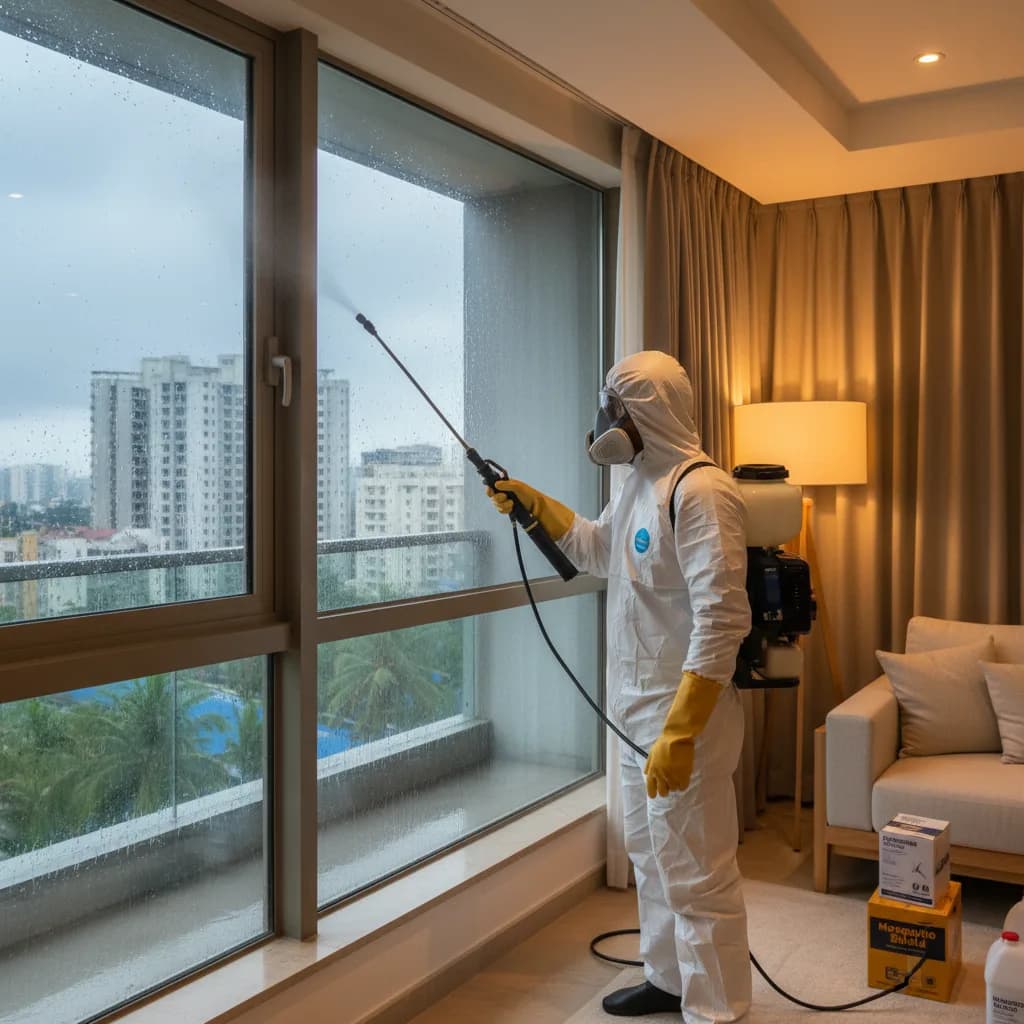
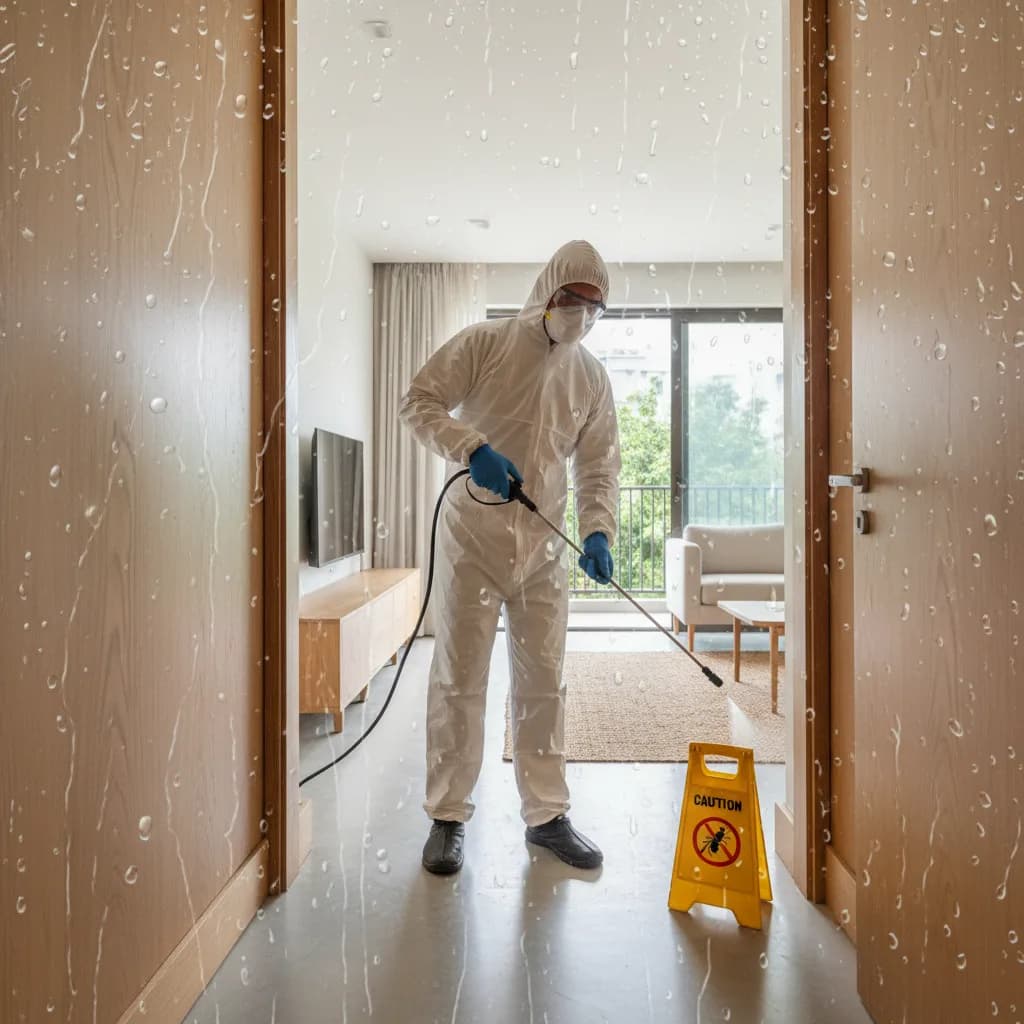
- Get a professional inspection if droppings keep reappearing within a week of cleaning. DIY sprays usually push roaches deeper into wall cavities rather than eliminating the colony, which is the single biggest reason people feel like they've "tried everything" and nothing worked.
- Cockroach droppings look like coarse black pepper, firm and clustered, unlike crumbly dirt or pointed mouse droppings.
- Check behind the fridge, under sinks, and inside drawer tracks first, that's where clusters build up fastest.
- Droppings plus a musty smell or egg casings usually mean an established colony, not a one-off visitor.
- Monsoon humidity speeds up roach breeding cycles, which is why sightings climb between June and September.
- DIY sprays often scatter roaches deeper into walls rather than solving the problem.
Eight years of doing this across Bengaluru homes has taught our team one thing clearly: by the time droppings are visible to the naked eye, the colony is usually bigger than the homeowner expects. If you're seeing this in your kitchen or bathroom right now, it's worth getting it looked at properly rather than guessing with another spray can. Book Pest Control Service with KBS and let someone who does this daily tell you exactly what's living behind that cabinet.
Want this handled by professionals in Bengaluru? Book KBS Pest Control Service, or message us on WhatsApp.