How to Maintain Your Kitchen Drain and Prevent Pest Infestations in Bengaluru

Most kitchen pest calls KBS gets in Bengaluru trace back to one spot: the drain under the sink or the floor trap near the chimney outlet. Grease cools and hardens on the pipe walls, food particles get trapped in the P-trap, and within a week you have a thin biofilm that cockroaches and drain flies find irresistible. Fixing this is less about chemicals and more about changing a few daily habits.
If the smell keeps coming back even after you've tried the usual tricks, the problem has probably moved past what a home remedy can fix. At that point it makes sense to get a professional pest control service to treat the drain line and surrounding cabinetry properly.
Why kitchen drains attract pests in the first place
Cockroaches don't come for your food. They come for moisture, warmth and organic residue, and a kitchen drain offers all three in one package. The biofilm that builds up on pipe walls, that slimy layer you feel if you ever run a finger inside a floor trap, is actually bacteria feeding on trapped grease and food debris.
Drain flies lay eggs directly in this film. Their larvae live in it for about a week before hatching into the small moth-like flies you see hovering near the sink at night. Cockroaches are drawn to the same film because it's a ready food source that never runs dry, especially in homes using borewell water where mineral sediment settles at the bottom of traps and slows drainage further.
The daily habits that actually make a difference
Small changes done consistently beat occasional deep cleans. A tech on our team once pointed out that homes calling for repeat cockroach treatment almost always have the same oil residue ring around their sink drain, the owners just never connect the two.
- Wipe oil before it reaches the sink. Pour used cooking oil into a container rather than washing it down. Even small daily amounts add up to a thick coating over a month.
- Run hot water for 30 seconds after washing dishes. This keeps grease from solidifying on the pipe walls while it's still warm enough to flow.
- Use a mesh strainer on every drain. It catches rice grains, vegetable peels and tea leaves before they enter the trap.
- Clean the strainer basket daily, not weekly. Food sitting in a wet basket overnight is exactly what drain flies need to breed.
- Flush with baking soda and vinegar once a week. Half a cup of each, left for 15 minutes, then washed with hot water. This won't dissolve old grease buildup but it slows new film from forming.
What monsoon changes about drain maintenance
Between June and September, Bengaluru's humidity sits noticeably higher indoors, and damp conditions near drains take longer to dry out. That extra drying time is exactly when roach and drain fly populations spike. If your kitchen already has a musty smell near the sink during monsoon, it's worth increasing the hot water flush to twice a week until the weather dries up.
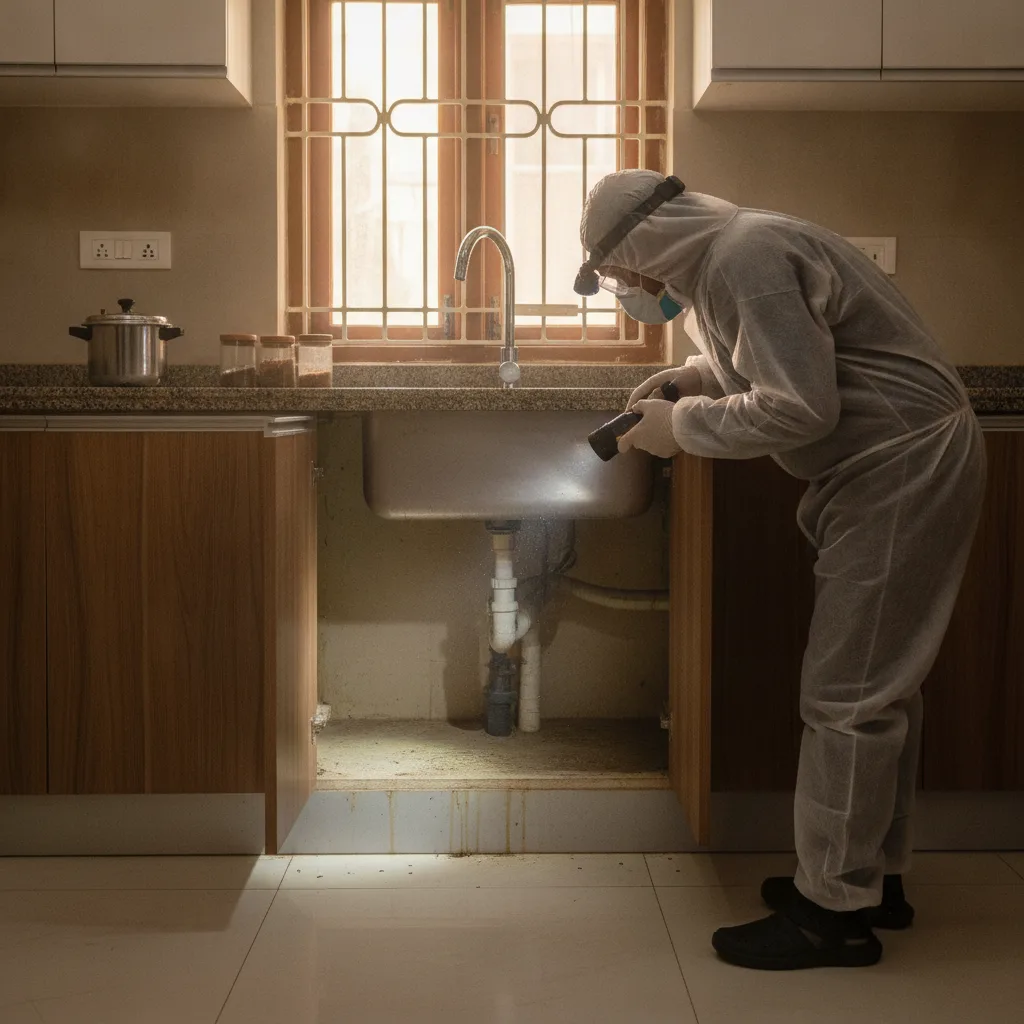
Cabinet interiors under the sink deserve attention too. Check for condensation on pipes weekly through monsoon; a damp cabinet floor is a second breeding ground that many homeowners never think to inspect.
Signs the drain itself needs professional attention
Not every roach sighting means your drain maintenance has failed. Sometimes the infestation started elsewhere and the kitchen drain is just the easiest entry point. Watch for these signals that point to a deeper problem.
- Water drains slower than usual even after a hot water flush
- A persistent sour smell that returns within a day of cleaning
- Small flies reappearing within 48 hours of treatment
- Roach sightings increasing despite strainer use and nightly cleaning
Any of these usually means grease or sediment has built up further down the pipe than a home flush can reach, or there's a crack in the trap seal letting sewer gas and pests in from the main line.
Key takeaways
- Drain biofilm, not visible food, is what actually attracts cockroaches and drain flies
- A mesh strainer and daily basket cleaning stop most buildup before it starts
- Hot water flushes work only while grease is still soft, not after it hardens
- Monsoon humidity slows drying and raises pest activity near kitchen drains
- Slow drainage or recurring smells after cleaning usually mean the problem is deeper in the pipe
A clean-looking kitchen can still have a pest problem brewing just out of sight in the drain line, and once it's established, scrubbing the sink won't fix it. If daily habits aren't enough anymore, KBS's team can inspect the drain, trap and cabinet space properly and treat it at the source. Book Pest Control Service and get your kitchen drain sorted before the problem spreads further into the house.
Want this handled by professionals in Bengaluru? Book KBS Pest Control Service, or message us on WhatsApp.