How to Identify Cockroach Infestations Early: Signs Before They Spread in Your Bengaluru Home
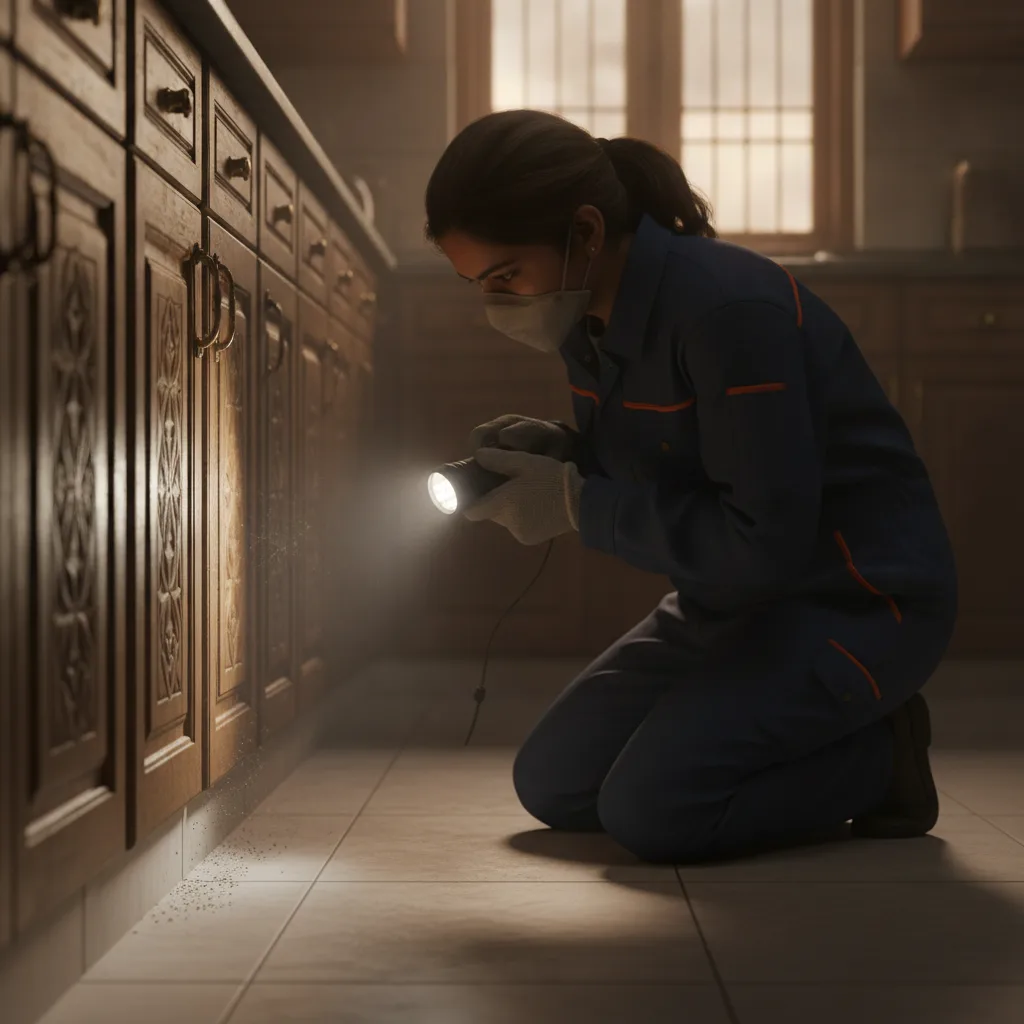
By the time you see a cockroach scuttling across your kitchen counter at noon, the problem is already bigger than it looks. Roaches are nocturnal and hate light, so a daytime sighting usually means the hiding spots are overcrowded. The good news is that your home gives off warning signals weeks before that happens, if you know where to look.
At KBS we've walked into hundreds of Bengaluru kitchens where the owner swears they only noticed "one roach last week" and found droppings, egg cases and grease trails going back months. Catching these early signs is genuinely the difference between a one-time clean-up and a recurring battle. If the signs below sound familiar, it's worth arranging a thorough pest inspection and treatment before the colony establishes itself properly.
The smell that shouldn't be there
A heavy, oily, musty odour, somewhere between old socks and stale coffee, is one of the earliest tells. It comes from pheromones roaches release to mark trails and from their faecal matter building up in cupboards and behind appliances.
In a small kitchen this smell shows up fast because roaches concentrate near water and food. In larger homes it can hide for weeks behind a fridge or under a sink cabinet. If you notice the smell only when you open a particular cupboard, that cupboard is your starting point.
Droppings: the clearest physical proof
Cockroach droppings look different depending on the species. German cockroaches, the small tan ones common in Bengaluru kitchens, leave droppings like ground coffee or black pepper flakes. American cockroaches, the larger reddish-brown ones often found near drains, leave cylindrical droppings with ridges, closer to mouse droppings in size.
- Check under the sink, behind the stove, and along skirting boards near water pipes
- Look inside rarely-opened drawers, especially ones storing plastic bags or old newspapers
- Run a torch along the back wall of kitchen cabinets, droppings collect in corners where roaches rest during the day
Finding even a small cluster of droppings means roaches have been active in that exact spot for several days, not hours. A single sighting can be a stray; droppings mean residents.
Egg cases are the real warning sign
Each female German cockroach can produce an egg case, called an ootheca, carrying 30 to 40 eggs, and she'll produce several over her lifetime. These capsules are small, brownish, and often tucked into cracks, behind picture frames, or glued to the underside of furniture. Finding even one egg case means you're looking at an exponential problem, not a single-roach nuisance.
Grease marks and smear trails
Cockroaches travel along the same paths repeatedly, and their bodies pick up grime from drains and bins. Over time this leaves faint brown smear marks along walls, especially near pipe entry points and skirting boards. Run your finger along a suspicious mark; if it's slightly greasy and doesn't wipe off like dust, that's a roach trail, not household dirt.
Shed skins in corners
Nymphs moult several times before reaching adulthood, shedding a pale, brittle, roach-shaped skin each time. These skins are easy to mistake for dead insects at first glance, but they're hollow and weightless. Finding them regularly in the same corner tells you there's an active breeding population nearby, not just the odd adult wandering in from outside.
Where to actually look in a Bengaluru home
Kitchens are the obvious hotspot, but Bengaluru's older plumbing and shared drainage lines mean bathrooms and utility areas matter just as much. Check these spots on a weekly basis if you've had any history of infestation:
| Area | Why it attracts roaches | What to check |
|---|---|---|
| Under kitchen sink | Constant moisture from pipe joints | Droppings, damp cardboard, musty smell |
| Behind refrigerator | Warmth from the compressor motor | Grease trails, shed skins |
| Bathroom drain gaps | Direct access from building drainage | Roaches emerging at night, egg cases near the trap |
| Store room / grain bins | Food source plus low disturbance | Chewed packaging, droppings in corners |
Why early action matters more than big action
A handful of roaches hiding in a wall void is manageable with gel baits and sealing entry points. A full infestation that's spread into multiple rooms usually needs repeated professional treatment cycles, because egg cases are resistant to most sprays and keep hatching for weeks after the adults are gone. Acting on early signs saves time, money and the hassle of a longer treatment plan later.
Monsoon months make this worse in Bengaluru. Humidity keeps drains and wall cavities damp longer, giving roaches easier access to water, which is the one thing they need more than food to survive.
- A musty, oily smell in a cupboard is often the first sign, before you see a single roach
- Pepper-like droppings under sinks or in drawers mean an active population, not a stray visitor
- Finding even one egg case signals dozens of future roaches, since each holds 30 to 40 eggs
- Shed skins in corners point to an active breeding cycle nearby
- Daytime sightings usually mean the hidden population is already overcrowded
If you've spotted two or more of these signs in the last month, don't wait for the roaches to become visible during the day. Our team at KBS has handled cockroach infestations across Bengaluru for over 8 years, and early-stage treatment is always quicker and cheaper than catching up on an established colony. Book Pest Control Service and let us check the spots you can't easily see yourself.
Want this handled by professionals in Bengaluru? Book KBS Pest Control Service, or message us on WhatsApp.