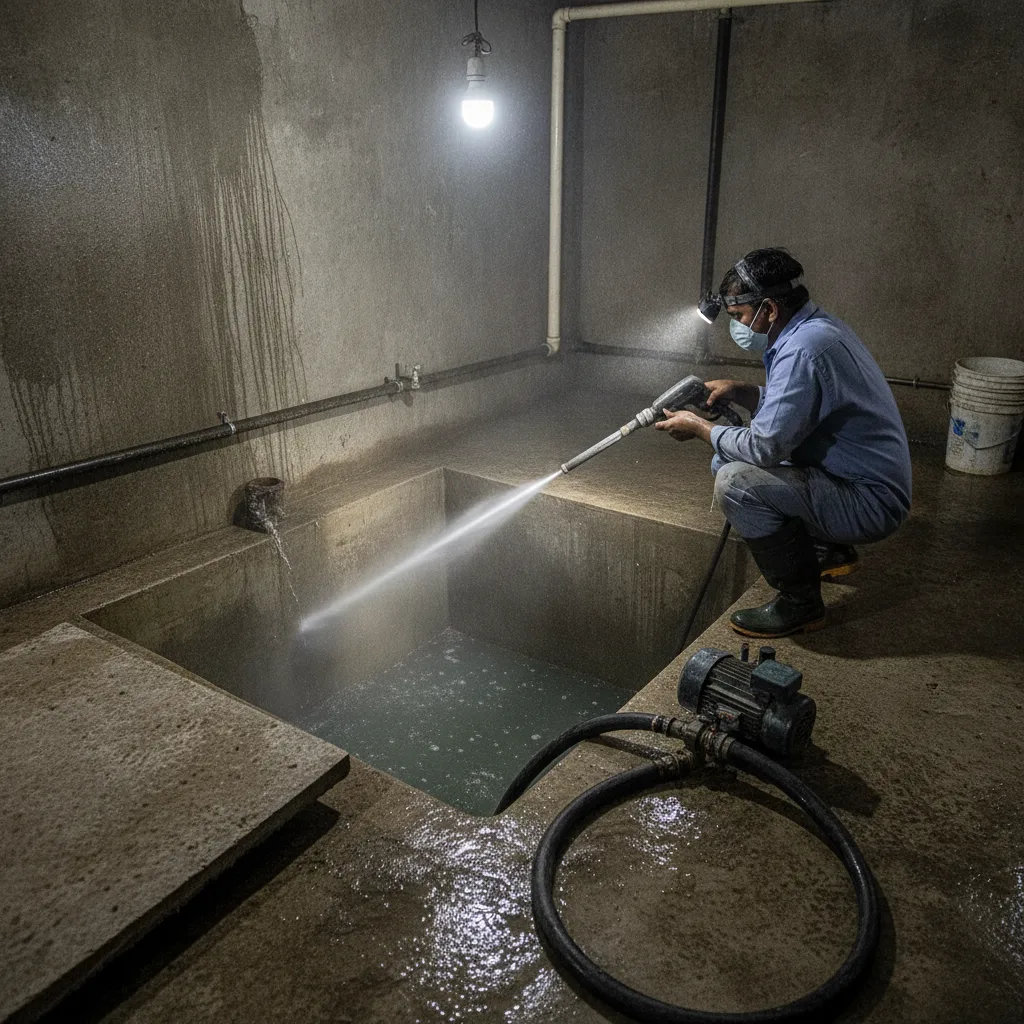
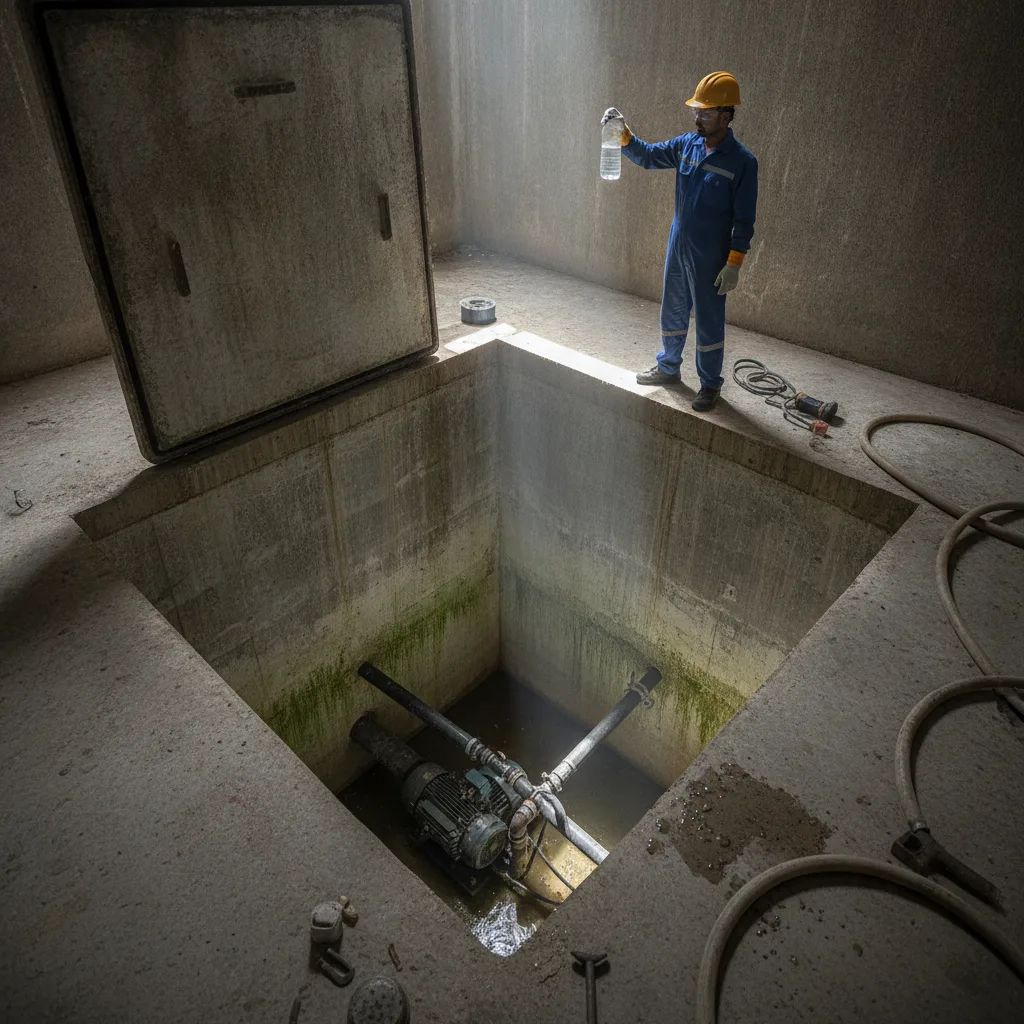
Apartment Sump & Overhead Tank Cleaning: RWA Checklist for Bengaluru Water Outages
Bengaluru's water cuts rarely give warning. One week BWSSB announces maintenance on a trunk line, the next your RWA WhatsApp group is flooded with messages asking why the taps ran dry for six hours. Apartments that sail through these outages calmly are the ones whose sump and overhead tank were already clean and full before the disruption started.
This isn't about panic buying water tankers. It's about an RWA having a working checklist, used before the crisis, not during it.
Why outages turn into water quality problems
When BWSSB supply stops, most apartments switch to running the sump dry or close to it. Low water levels mean sediment that normally sits undisturbed at the bottom gets stirred up and pulled into the pump suction line.
Residents then complain about muddy water or a faint smell, not because the outage caused contamination, but because an already-dirty sump got agitated. A sump cleaned on schedule simply doesn't have that sediment layer to kick up.
There's a second issue too. During outages, RWAs often bring in tanker water to top up the sump. Tanker water quality varies a lot, and if it's poured into a sump that hasn't been desludged in a year, you're mixing fresh water with old sediment and biofilm. That's when TDS spikes and residents start noticing taste or odour changes.
The pre-outage checklist every RWA should run
Most societies only think about their sump when something smells wrong. A proactive RWA checks these points on a fixed schedule, ideally every quarter, so an outage never catches the building unprepared.
- Confirm the last cleaning date. Facility managers should maintain a log. If nobody can tell you when the sump was last desludged, assume it's overdue.
- Check sediment depth. A torch and a measuring rod at the sump's lowest point will show if sludge has built up past 2-3 inches, which is usually the threshold worth acting on.
- Inspect the overhead tank lid. Loose or cracked lids let in dust, leaves, and mosquitoes during the monsoon months when humidity keeps everything damp longer.
- Test water at two points. Draw a sample from the sump outlet and from a top-floor tap. A noticeable colour or smell difference between the two often points to tank-side buildup rather than supply issues.
- Keep the backup tanker contact list updated. Not for routine use, but so the RWA isn't scrambling for a reliable tanker number when supply actually stops.
- Verify the sump's float valve and auto-cut are working. A stuck float can overflow your sump or run the pump dry, both of which stress the motor and disturb settled sediment.
Running through this list takes a facility manager maybe 30 minutes. Societies that skip it usually find out the hard way, during the outage itself, when there's no time left to fix anything.
What actually happens inside a neglected apartment sump
Apartment sumps are bigger than individual house sumps, often holding 5,000 to 20,000 litres depending on the number of flats. That size works against them. More surface area for algae to grow on, more residents' water entering and leaving daily, and more organic debris getting washed in from terrace runoff.
Over 6 to 8 months without cleaning, you typically get a layer of fine silt at the bottom (from BWSSB's Cauvery water, which carries natural sediment), a biofilm coating on the inner walls that feels slippery to touch, and sometimes small organic matter like leaves or insects that found their way in through a gap in the cover. None of this is usually visible from the manhole opening at the top. You have to actually get in and look.
This is exactly why a professional water tank and sump cleaning service matters more for apartments than individual homes. The volume of water and number of dependent families raises the stakes if something goes wrong.
Scheduling cleaning around BWSSB's supply calendar
Smart RWAs don't wait for a crisis to schedule cleaning. They time it around BWSSB's planned maintenance windows, which are usually announced a few days in advance for specific zones.
If your society knows a cut is coming, that's actually the best window to get the sump cleaned. The sump needs to be fully or mostly emptied anyway for the work, so you're not wasting water that would otherwise be used. Two birds, one afternoon.
| Trigger | Recommended action |
|---|---|
| Planned BWSSB maintenance announced | Schedule sump cleaning during the same window |
| Sediment depth over 2-3 inches | Book cleaning within the week, don't wait for quarterly schedule |
| Sudden water cut with no notice | Use stored sump water carefully, inspect for sediment disturbance before next refill |
| Post-monsoon (October-November) | Full sump and tank clean, debris accumulation is highest this period |
Getting residents to actually cooperate
The technical part of this checklist is the easy half. The harder part is getting 40 or 80 or 150 households to agree on timing and share the cost fairly.
A few things help. Announce cleaning dates at least a week ahead through the RWA notice board and WhatsApp group, not just a verbal mention in a meeting. Explain in plain terms why water will be unavailable for 3-4 hours during the clean, people cooperate more when they understand the reason instead of just seeing a notice. And keep a record of each cleaning with photos, so when a new committee takes over next year, they're not starting from zero.
One thing we notice on the ground: buildings where the facility manager personally understands why sediment builds up (not just that it does) tend to maintain much better schedules than ones running purely on a calendar reminder. Knowledge sticks better than rules.
- Low water levels during outages stir up sediment that's normally undisturbed, which is why cuts often coincide with water quality complaints
- Check sediment depth, tank lids, and float valves every quarter, don't wait for a smell to act
- Apartment sumps hold far more water than individual homes, raising the stakes if biofilm or silt builds up unchecked
- Time cleaning around announced BWSSB maintenance windows to avoid wasting already-scarce water
- Clear communication with residents about cleaning schedules gets more cooperation than last-minute notices
If your RWA hasn't checked the sump in a while, the next planned BWSSB outage is a reasonable prompt to finally get it done. KBS has handled apartment sumps across Bengaluru for over 8 years, and Book Water Tank Cleaning is the fastest way to get your committee a clean, documented job before the next water cut catches everyone off guard.
Want this handled by professionals in Bengaluru? Book Water Tank Cleaning, or message us on WhatsApp.