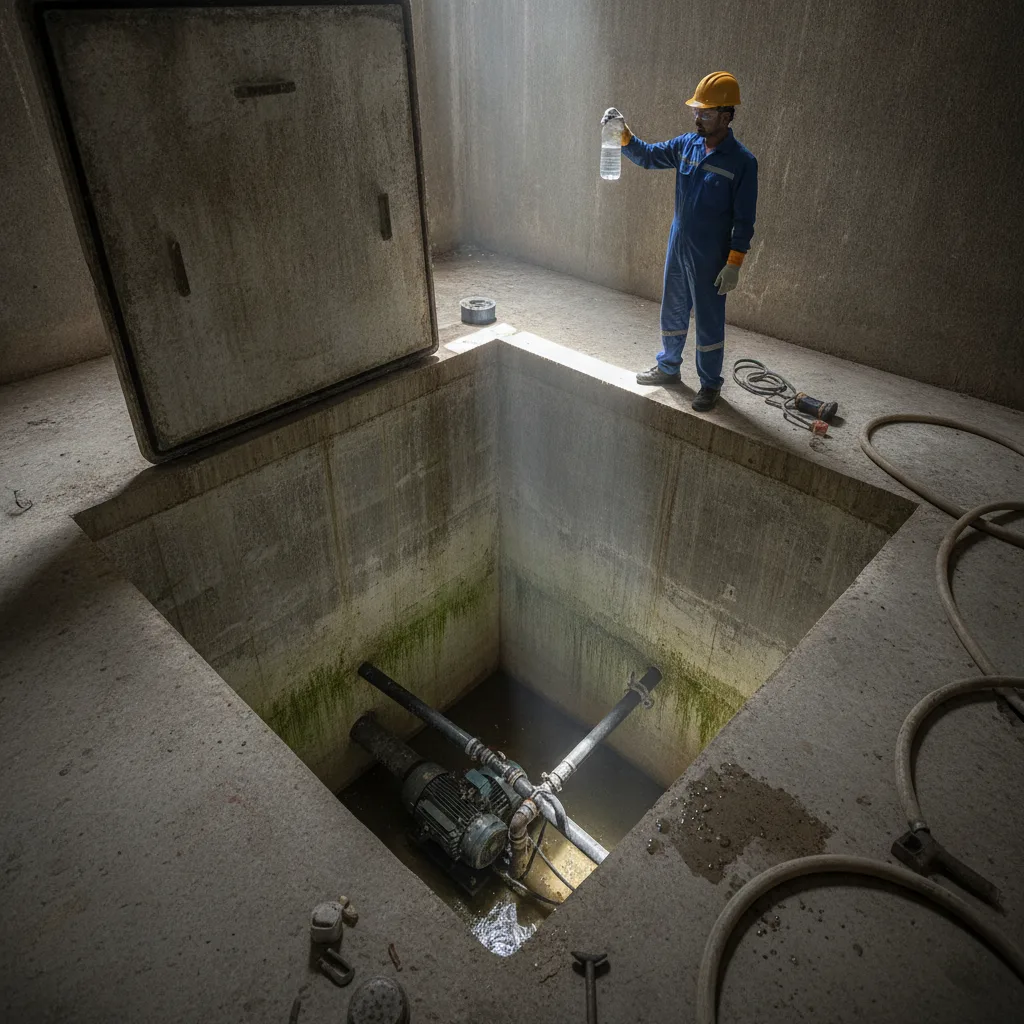
Post-Cleaning Water Safety: TDS, Chlorine & Testing After Sump Cleaning in Bangalore
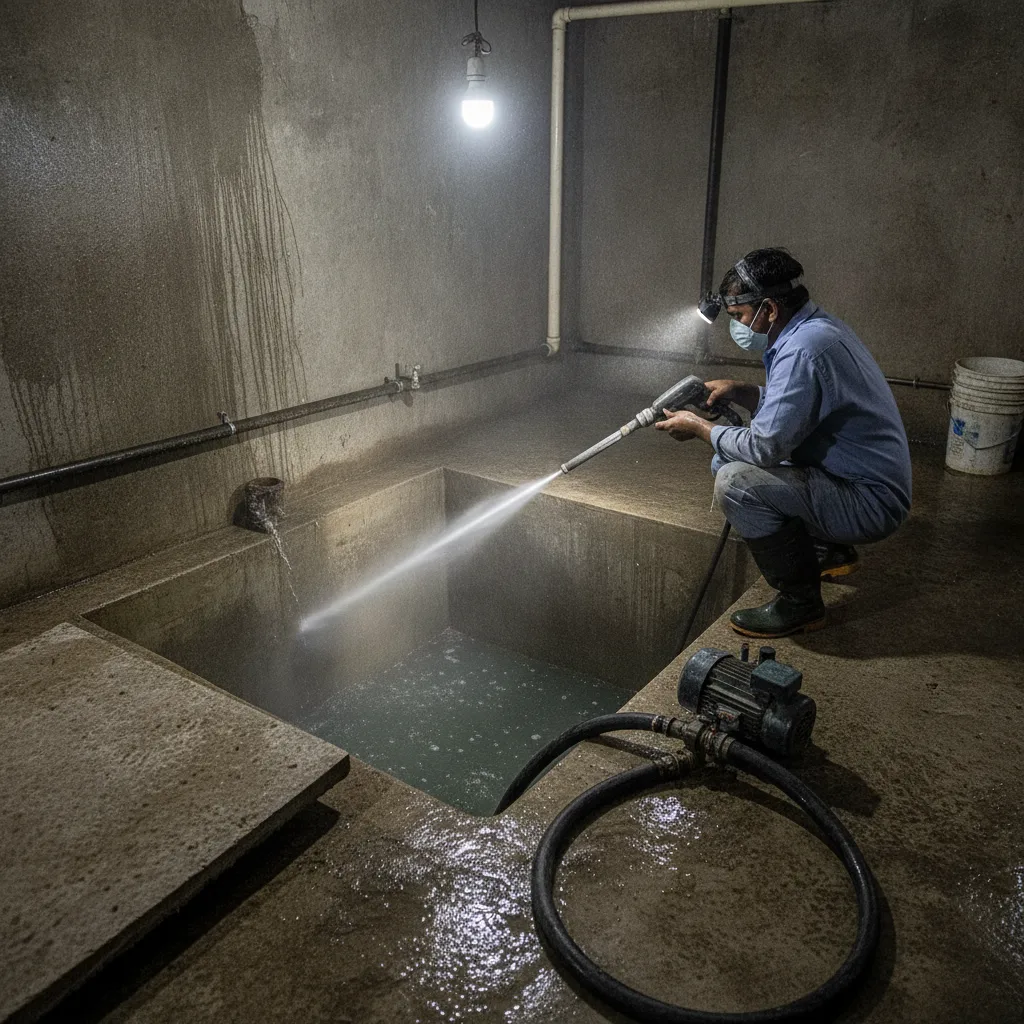
A clean-looking sump is not the same as safe water. Plenty of homeowners in Bengaluru assume the job is done the moment the cleaning crew packs up and the tank looks spotless under a torch. But grime you can't see, like dissolved salts and biological load, doesn't disappear just because the walls got scrubbed.
This is where basic testing after a clean comes in. It's quick, it's cheap, and it tells you whether the cleaning actually improved your water or just moved the dirt around.
Why visual inspection alone isn't enough
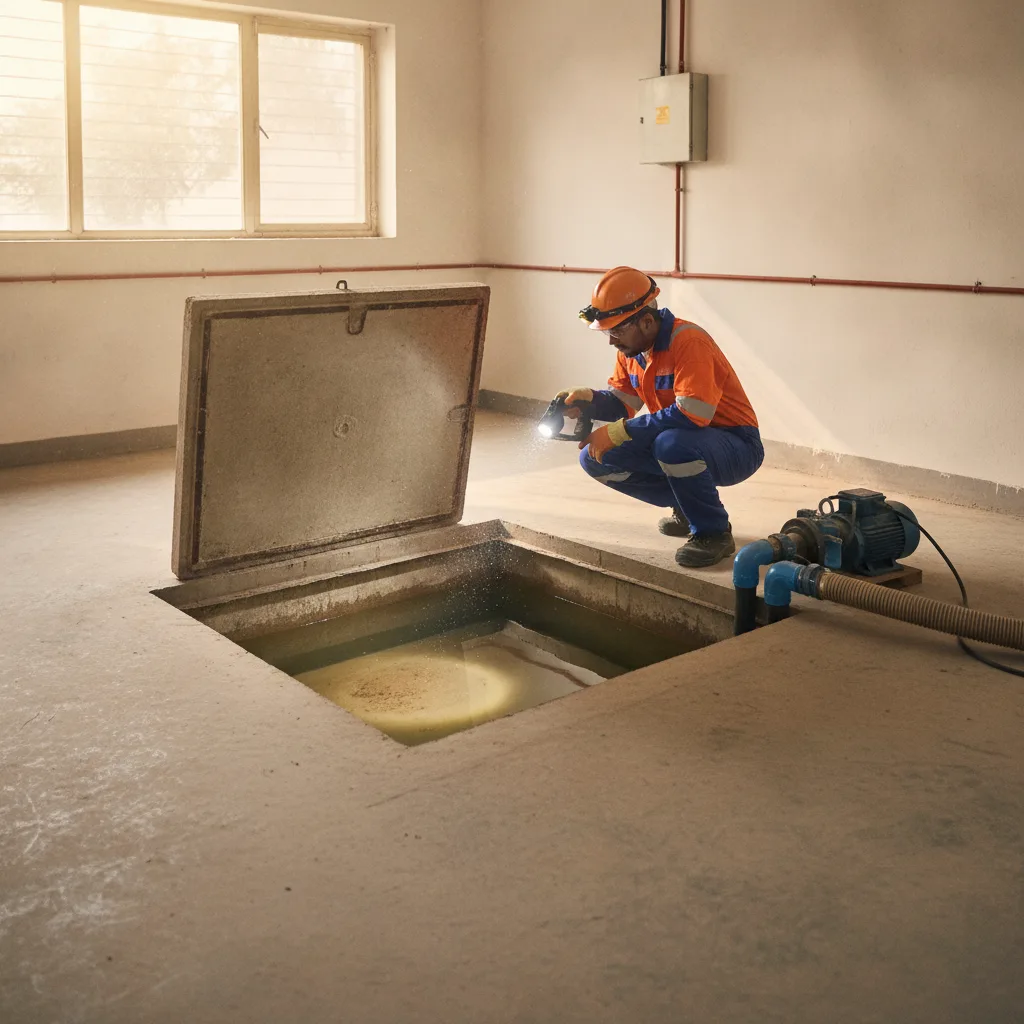
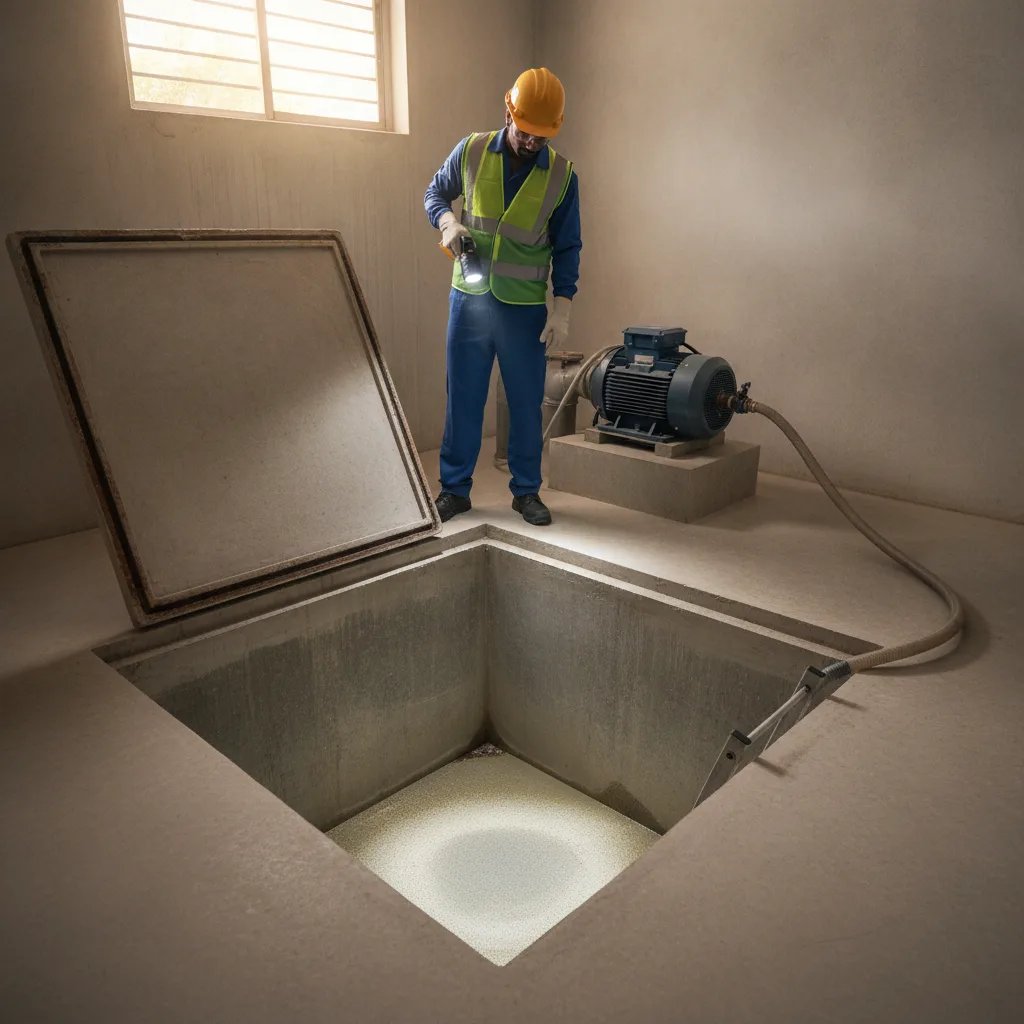
A technician shining a torch into your sump can tell you if the sludge and biofilm are gone. That's valuable. But TDS (Total Dissolved Solids) and chlorine levels are invisible to the eye.
Hard water deposits, dissolved minerals from borewell sources, and leftover disinfectant residue all affect water quality without changing how the tank looks. A sump can look pristine and still carry water that's chemically off balance.
That's why a proper water tank and sump cleaning service in Bengaluru should pair physical cleaning with basic water quality checks, not just a wipe-and-leave job.
What TDS actually tells you
TDS measures the combined concentration of dissolved minerals, salts, and metals in your water, measured in parts per million (ppm). It's not a cleanliness score by itself, but a sudden spike after cleaning usually means something in the tank is leaching into the water, often a corroding fitting or untreated borewell inflow.
- Below 300 ppm: Generally considered good for drinking, per BIS (Bureau of Indian Standards) guidelines.
- 300 to 600 ppm: Acceptable but noticeable in taste; common in many Bengaluru borewell-fed homes.
- Above 900 ppm: Poor, BIS marks this as the upper permissible limit; water may taste salty or metallic.
A cheap TDS meter (digital pen type, available for a few hundred rupees) gives you a reading in seconds. Test before and after cleaning if you want to see whether the sludge removal actually made a measurable difference, not just a visual one.
Chlorine: how much is right, and why it matters
If KBS or any cleaning team disinfects your tank with chlorine after cleaning, residual chlorine should sit between 0.2 and 0.5 mg/l at the tap, per WHO and BIS drinking water guidelines. Too little and the disinfection didn't do its job; bacteria can regrow within days, especially in Bengaluru's humid months when organic matter breaks down faster.
Too much chlorine and you get that sharp, swimming-pool smell, which puts people off drinking the water even though it's technically still within safe limits. A basic chlorine test kit (DPD tablets, sold at aquarium and water treatment shops) gives a colour-based reading you can check against a chart in under two minutes.
Here's a detail most people miss: chlorine dissipates faster in warm weather and in tanks with more surface exposure to air. If you test chlorine levels a week after cleaning instead of right after, don't be surprised if the reading has dropped closer to zero. That's normal, not a sign of failure.
When to re-test
Test once within 24 hours of cleaning, then again after about a week. The first reading confirms the clean and disinfection worked. The second tells you how fast your particular tank's water quality drifts, which varies a lot depending on tank material, sunlight exposure, and whether it's fully covered.
Simple checks you can do without equipment
Not every household wants to buy a TDS meter or chlorine kit. A few low-tech checks still catch obvious problems.
- Smell test: Water should be odourless or have a very faint chlorine note right after cleaning. A musty or sulphur-like smell means something's off, possibly stagnant water pockets that weren't fully drained during cleaning.
- Clarity check: Fill a clear glass and hold it against light. Cloudiness or visible particles suggest sediment is still settling, common for the first day or two after a clean as fine silt redistributes.
- Taste note: A metallic or salty taste often points to high TDS from borewell mineral content, not necessarily a cleaning failure, but worth tracking over time.
None of these replace actual testing, but they're a fast first filter before you decide whether to bother with a meter or kit.
What changes after a sump clean, realistically
A thorough cleaning removes sediment, organic sludge, and biofilm that have built up on tank walls and the floor. It doesn't change the source water quality coming in from BWSSB or your borewell. If your raw water already has high TDS because of local groundwater mineral content, cleaning the sump won't fix that number; it'll just stop contamination from the tank itself adding to the problem.
This is a distinction customers often don't expect. People sometimes assume a clean sump should bring TDS down to near-zero, which isn't realistic unless you're also running an RO system at the point of use. Cleaning addresses biological and sediment contamination; it's not a water softening process.
- TDS under 300 ppm is good; above 900 ppm is the BIS upper limit for drinking water.
- Residual chlorine should read 0.2 to 0.5 mg/l at the tap right after disinfection.
- Chlorine levels drop naturally within days, especially in warm weather; re-test don't panic.
- Smell, clarity, and taste checks are useful first filters but no substitute for a meter or kit.
- Cleaning removes tank-based contamination; it doesn't change source water mineral content.
If your tank hasn't been tested in a while, or you're not sure what's actually coming out of your taps, it's worth getting a baseline reading before your next clean. You'll know exactly what improved and by how much. KBS's teams carry basic testing tools on most jobs now, precisely because customers kept asking "but is it actually safe to drink" after watching the sludge come out. Ready to find out what's really in your tank? Book Water Tank Cleaning and get a proper clean with the numbers to back it up.
Want this handled by professionals in Bengaluru? Book Water Tank Cleaning, or message us on WhatsApp.