Monsoon Rainwater Entry: Why Bangalore Homes Get Dirty Sump Water After Storms
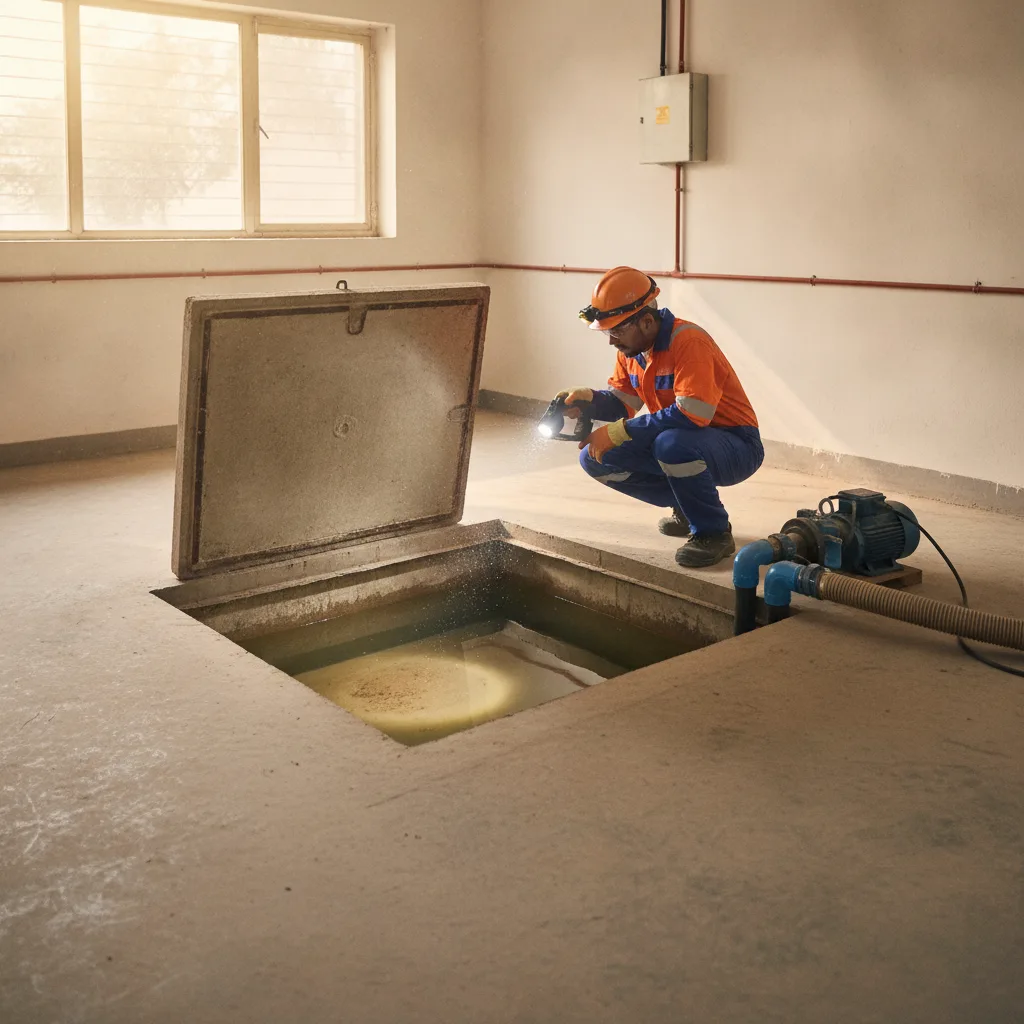
First rain of the season hits, and by evening the sump water looks like chai. Homeowners call us thinking something is badly wrong, but in most cases the explanation is simple and mechanical. Rainwater picks up dirt, silt and organic debris on its way into your sump, and monsoon storms make this worse in specific, predictable ways.
Once you understand where the water is actually coming from, the dirty-water pattern stops being a mystery. This is also the point where a professional water tank and sump cleaning service earns its cost, because clearing sediment after every storm is not something a bucket and mop can fix properly.
Where the rainwater is actually entering from
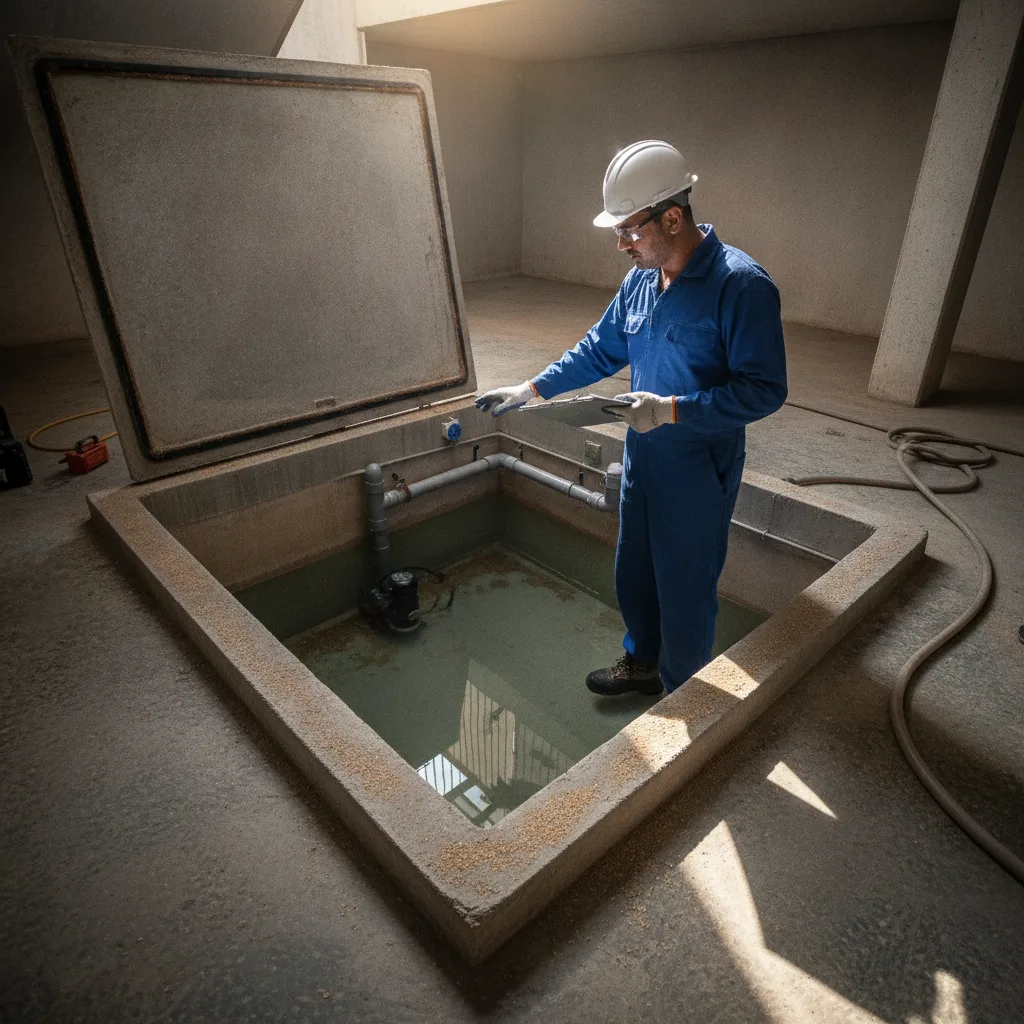
Very few Bengaluru sumps are perfectly sealed. Most have a vent pipe, an inspection lid with a worn rubber gasket, or a hairline crack near the ground-level joint where the tank meets the slab. During a dry spell, none of this matters because there is no water pressure pushing through.
Add two hours of heavy rain and the ground around the sump gets saturated. Water finds the path of least resistance, seeping through those same gaps, carrying mud, dust and construction grit with it. This is why the discolouration usually shows up within a day of a storm, not gradually.
Surface runoff is the biggest contributor
Terrace drains, open compound areas and poorly graded courtyards all funnel rainwater toward the lowest point of the property, which is often right next to the sump inlet or overflow pipe. That runoff picks up leaf litter, roof dust, and whatever settled on the terrace over the dry months.
If your building's terrace hasn't been cleaned since before the rains started, the first storm effectively washes months of accumulated dust straight into your water system. We see this pattern every June and again in September when the second monsoon spell hits Bengaluru.
Why the water turns brown or cloudy specifically
Clay-heavy Bengaluru soil is the real culprit here. Unlike sandy soil that settles fast, clay particles stay suspended in water for a long time, giving it that persistent brownish tint even after the rain has stopped for a day or two.
Organic matter adds to this. Decomposing leaves and soil bacteria that wash in during a storm create a faint earthy smell along with the colour change. It is not usually a health emergency on its own, but it does mean the water needs proper filtration and cleaning before use, especially for drinking or cooking.
The overflow pipe problem nobody checks
Overflow pipes are meant to carry excess water OUT of the tank when it's full. But if the pipe end sits below ground level, is unscreened, or slopes slightly inward instead of outward, rainwater and even the odd earthworm or insect can travel back up it during a downpour.
This is one of the most common issues our technicians find when opening a sump after a bad monsoon week. A simple mesh screen and correct pipe gradient fix it permanently, and it costs almost nothing compared to a full cleaning.
What actually needs fixing versus what's just cosmetic
- Cracked inspection lid gasket: replace it, this is the number one silent entry point for dirty rainwater.
- Overflow pipe screen missing: install a fine mesh cap, prevents both water backflow and mosquito entry.
- Poor terrace or compound drainage: redirect runoff away from the sump inlet area, not a plumbing job but a civil one.
- Sediment already settled at the bottom: this needs physical removal, filtration alone won't clear it once it has built up over weeks.
Why filtration alone won't solve it
A lot of households respond to cloudy sump water by adding an extra filter at the outlet or dosing with alum. Both help temporarily, but neither addresses sediment that has already settled at the bottom of the tank. Silt and clay particles sink over a few days, forming a sludge layer that keeps re-suspending every time the motor draws water or the tank refills.
This is exactly the sludge our teams scrape out manually during a sump cleaning visit. Left alone for a full monsoon season, it can build up to several inches, reducing your actual storage capacity and giving bacteria a place to multiply undisturbed.
A quick post-storm check you can do yourself
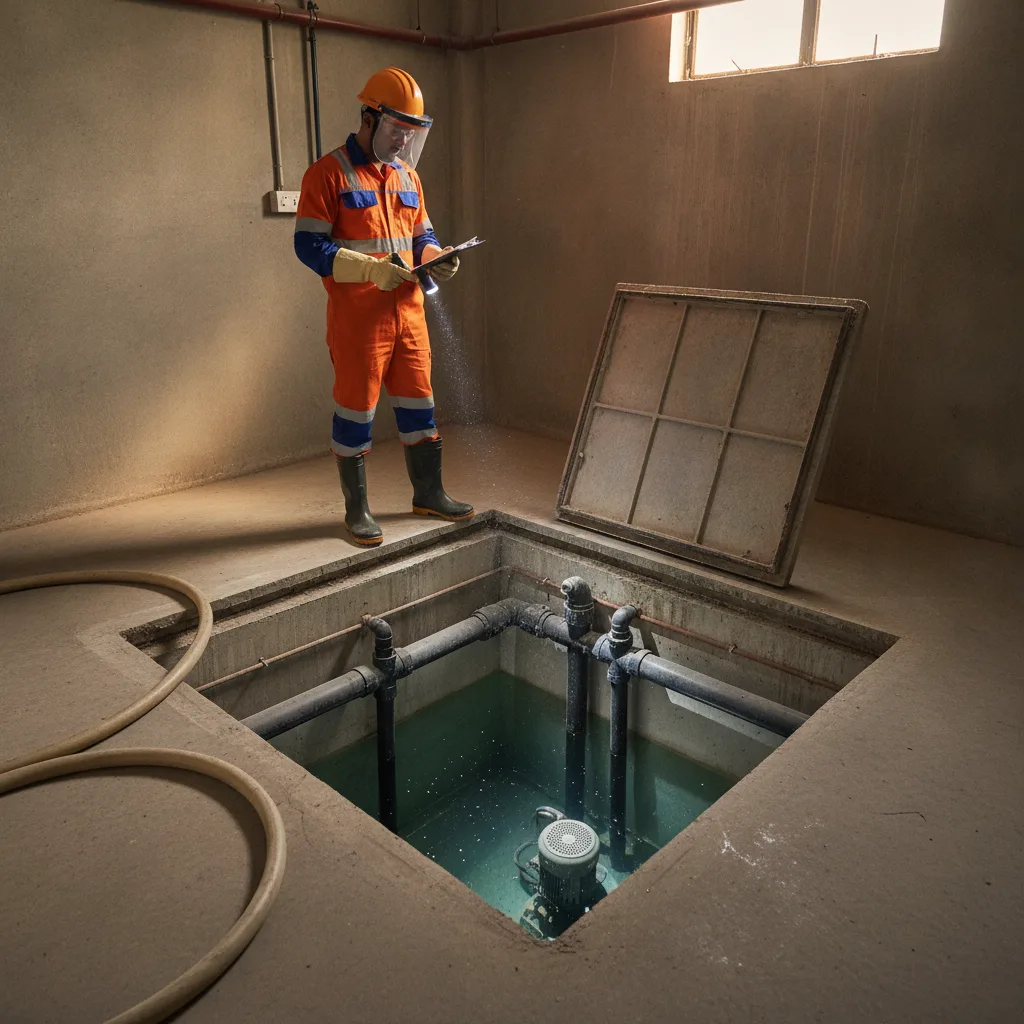
- Open the inspection lid within a day of heavy rain and look at the water colour under a torch, don't rely on tap water appearance alone.
- Check the gasket seal around the lid for cracks or gaps.
- Trace the overflow pipe outside and confirm it slopes downward and has a mesh cap.
- Note if the smell is faintly earthy (soil runoff, usually manageable) versus sharply foul (possible sewage cross-contamination, needs urgent attention).
If your area has heavy borewell dependency, this is worth pairing with a check on borewell water quality too, since mineral content varies block to block and can compound the sediment issue after rain.
- Cracked lids, worn gaskets and unscreened overflow pipes are the real entry points for rainwater, not the tank walls themselves.
- Bengaluru's clay soil keeps sediment suspended longer, which is why the water looks cloudy for days after a storm.
- Filtration treats symptoms; only physical removal clears sludge that has already settled at the sump base.
- A same-day post-storm inspection catches problems before they turn into a full sediment build-up.
Most of this is preventable with basic seals and screens fixed once, properly. But if your sump hasn't been opened and scraped in over six months, this monsoon is the right time to get it done professionally rather than waiting for the water to look visibly bad. Our team at KBS has handled this exact seasonal pattern across Bengaluru for eight years now, and a quick Book Water Tank Cleaning visit before the next big storm will save you the guesswork.
Want this handled by professionals in Bengaluru? Book Water Tank Cleaning, or message us on WhatsApp.