How to Identify If Your Sump Water is Contaminated in Bengaluru: Signs & Solutions
Most homeowners only think about their sump when the water starts smelling odd or the taps run cloudy. By that point, contamination has usually been building for weeks. Knowing the early signs of sump water contamination in Bengaluru homes means you catch the problem while it's still a five-minute fix, not a family health scare.
The good news is your sump gives plenty of warning before things get bad. You just need to know what to look for, and how to tell a cosmetic issue apart from a genuine safety one. If the signs point to serious buildup, it's worth booking a professional water tank and sump cleaning service rather than waiting it out.
Colour changes tell you more than you'd think
Clear water with a faint yellow tinge usually means iron or rust, common if your sump has an old MS (mild steel) inlet pipe or the borewell itself carries dissolved iron. It's not immediately dangerous but stains clothes and bathroom tiles over time.
Brownish or muddy water right after heavy rain is different. That's silt and surface runoff getting in through a cracked lid or a gap around the inlet pipe, something we see a lot right after Bengaluru's first big monsoon showers each year. Greenish water is algae, and it only grows where sunlight is reaching the tank, which means your lid isn't sealing properly.
What each colour is actually telling you
- Yellow or rust tint: iron content from pipes or borewell source, needs a water test if it persists
- Brown or muddy: rainwater or surface water ingress through a damaged inlet or lid
- Green tinge: algae growth from light exposure, check the lid seal immediately
- Milky white: usually trapped air bubbles from the pump, harmless but worth confirming
Smell is the fastest early warning you'll get
A rotten-egg smell means hydrogen sulfide gas, produced by bacteria breaking down organic matter that's settled at the bottom of the sump. This is one of the clearest signs something has been decomposing in there for a while, often leaves, insects, or a dead rodent that got in through a broken vent.
A musty, damp-basement smell points to mould growth on the tank walls above the waterline, which thrives in the humidity of Bengaluru's monsoon months. Neither smell means instant danger, but both mean the sump needs physical cleaning, not just chlorination.
What's floating or settled matters
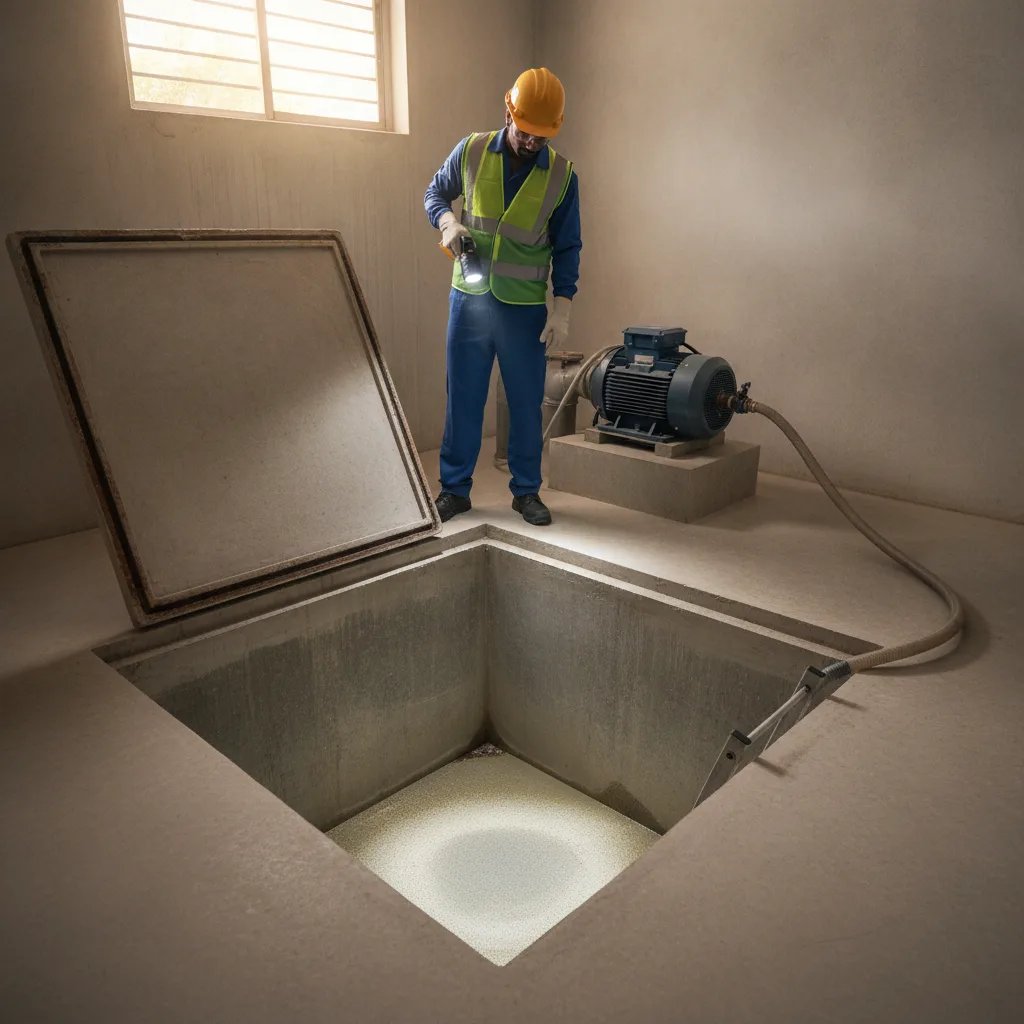
Sediment at the bottom isn't automatically a problem. Every underground sump collects some silt from borewell water or municipal supply over months. The issue is how much, and how fast it's accumulating.
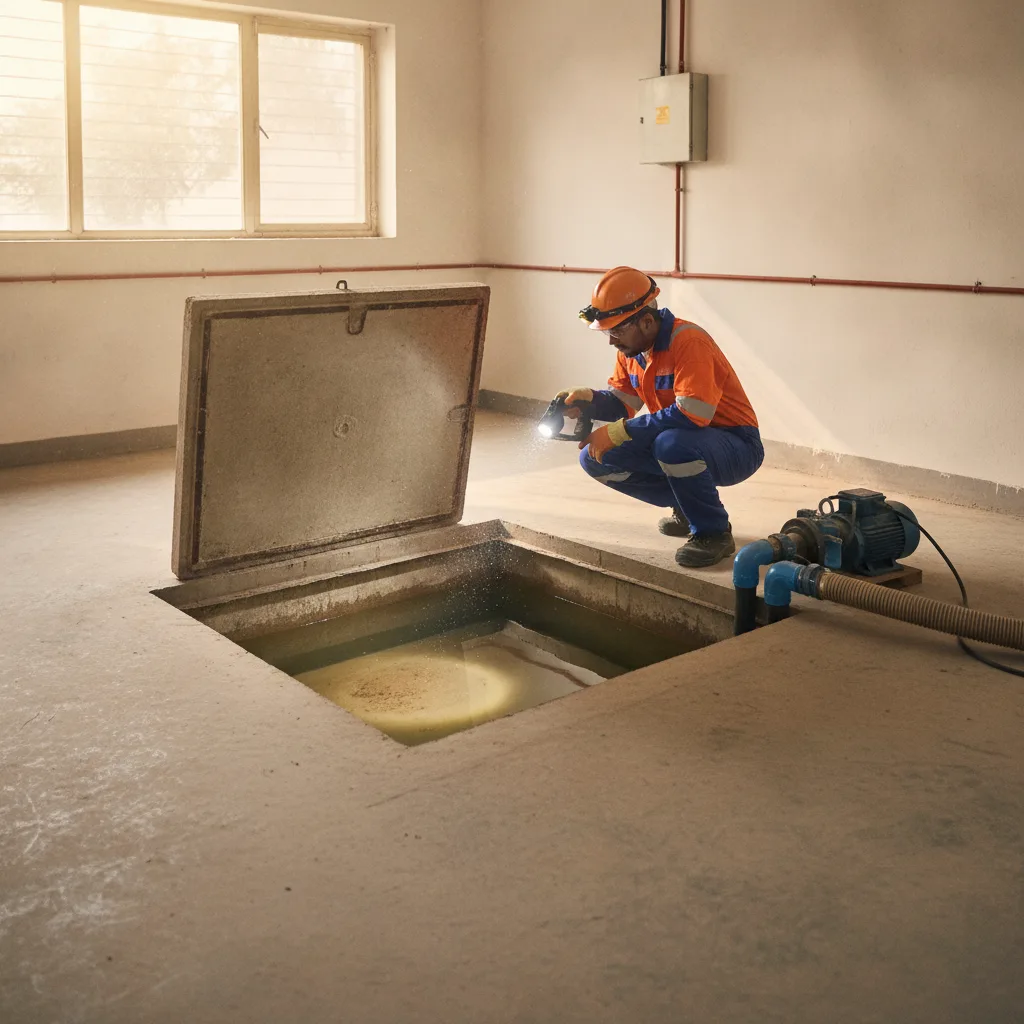
Run your hand along the inside wall near the waterline (with the tank empty or during a routine check) and feel for a slimy biofilm. That slippery coating is bacterial growth, and it's the number one thing that recontaminates water even after you've topped up with fresh supply. If you can see visible sludge more than an inch thick, or floating debris like leaves and insect larvae, that's well past the "wait and watch" stage.
| Sign observed | Likely cause | Action needed |
|---|---|---|
| Faint sediment layer, less than half an inch | Normal settling from borewell or BWSSB water | Monitor, clean at next scheduled interval |
| Slimy film on walls | Bacterial biofilm buildup | Full clean and disinfection required |
| Rotten-egg smell | Decomposing organic matter | Clean and inspect for dead insects or debris |
| Visible larvae or mosquito activity | Uncovered or cracked lid allowing entry | Immediate cleaning plus lid repair |
Test the water yourself before calling anyone
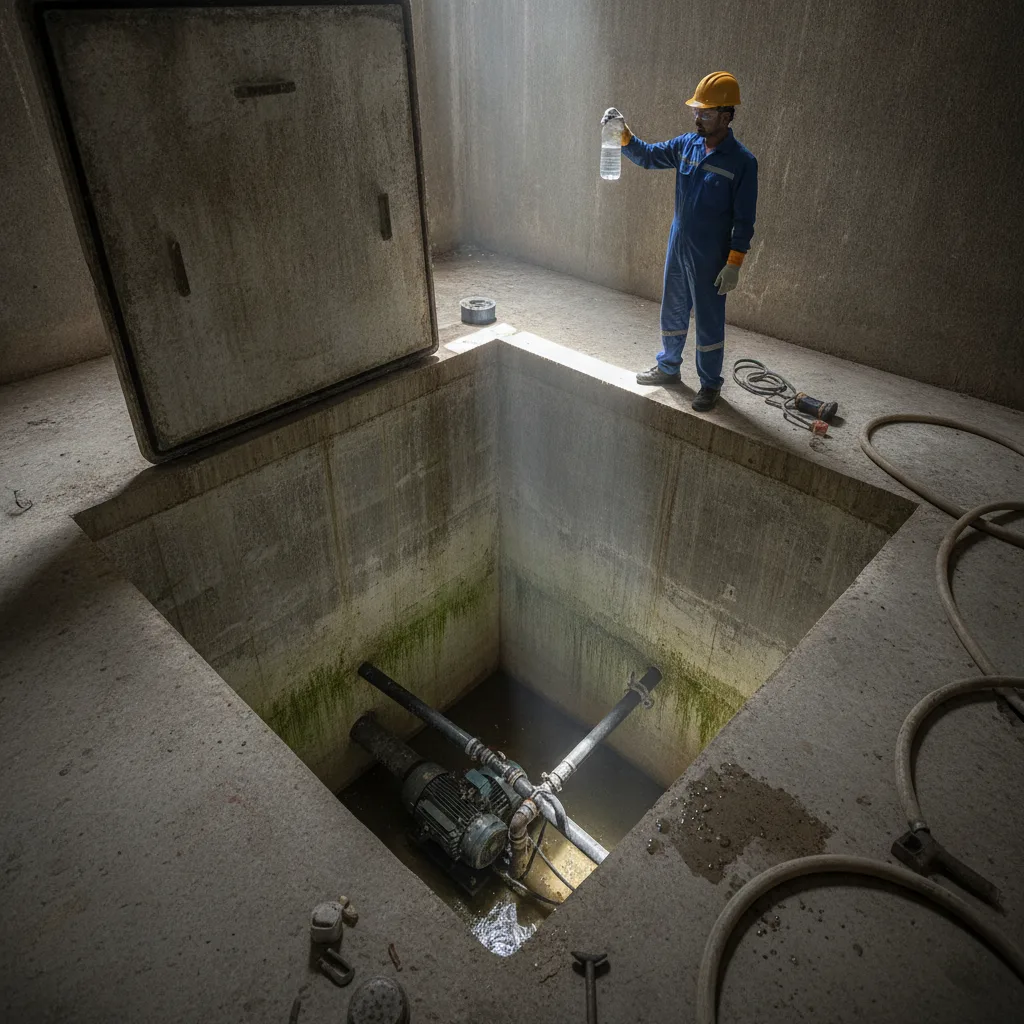
You don't need a lab to catch obvious contamination. Fill a clear glass and hold it up to daylight. Cloudiness that doesn't settle after a few minutes usually means suspended particles or bacterial growth rather than just dust.
A simple pH strip (available cheap at any pharmacy) can flag if the water has drifted too acidic or alkaline, which affects both taste and pipe corrosion over time. If you want to be thorough, BWSSB and several private labs in the city offer basic water quality testing for a few hundred rupees, worth doing once a year if you're on borewell supply.
Where contamination usually enters from
In our experience cleaning sumps across the city, the entry point is almost always one of three things: a lid that doesn't seal flush, a cracked overflow pipe near ground level, or an inlet pipe joint that's degraded. Areas with older independent houses tend to have more of the second issue, since exposed plumbing ages faster in Bengaluru's temperature swings between summer and monsoon.
Apartment complexes have a different pattern. Shared sumps in basements often pick up contamination from nearby drainage lines if the sump wall has hairline cracks, something residents rarely notice until the smell becomes obvious. If you live in a complex, it's worth reading our apartment sump cleaning checklist for Bengaluru housing societies to know what your maintenance committee should already be tracking.
When to stop monitoring and get it cleaned
Some signs mean you should skip the wait-and-watch approach entirely. Persistent odour after refilling the tank. Visible sediment thicker than a fingernail. Any greenish tint that returns within days of a manual clean. Family members reporting stomach issues with no other obvious cause.
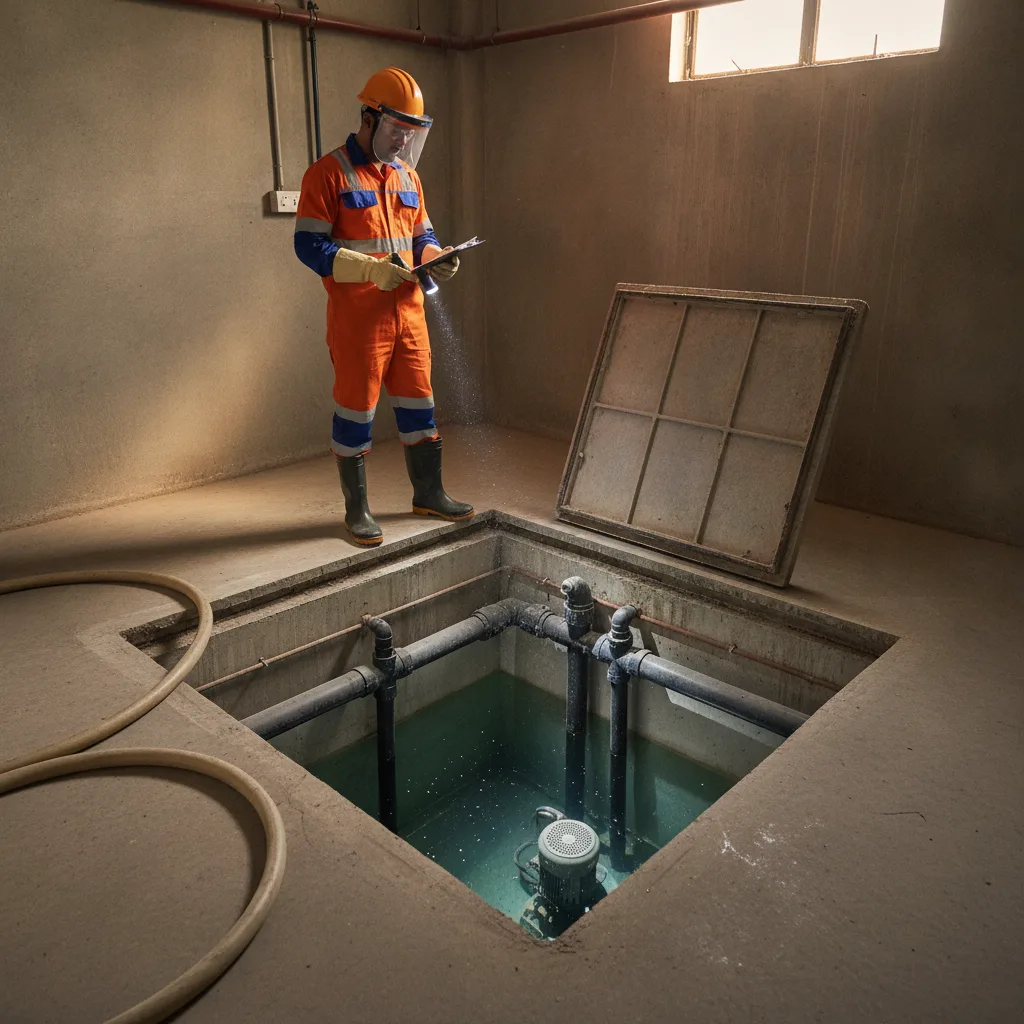
Professional cleaning removes what a simple drain-and-refill can't: the biofilm layer, settled sludge, and any cracks that need sealing before they let more contamination in. A trained team also checks the lid, vent, and overflow pipe condition while they're in there, catching the entry point before it causes round two.
- Colour changes (yellow, brown, green) each point to a different cause, not all urgent
- Smell is often the earliest and most reliable warning sign
- A slimy wall coating means bacterial biofilm, which needs a full clean, not just a rinse
- Basic home tests (clarity, pH strips) can flag issues before you call anyone
- Persistent odour or repeated cloudiness after cleaning means the entry point itself needs fixing
If any of this sounds like what's happening in your tank right now, don't wait for it to get worse. KBS has been cleaning sumps and water tanks across Bengaluru for over 8 years, and spotting these signs early is exactly what keeps a household's water genuinely safe. Book Sump Cleaning Service and get a proper inspection done before the next monsoon adds to the load.
Want this handled by professionals in Bengaluru? Book Water Tank Cleaning, or message us on WhatsApp.