Apartment Sump Cleaning Checklist for Bengaluru Housing Societies
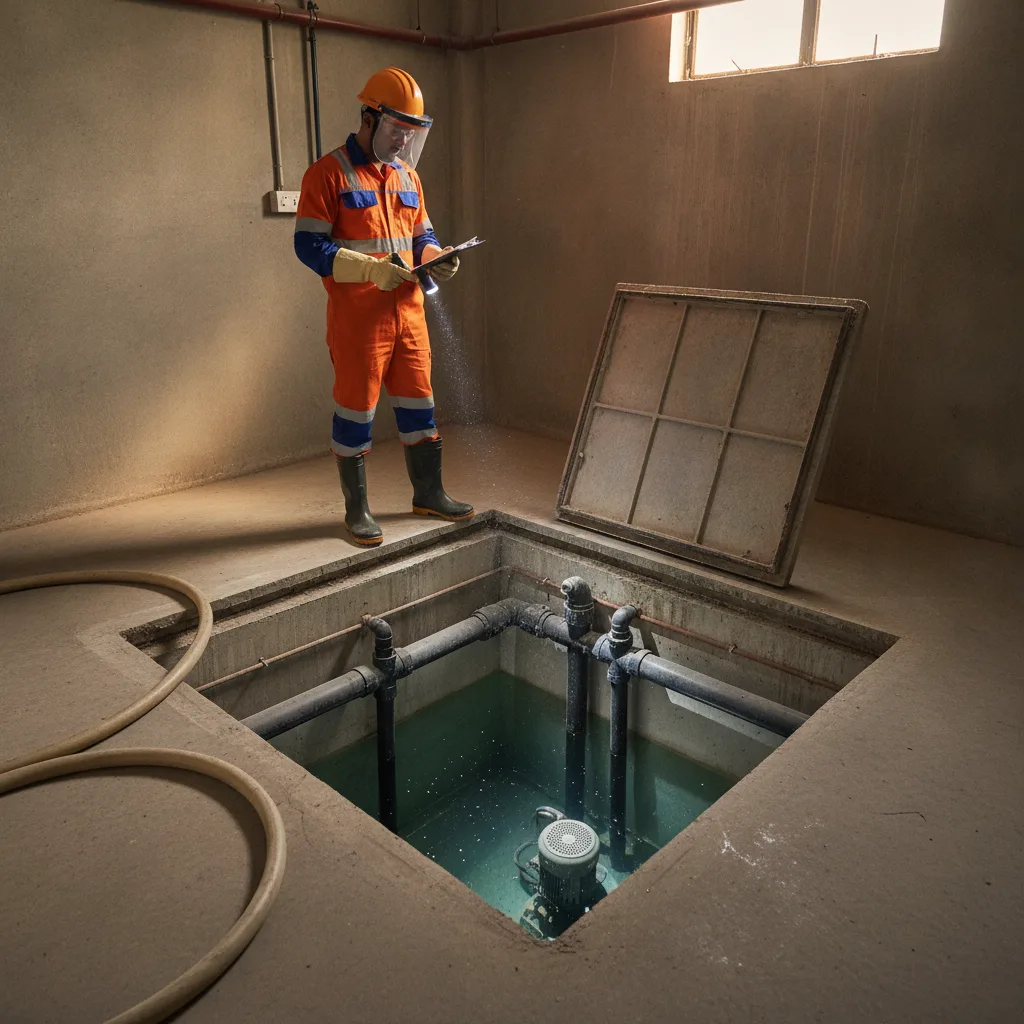
Ask ten flat owners in any Bengaluru apartment complex when the sump was last cleaned, and you'll get ten different answers. Some say every six months, some say whenever the water 'smells funny', and a good number just shrug. That gap between what should happen and what actually happens is where sludge builds up quietly for years.
A housing society sump isn't a one-flat problem. It feeds every unit in the block, so contamination or neglect hits everyone at once. Getting a proper checklist in place, and sticking to it, is the difference between water that's genuinely safe and water that just looks clear in the glass.
Why apartment sumps get neglected more than individual homes
In an independent house, the owner sees the sump lid, remembers it exists, and eventually calls someone. In an apartment block, the sump is usually tucked in a basement corner, out of sight, and 'someone else's job'. Committees rotate every year or two, and cleaning schedules get lost in the handover.
This is exactly the gap that leads residents to search for apartment sump cleaning in Bangalore only after water pressure drops or someone spots black flecks in a glass. By then the sludge layer at the bottom has often been sitting undisturbed for well over a year, thick enough to reduce actual storage capacity.
What should be on the society's checklist
A working checklist needs an owner, not just a document pinned on the noticeboard. Most well-run societies assign this to the facilities or maintenance committee and review it every AGM. Here's what that checklist should actually cover.
- Cleaning frequency on record: minimum once every 6 months, more often if the complex uses borewell water with visible hardness or iron staining.
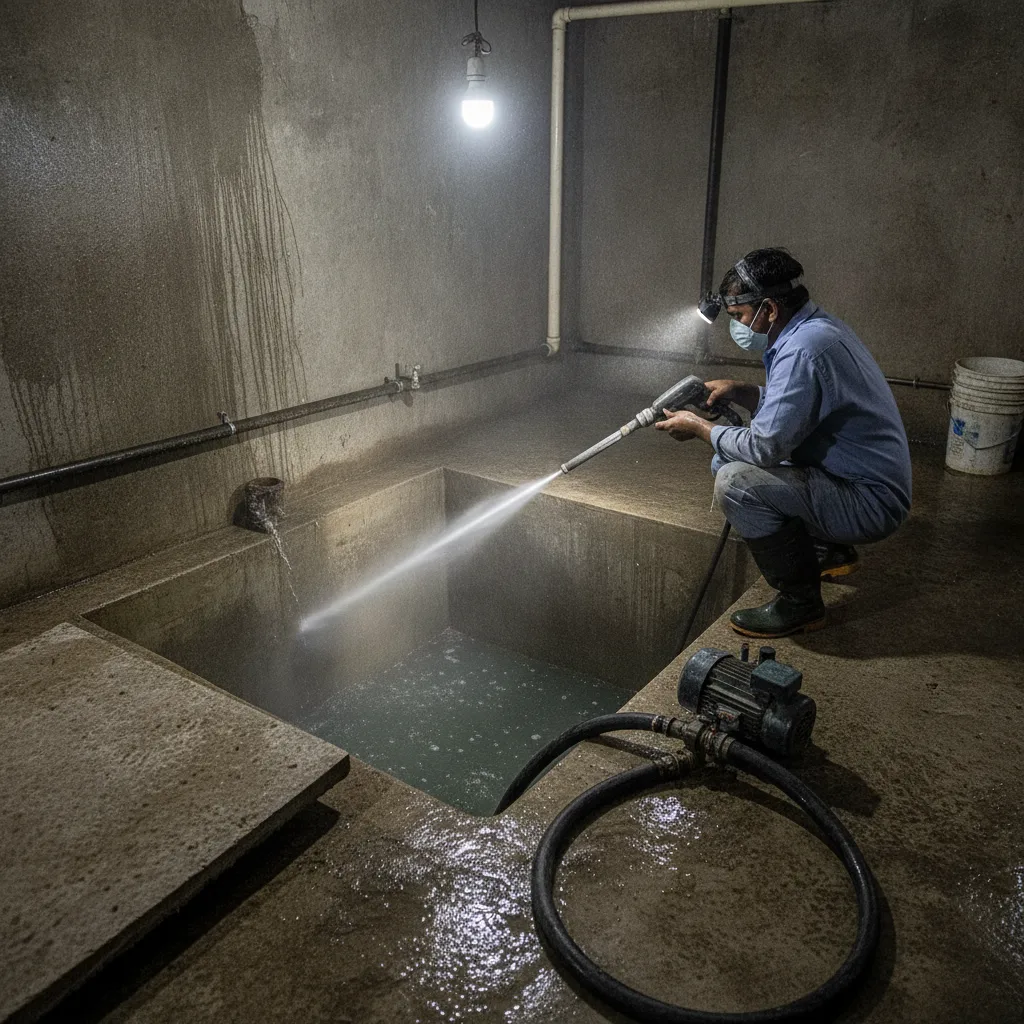
- Vendor verification: check that the cleaning team physically enters and scrubs the tank walls and floor, not just skims the surface with a pump.
- Sludge disposal method: sludge should be pumped out and removed from the premises, not just pushed toward a drain where it can flow back in.
- Disinfection step: chlorination or an equivalent food-grade disinfectant after scrubbing, followed by a rinse cycle before the tank is refilled.
- Photo or video proof: before and after images shared with the committee, so residents can see the actual condition rather than take it on trust.
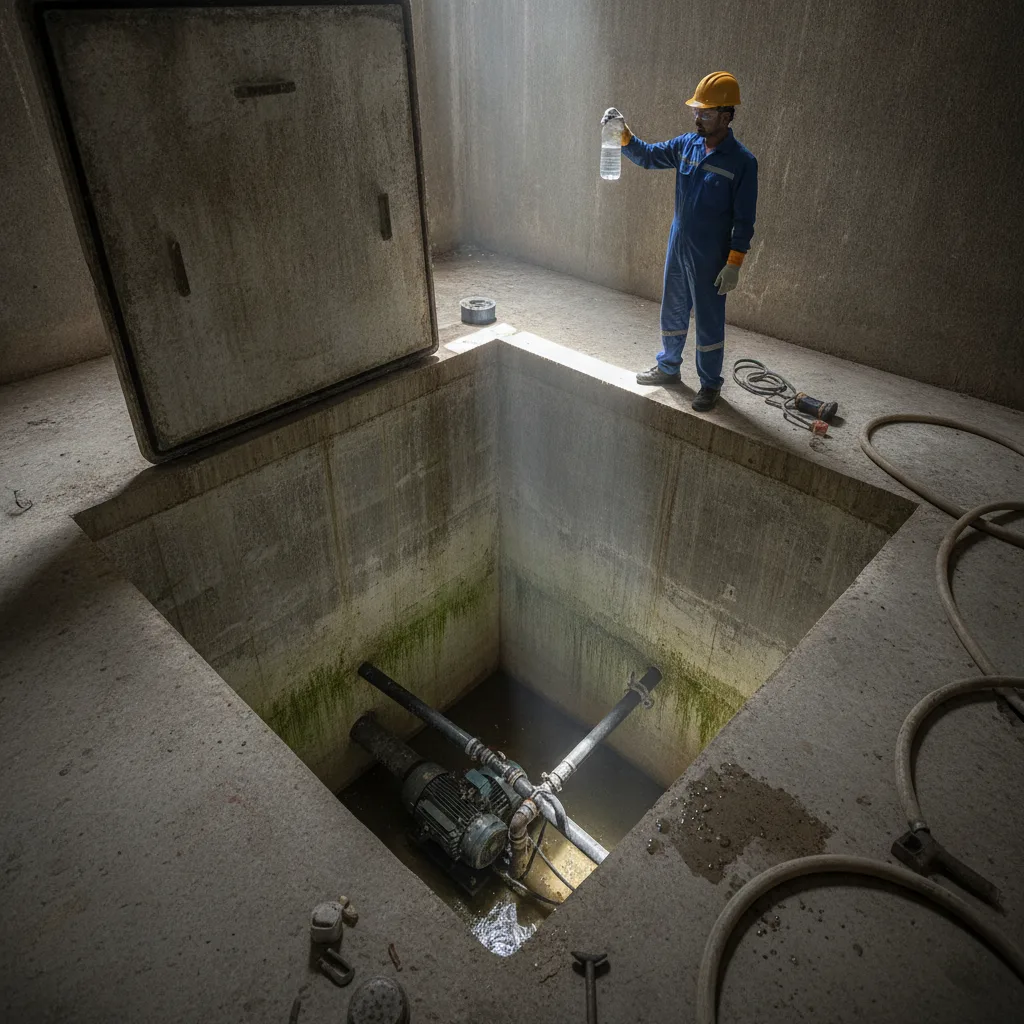
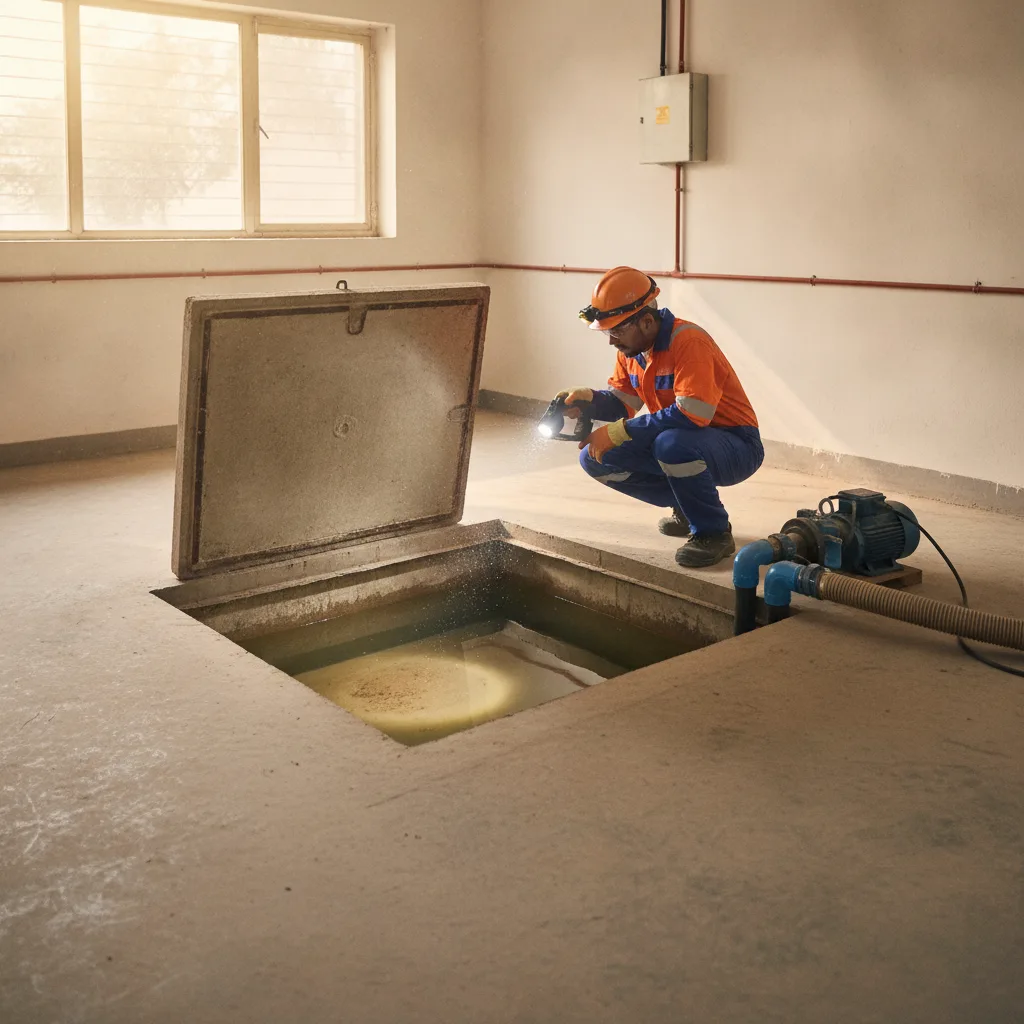
- Lid and vent inspection: cracked lids or missing mesh on vents are a direct entry point for mosquitoes and debris between cleanings.
Committees that skip the verification step often end up paying for a service that was never properly done. It's worth booking a professional water tank and sump cleaning service that documents each stage, so the RWA has proof for its records and for the next set of committee members.
How sludge actually builds up in a shared sump
Every time water enters an apartment sump, from BWSSB supply or tanker refills, it carries a small amount of dissolved minerals and fine sediment. On its own, that's harmless. Over months, though, this settles into a layer at the bottom.
Bengaluru's water, especially from borewells, tends to be harder than municipal supply. Calcium and magnesium in hard water don't just scale up pipes, they also settle as a fine grey sludge on the sump floor. In blocks that mix borewell and BWSSB water, this layer builds faster than owners expect.
Why lids and access covers matter more than people think
A cracked or ill-fitting sump lid is one of the most common issues KBS technicians flag on-site. It looks minor, but a gap even the width of two fingers is enough for a mosquito to enter and lay eggs on the water surface, and organic debris like leaves to fall in and start decomposing.
Decomposing leaf matter feeds bacteria and adds a faint but noticeable odour to stored water. Societies should get maintenance staff to visually check lids monthly rather than waiting for the six-monthly cleaning to notice.
Monsoon changes the equation
Between June and September, groundwater tables rise and surface runoff increases. In older buildings with hairline cracks in the sump wall, this can let contaminated groundwater seep in even when the lid is intact.
Humidity during this period also slows down how fast surfaces dry after cleaning, which gives algae and biofilm more of a window to establish before the tank is even refilled. Societies that adjust their schedule to clean just before monsoon sets in, and again once the heaviest rains pass, tend to see far fewer complaints in September and October.
A simple cost and frequency reference for committees
| Sump size (approx.) | Recommended frequency | Typical cleaning duration |
|---|---|---|
| Up to 5,000 litres | Every 6 months | 1 to 1.5 hours |
| 5,000 to 15,000 litres | Every 5 to 6 months | 2 to 3 hours |
| Above 15,000 litres (large complexes) | Every 4 to 5 months | 3 to 5 hours |
Larger complexes with heavier daily draw-off need more frequent attention simply because water turnover is higher and sediment gets disturbed and redistributed more often, rather than settling undisturbed.
Getting resident buy-in without the drama
Committees often struggle less with the technical side and more with getting residents to actually notice or care. A short WhatsApp update with before-and-after photos after each cleaning tends to work better than a formal circular nobody reads.
It also helps to tie the schedule to something residents already track, like the AGM or the festival calendar. A pre-Diwali and pre-monsoon clean, twice a year, becomes a habit rather than a debate every single time.
- Assign sump cleaning ownership to a named committee role, not a vague 'maintenance' line item.
- Clean every 5 to 6 months, more often for borewell-fed or larger complexes.
- Insist on photo or video proof and proper sludge removal, not just surface skimming.
- Check lids and vents monthly; a small gap is enough for mosquitoes to get in.
- Time one clean just before monsoon and one after the heaviest rains pass.
If your society's last cleaning is a mystery even to the committee, that's usually the first sign it's overdue. Reach out to KBS Home Services and Book Water Tank Cleaning for a schedule your RWA can actually stick to, and hand the next committee a system worth keeping.
Want this handled by professionals in Bengaluru? Book Water Tank Cleaning, or message us on WhatsApp.