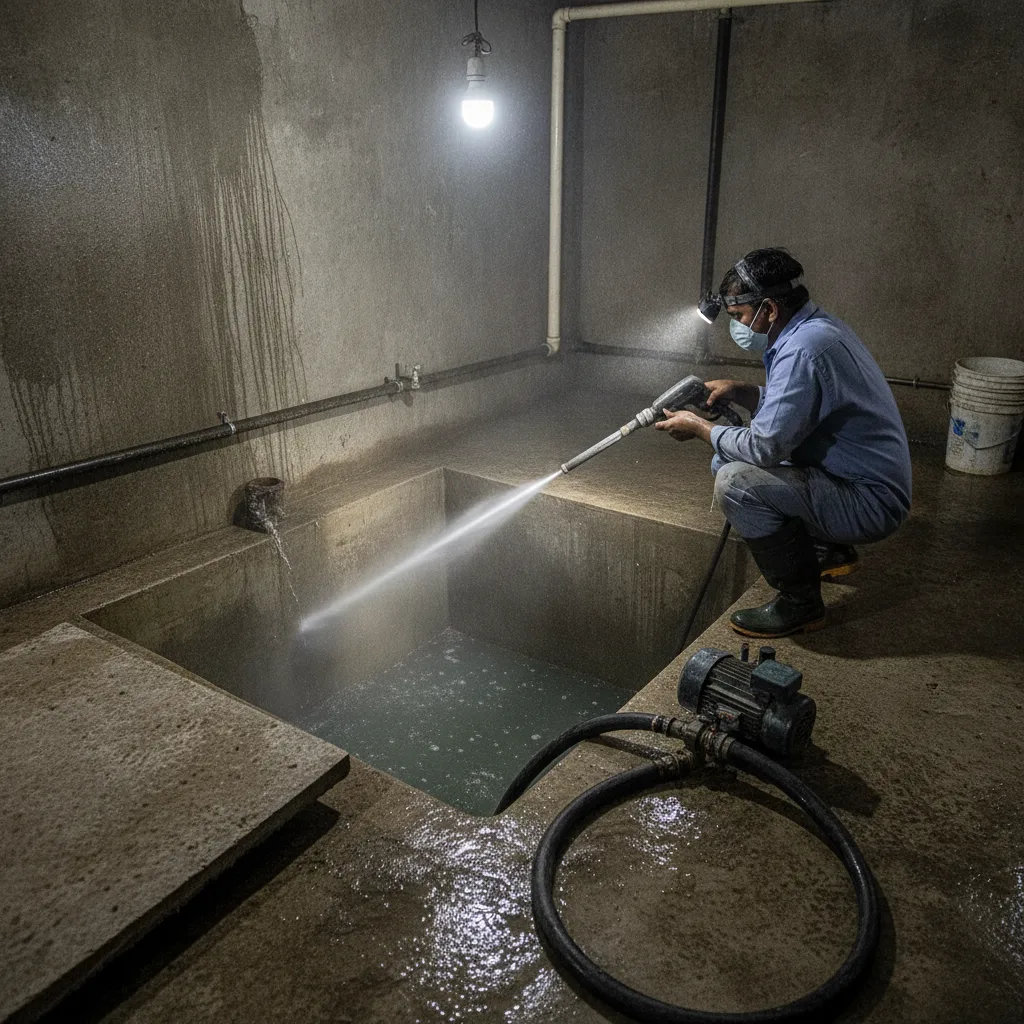
Pre-Monsoon Sump Cleaning Checklist for Bengaluru Homes: Sludge, Mosquito Larvae & BWSSB Water Quality

June rains in Bengaluru don't ease in gently. They arrive as sudden, heavy spells that flood storm drains, push silt into borewell recharge pits, and send debris straight into poorly sealed sump inlets. If you clean your sump now, before the first real downpour, you avoid months of cloudy water and that damp, earthy smell that settles into bathrooms once the monsoon takes hold.
Why pre-monsoon timing actually matters
A sump that's been sitting since October has had eight dry months to accumulate fine sediment. Hard water in Bengaluru carries dissolved calcium and magnesium that slowly precipitate out and settle as a grey-brown layer on the tank floor. This sludge doesn't dissolve. It waits.
When the first heavy rain hits, two things happen at once. Groundwater tables rise and can seep through micro-cracks in older sump walls, and surface runoff finds its way in through loose manhole covers. Both stir up that settled sludge and send it straight into your taps. That's why so many households notice yellowish or gritty water in the first week of monsoon, not because the rain itself is dirty, but because it's disturbing months of buildup.
Getting ahead of it with a professional sump cleaning service in May means your tank starts the season empty of sediment, so even if water does get disturbed, there's nothing sitting at the bottom to churn up.
The checklist: what to inspect before the rains
- Manhole cover seal: Check the rubber gasket or cement seal around your sump's inlet cover. If it's cracked or sitting loose, surface water will find that gap during the first heavy spell.
- Sludge depth at the base: Shine a torch down if you can see the bottom. More than an inch of grey sediment means it's overdue.
- Overflow pipe position: Make sure it's not blocked by leaves or nesting debris from dry-season birds and lizards. A blocked overflow pushes dirty water back into the tank instead of out.
- Inlet pipe from borewell or BWSSB line: Look for any visible staining or orange tint, a sign of iron content that needs a different cleaning approach than plain silt.
- Tank wall for algae film: A slimy green coating near the waterline means light is getting in somewhere, usually through a cracked lid, and that needs sealing, not just cleaning.
- Mosquito larvae check: Look for small wriggling movement near the surface, especially in overhead tanks that haven't been opened in weeks.
Sludge isn't just dirt, here's what it actually is
Technicians who open up a sump after eight months typically find three layers. The top is loose silt that moves with water flow. Below that sits a denser clay-like layer, often dark grey, formed from mineral deposits binding with organic matter like leaf litter or insect debris that entered through small gaps. At the very bottom, especially in older sumps, there's sometimes a thin biofilm layer, a bacterial mat that forms when stagnant water sits undisturbed for long stretches.
None of this is visible from the top. Water can look perfectly clear while an inch of this sits below. That's the whole reason manual draining and scrubbing beats just running a pump through it. A pump moves water. It doesn't touch what's stuck to the walls and floor.
Mosquito larvae: the problem rains make worse, not better
People assume mosquitoes are a stagnant-water, dry-season problem. Monsoon actually makes overhead tanks worse for breeding, not better. Rain fills gaps around loose tank lids, and warm humid air slows evaporation, giving larvae a stable, undisturbed environment for their full life cycle, about 8 to 10 days from egg to adult in Bengaluru's climate.
If you've noticed small dark specks that move when you shine a light into your tank, that's almost certainly larvae, not dirt. A single cleaning that scrubs the tank walls and seals the lid properly breaks this cycle completely, because female mosquitoes need still water to lay eggs in the first place. For a deeper look at this exact risk, there's a detailed breakdown of how overhead tanks become breeding grounds worth reading if this is a recurring issue at your place.
What BWSSB expects, and what's often misunderstood
BWSSB doesn't mandate a specific cleaning frequency for private residential sumps the way it does for apartment complexes with shared water systems. What it does strongly recommend is cleaning both sump and overhead tank at least twice a year, and most plumbers in the city will tell you pre-monsoon and post-monsoon is the practical rhythm to follow.
Where BWSSB does get involved is water quality complaints. If your area reports supply disruptions or main line repairs nearby, there's a real chance sediment or even minor contamination entered the supply line itself, not just your tank. In that scenario, cleaning your sump alone won't fix discoloured water coming from the source. It's worth checking with neighbours whether the whole street's line was affected before assuming it's purely a tank issue.
Borewell-dependent homes need an extra step
Areas relying heavily on borewell water, rather than BWSSB supply, see faster mineral buildup because groundwater here tends to carry higher dissolved solids. If your tank gets borewell water only, inspect for scaling (a white, crusty deposit) on the tank walls in addition to the usual sludge check. This scaling needs light acid-safe descaling, not just a scrub, or it keeps reforming within weeks.
A quick note on timing this right
Late April to mid-May is the sweet spot in Bengaluru. Early enough that tanks are still relatively dry and accessible, late enough that you're not doing it so far ahead that two months of dust resettles before the rains actually arrive. Booking a cleaning in the first week of June, right as pre-monsoon showers start, is cutting it close.
- Clean sumps in late April to mid-May, before rains disturb months of settled sludge
- Check manhole seals and overflow pipes, the two entry points for storm runoff
- Mosquito larvae thrive in monsoon humidity inside sealed tanks, not just stagnant dry-season water
- BWSSB recommends twice-yearly cleaning but doesn't mandate frequency for private sumps
- Borewell-fed tanks need descaling in addition to desludging due to higher mineral content
If your sump hasn't been opened since last monsoon, now's the window. Reach out to Book Water Tank Cleaning with KBS and get it sorted before the first real downpour hits your street.
Want this handled by professionals in Bengaluru? Book Water Tank Cleaning, or message us on WhatsApp.