Dengue Prevention at Home: Does Stagnant Water in Your Sump Attract Mosquitoes?

Every monsoon, BBMP fogging vans do their rounds and everyone assumes the mosquito problem is outside, in drains and puddles on the street. Fewer people check their own sump. But a cracked lid or a loose inspection cover on an underground tank is exactly the kind of dark, still, undisturbed water that Aedes aegypti, the dengue-carrying mosquito, looks for to lay eggs.
Does stagnant water in your sump attract mosquitoes? Yes, if there's any gap for a mosquito to get in and the water sits undisturbed for more than a few days. This isn't about the water itself being dirty. It's about access, darkness, and stillness, the three things a female mosquito needs to lay eggs safely away from predators and sunlight.
Why sumps are a near-perfect breeding spot
Underground sumps stay cool and dark all year, which is ideal for mosquito larvae development. Unlike an open drum or a flowerpot saucer that dries out in the sun, a sump holds water for weeks or months without evaporating.
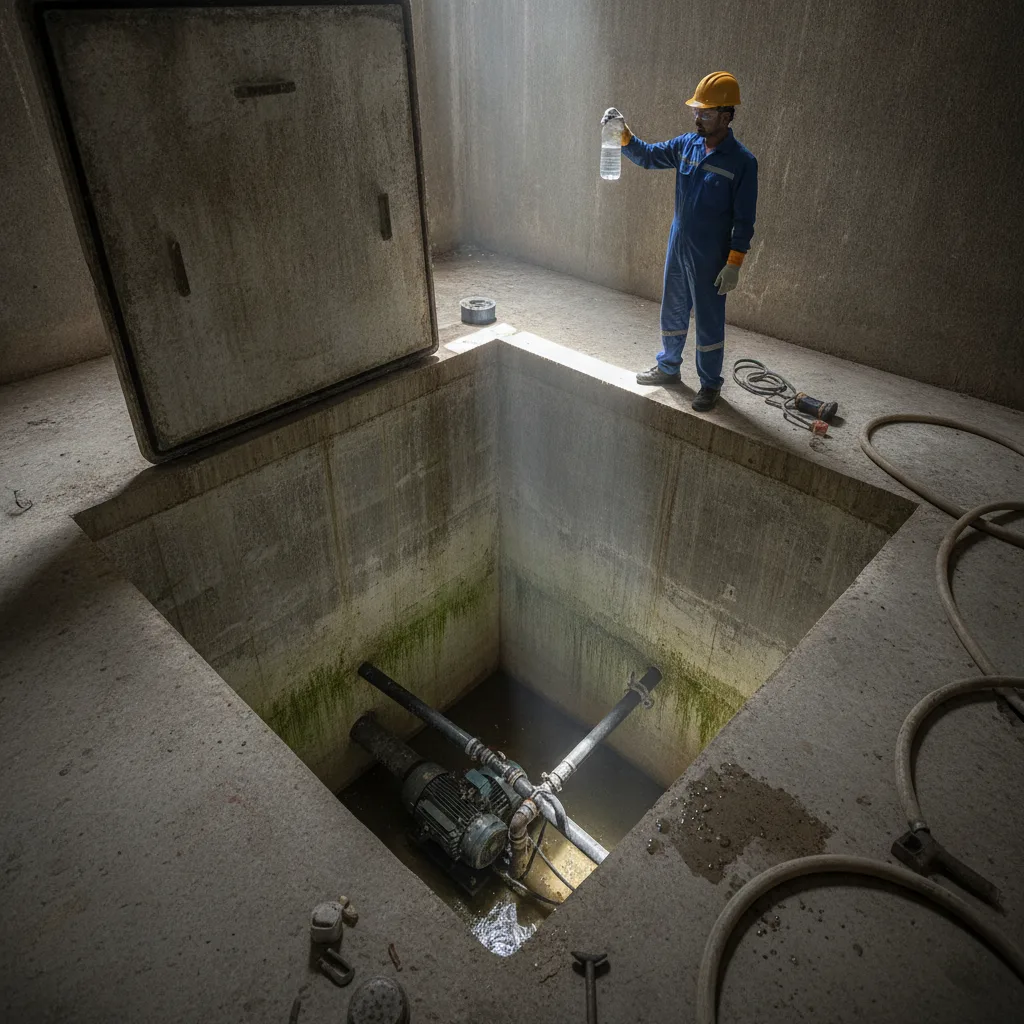
Add a damaged lid, a missing mesh on the overflow pipe, or a gap around the inspection chamber, and you've built a five-star mosquito nursery. We've opened sumps during routine cleaning and found the underside of the lid coated in tiny white egg rafts, something the homeowner had no idea was happening two feet below their feet.
The actual mechanism: how eggs turn into a dengue risk
A female Aedes mosquito lays eggs just above the waterline, often on the damp inner wall of the sump or tank. Those eggs can survive dry conditions for months, then hatch within an hour of being submerged again, which is exactly what happens when water levels rise after topping up or after rain seeps in through a poor seal.
From egg to adult mosquito takes about 7 to 10 days in Bengaluru's climate. That means a sump that goes unchecked for even two weeks after the first eggs appear can be producing new adult mosquitoes on a rolling basis, right inside your compound.
Signs your sump or tank might already be a breeding source
- The lid doesn't sit flush, or you can see daylight through a gap when it's closed
- The overflow or vent pipe has no mesh screen fitted over the opening
- You notice small mosquitoes near the sump chamber or motor room, especially at dusk
- Water hasn't been used or circulated in the sump for over a week (common in homes with a second overhead tank supply)
- There's visible algae or a greenish film at the waterline, which holds moisture even when the main water level drops
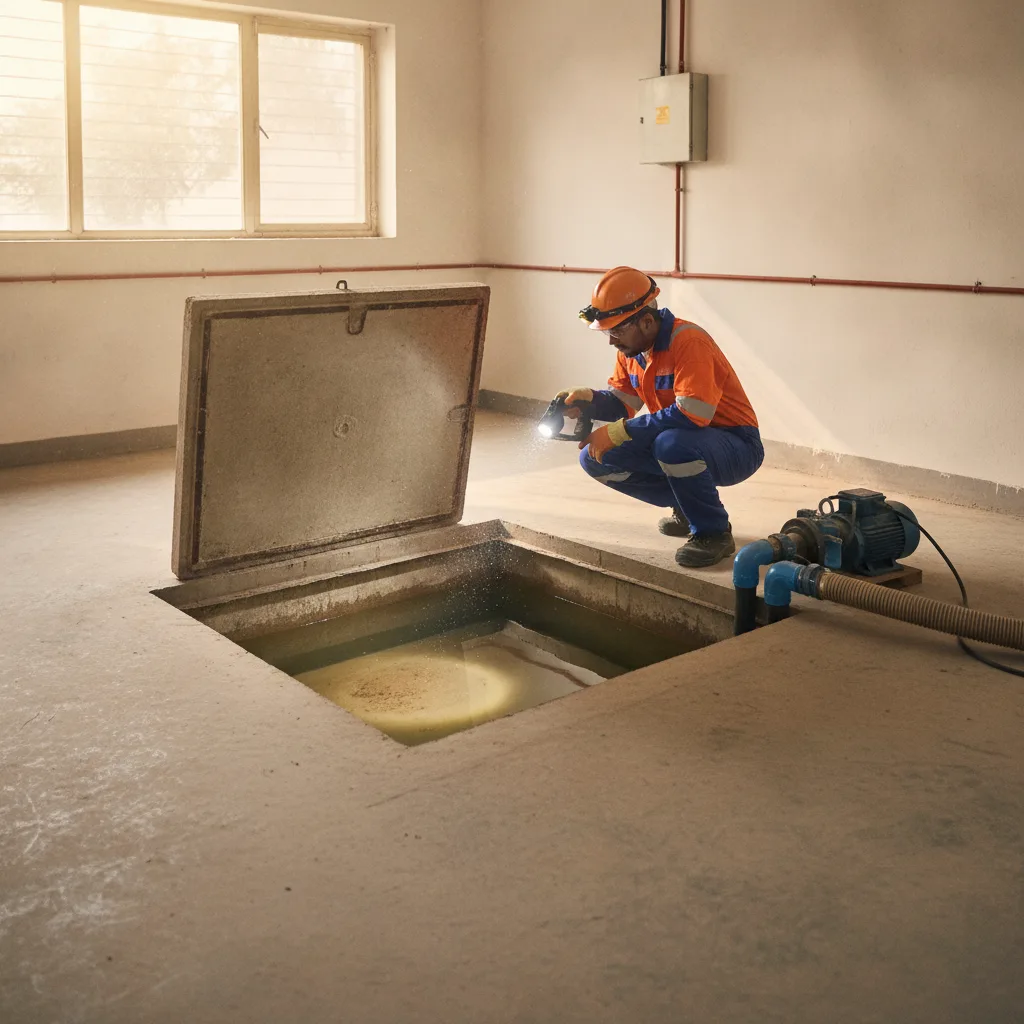
If two or more of these apply, it's worth having someone physically open the chamber and check, not just assume it's fine because the water looks clear from the top.
What actually stops mosquitoes from breeding in your tank
Chlorine tablets and mosquito dunks get recommended a lot online, but for a sump that supplies drinking and washing water, adding chemicals meant to kill larvae isn't something we'd suggest doing yourself. The safer, more permanent fix is mechanical: seal every entry point.
- Fit a tight-sealing, warped-free lid, cement lids crack over 3 to 4 years and rarely sit flush after that
- Cover the overflow and vent pipe openings with a fine stainless steel or nylon mesh, secured so it can't be pushed loose
- Check the inspection chamber gasket or rubber seal annually, these perish faster in Bengaluru's humidity than people expect
- Keep the sump on a proper draw-and-refill cycle rather than letting water sit idle for weeks
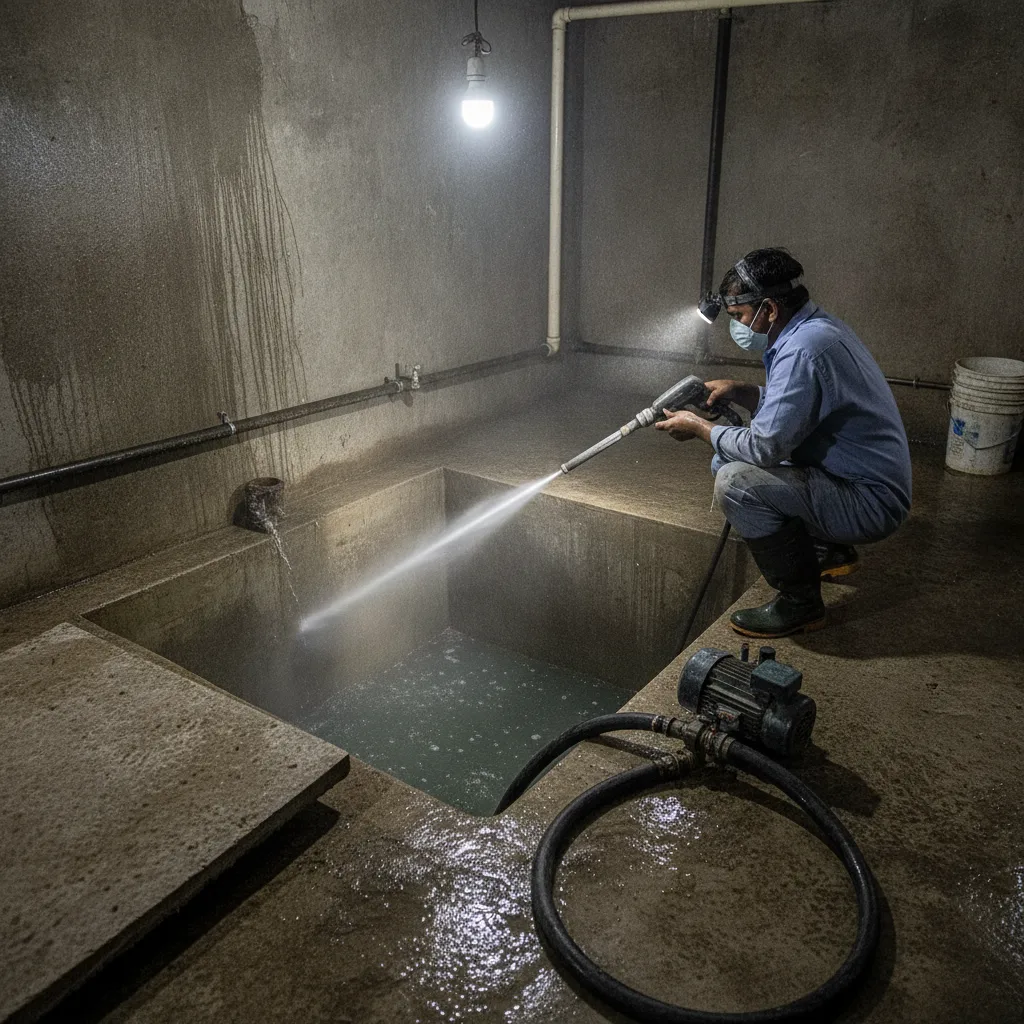
None of this replaces regular cleaning though. A sump due for its scheduled clean often has silt buildup along the walls above the waterline exactly where eggs get laid, and that gets scraped and flushed out during a proper service. It's one of the reasons a professional water tank and sump cleaning service checks the lid, vents, and seals as standard, not just the water inside.
Overhead tanks carry the same risk, just less obvious
People assume overhead tanks are safer since they're elevated, but a loose ballcock chamber lid or a tank left without its cover fully closed after maintenance work is just as inviting. The tank sits still for days between fills, especially in homes with big storage capacity, giving mosquitoes the exact still-water window they need.
In apartment complexes we've serviced, one of the most common gaps is the overhead tank's cleaning access hatch left slightly ajar after the last service, sometimes for months. It's a five-minute fix once someone checks it.
When to bring in a professional versus checking it yourself
You can and should visually check your own lids and mesh screens every couple of months, that takes five minutes with a torch. But actually clearing existing larvae, scrubbing algae from the waterline, and resealing chambers properly is where it makes sense to call in a team that does this daily and knows what a compromised seal looks like versus one that just needs a wipe down.
This matters more during Bengaluru's monsoon months (June to September) when humidity slows drying and rainwater seepage through poor seals becomes more common. It's also worth noting, dengue prevention in Bengaluru during monsoon season depends heavily on exactly this kind of household-level check, since civic fogging can't reach water sitting inside a sealed private tank.
- Mosquitoes need still, dark water and a way in, a damaged sump lid or open vent pipe provides both
- Eggs can hatch within an hour of water rising again, even after surviving weeks in dry conditions
- Mesh screens on overflow pipes and a flush-fitting lid are the most effective physical barriers
- Overhead tanks are just as vulnerable if the access hatch isn't fully sealed
- Routine cleaning catches larvae and algae buildup that a visual check from the top often misses
If you haven't had your sump or tank opened and inspected in the last six months, that's usually the point where small gaps turn into real breeding sites. KBS has been doing this across Bengaluru for over 8 years, and checking seals and vents is now a standard part of every visit. Book Water Tank Cleaning and get your sump properly inspected, cleaned, and sealed before the next spell of rain gives mosquitoes another chance.
Want this handled by professionals in Bengaluru? Book Water Tank Cleaning, or message us on WhatsApp.