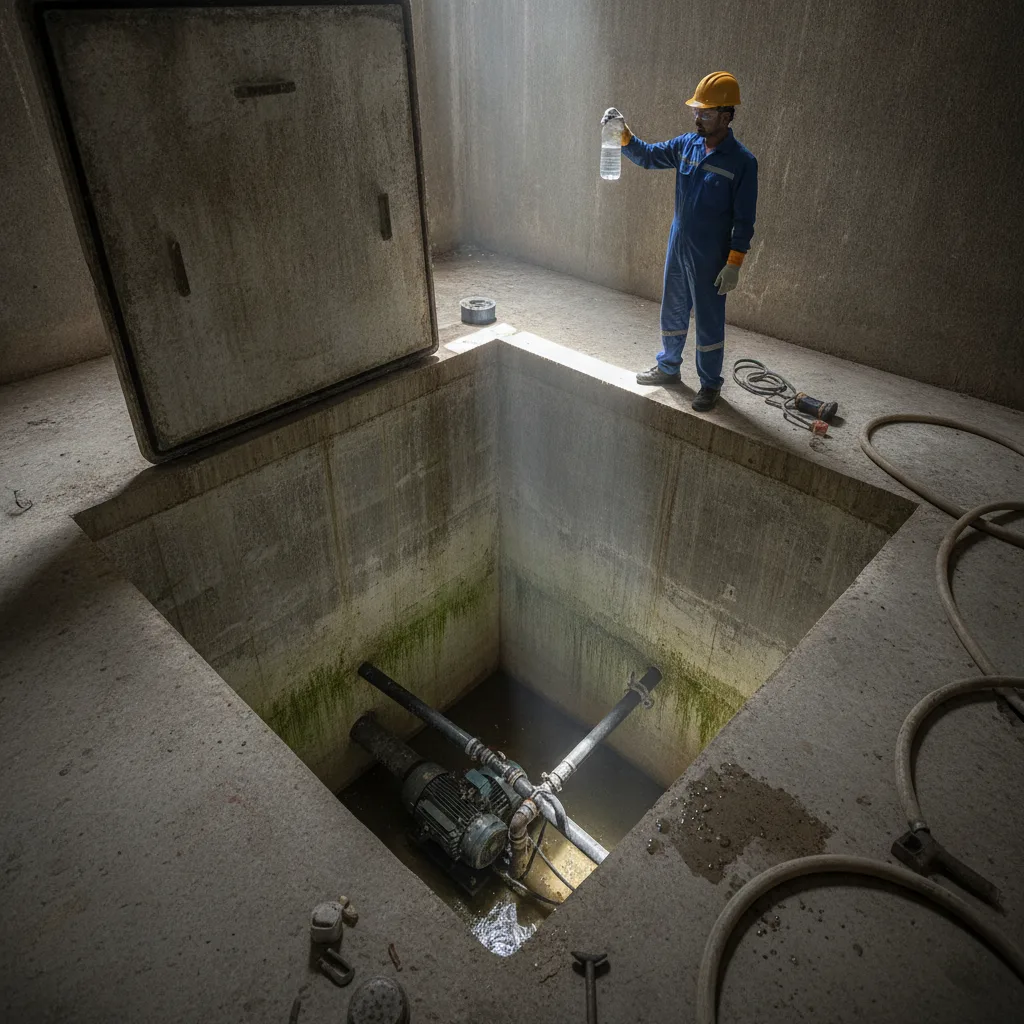
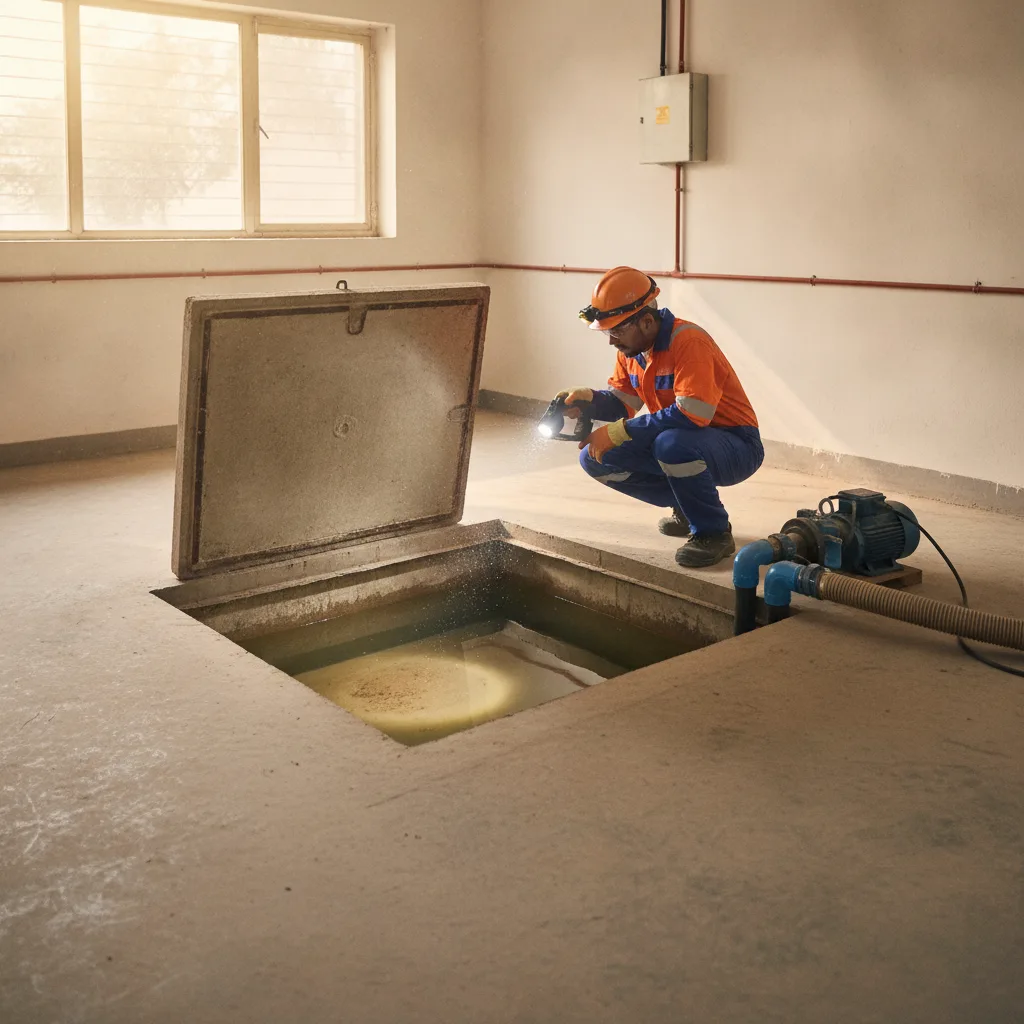
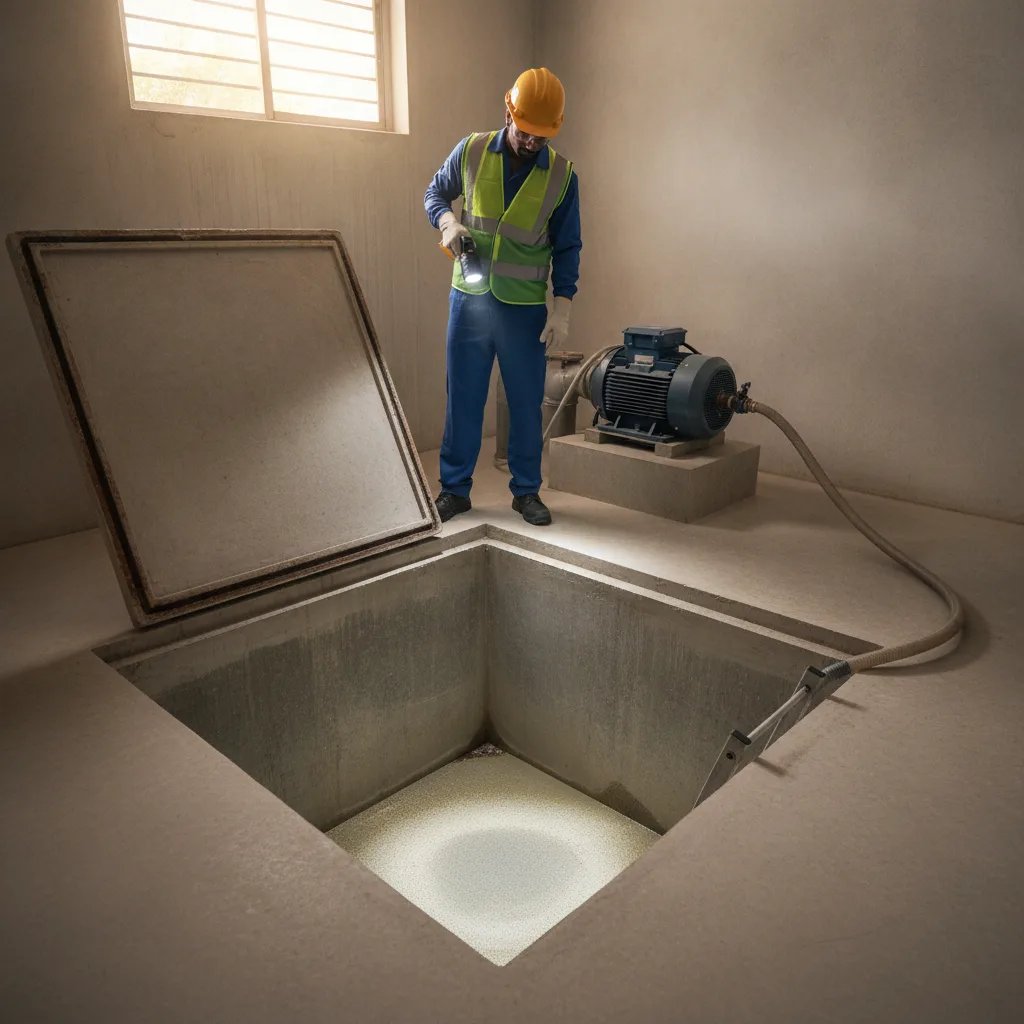
Sump Cleaning for Apartments in Bangalore: Frequency, Cost, and What Residents Must Know
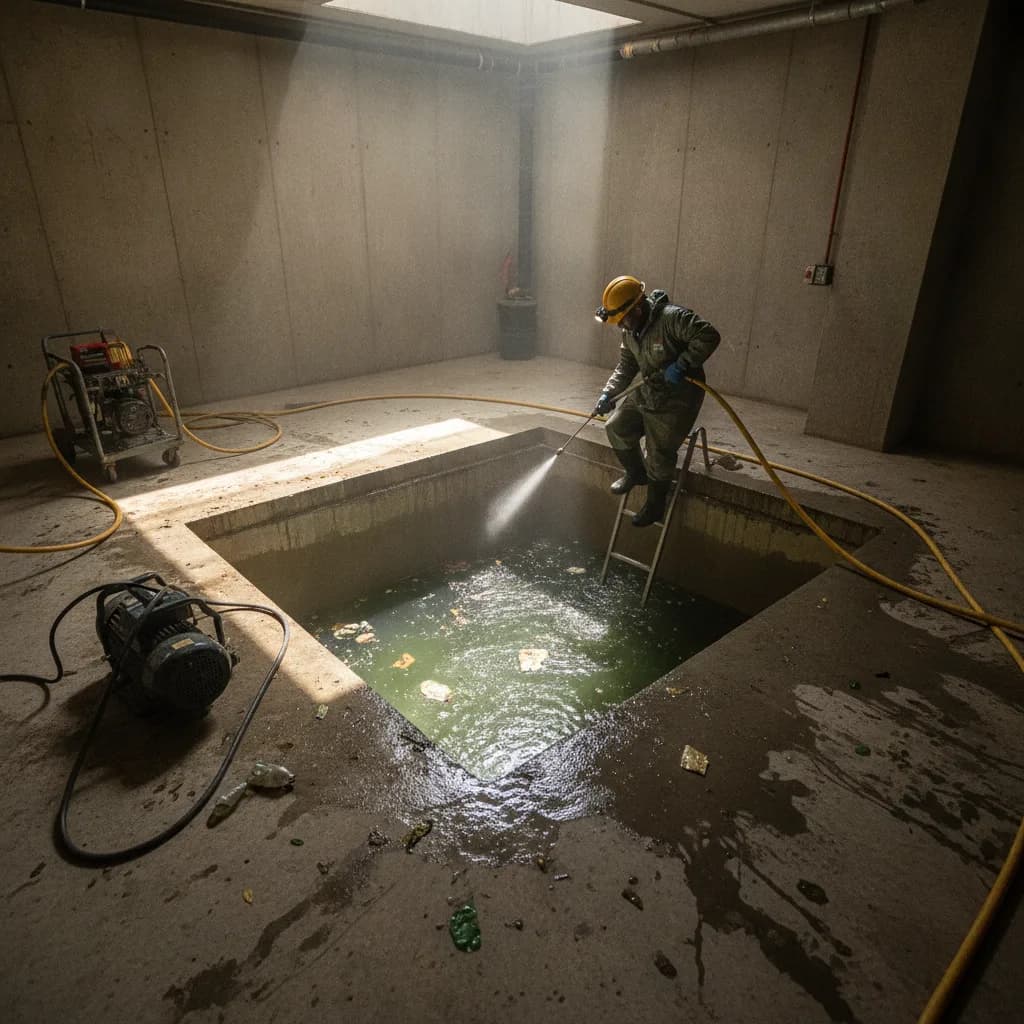
In most Bangalore apartment complexes, sump cleaning sits quietly on the maintenance list until something goes wrong: an odd smell in the water, a few flats reporting stomach upsets, or a contamination alert for the zone. By then you are playing catch-up. It is worth treating sump cleaning as routine prevention, not a reaction. Here is how often apartments should clean, what it costs, and what residents should know before the day.
How Often Should an Apartment Clean Its Sump?
The baseline is every six months for borewell-fed complexes and every twelve for those mainly on BWSSB supply. Higher water turnover in larger buildings settles sediment continuously, so most apartments do best on a six-month cycle. Use size and usage as a guide:
| Complex size | Sump volume | Clean every |
|---|---|---|
| Small (10-20 flats) | 5,000-10,000 L | 6 months |
| Medium (20-50 flats) | 10,000-20,000 L | 6 months |
| Large (50+ flats) | 20,000 L and up | 4 to 6 months |
Large sumps can hold several inches of sludge within months of a skipped clean, so bigger complexes lean towards the shorter interval. Booking a professional sump cleaning on a fixed cycle keeps that buildup from reaching the overhead tanks and the taps.
What Does It Cost?
Cost depends on sump size, access, and whether disinfection or minor repairs are needed. A standard apartment sump usually runs ₹2,500 to ₹6,000, which should include draining, sludge removal, high-pressure jetting, disinfection, and refilling. Larger sumps, or ones under slabs that need a pump to drain, go up to ₹8,000 to ₹10,000. Always ask for an itemised quote covering labour, disinfection, and sludge disposal. A very low quote usually means the disinfection is being skipped, which is a false economy.
What Residents Should Know Before the Day
A sump clean needs a little coordination. The sump is emptied, so the water supply is off for four to six hours, and the association should tell residents at least 48 hours ahead so they can store water. The sump lid or manhole also has to be reachable; a cover buried under a new paver block or planter just wastes time on the day. And remember that cleaning the sump does not clean the overhead tanks, which are a separate job best done on the same visit.
What Actually Builds Up Inside a Sump
To see why the interval matters, it helps to know what settles down there. Borewell water carries fine sand and silt that the pump draws up from the ground, and being heavier than water, it sinks and stays on the sump floor. BWSSB supply brings its own load of pipe sediment, and after heavy rain the mains can carry in whatever it picked up along the way. Over months this becomes a compacted layer of grey-brown sludge.
On top of the sediment, the sump walls grow biofilm, a slippery bacterial layer that thrives in the dark, cool, still conditions underground. Any organic matter that gets in, a stray leaf or insects through a poorly sealed lid, feeds it. Clear-looking water can sit above several inches of this without any visible sign at the tap, which is exactly why a visual check is misleading and a scheduled clean matters.
Why a Sump Clean Is Skilled Work
A sump is a confined space, and that changes the job. Air does not circulate well in a deep underground tank, and stale water can give off gases, so a careful team never sends one person in alone. One technician works inside while a second stays stationed at the manhole, and the sump is aired out before anyone enters. This is not box-ticking, it is the difference between a professional crew and the cheapest quote.
The work itself is drain, hand-scrub every wall and the floor, treat the inlet and outlet pipes, apply a food-grade disinfectant, rinse, and drain the first refill once to carry away any residue. Done properly it takes hours, not minutes, and the removed sludge is taken away rather than pushed down a drain to settle again nearby.
Three Common Myths
Chlorine tablets replace cleaning. No. Chlorine kills some surface bacteria but does nothing about settled sludge, which harbours pathogens and feeds regrowth. You would be disinfecting a dirty container.
Clear water means a clean sump. Sediment sits at the bottom, out of sight. A sump can pour clear water while holding a thick layer of black silt below.
Once a year is enough for everyone. Frequency depends on water source, size, and usage. A single blanket rule does not fit Bangalore's mix of borewell and BWSSB supply.
Planning your complex's next cycle? You can book a water tank and sump cleaning with KBS and get an itemised quote before the day.
Want this handled by professionals in Bengaluru? Book Water Tank Cleaning, or message us on WhatsApp.