Effective Termite Control in Bangalore: Protecting Your Home from Monsoon Damage
Termites are among the most damaging pests a Bengaluru home can face, and they usually work unseen until the damage is done. The monsoon makes it worse: damp soil and humid air let colonies grow and forage closer to your foundation, and many species swarm right before the rains. Here is why homes here are vulnerable, how to spot termites early, and what proper treatment involves.
Why Bengaluru Homes Are Vulnerable
A few local factors combine to make termites common here. The red loamy soil, rich in organic matter, suits subterranean termites building colonies. Monsoon rain saturates that soil and raises humidity, which termites need, and everyday dampness from leaks or poor drainage does the same off-season. Older timber-framed homes are naturally more exposed, but modern concrete buildings are not immune, since termites push through tiny foundation cracks. The city's greenery adds decaying wood and roots that feed and shelter them.
Subterranean or Drywood: Why It Changes the Treatment
Nearly all serious termite damage in Bengaluru homes comes from subterranean termites, which nest in the soil and travel up into the structure through mud tubes. They need constant contact with moist ground, which is precisely why a soil and foundation barrier works against them: cut off the damp soil and you cut off the colony.
Drywood termites are less common here and live entirely inside the timber they eat, needing no soil contact at all, so they are treated by targeting the infested wood directly rather than the ground. Telling the two apart matters, because a soil treatment does nothing for a drywood colony inside a door frame, and treating wood alone will not stop a subterranean colony that keeps feeding from the garden. Settling this is the first job of a proper inspection.
How to Spot Termites Early
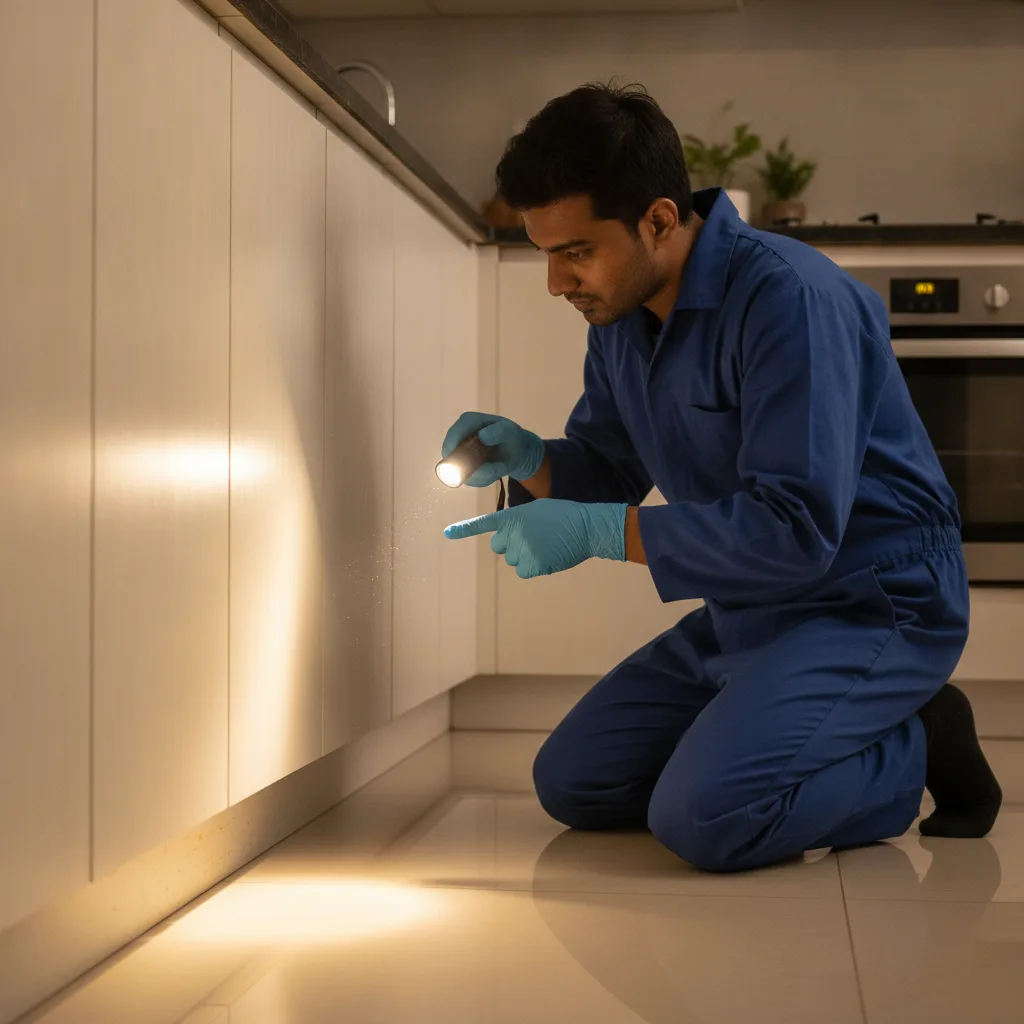
Termites work behind walls and under floors, so early signs are easy to miss. Look for:
- Mud tubes: pencil-width mud tunnels on walls, foundations, or beams, which they use to travel safely.
- Hollow or damaged wood: wood that sounds hollow when tapped, or blistered and darkened patches in flooring and furniture.
- Discarded wings: small piles near windowsills or doors after a swarm, resembling fish scales.
- Frass: tiny sawdust-like droppings left by drywood termites in and around furniture.
- Sticking doors and windows: frames that warp and jam as termites tunnel through them.
If you are unsure whether you are seeing termites or flying ants, winged termites have straight bodies and two pairs of equal-length wings, while winged ants do not. Mud tubes and piles of small discarded wings are the clearest signs of termites.
Why the Monsoon Is Peak Season
Rain saturates the soil and gives subterranean termites the moisture to expand and forage near your foundation. Many species swarm in the humid weather right before or at the start of the rains, sending out winged termites to start new colonies. Damp also softens wood, making it easier to penetrate, and heavy rain can wash away the surface signs that would otherwise warn you early.
Why Professional Treatment Matters
DIY sprays give temporary relief but rarely reach a colony that runs deep underground or inside the structure. A surface spray kills the few workers it touches while the queen and the bulk of the colony, often metres away in the soil, keep breeding and rebuilding. That is the trap with termites: what you can see is a fraction of what is there.
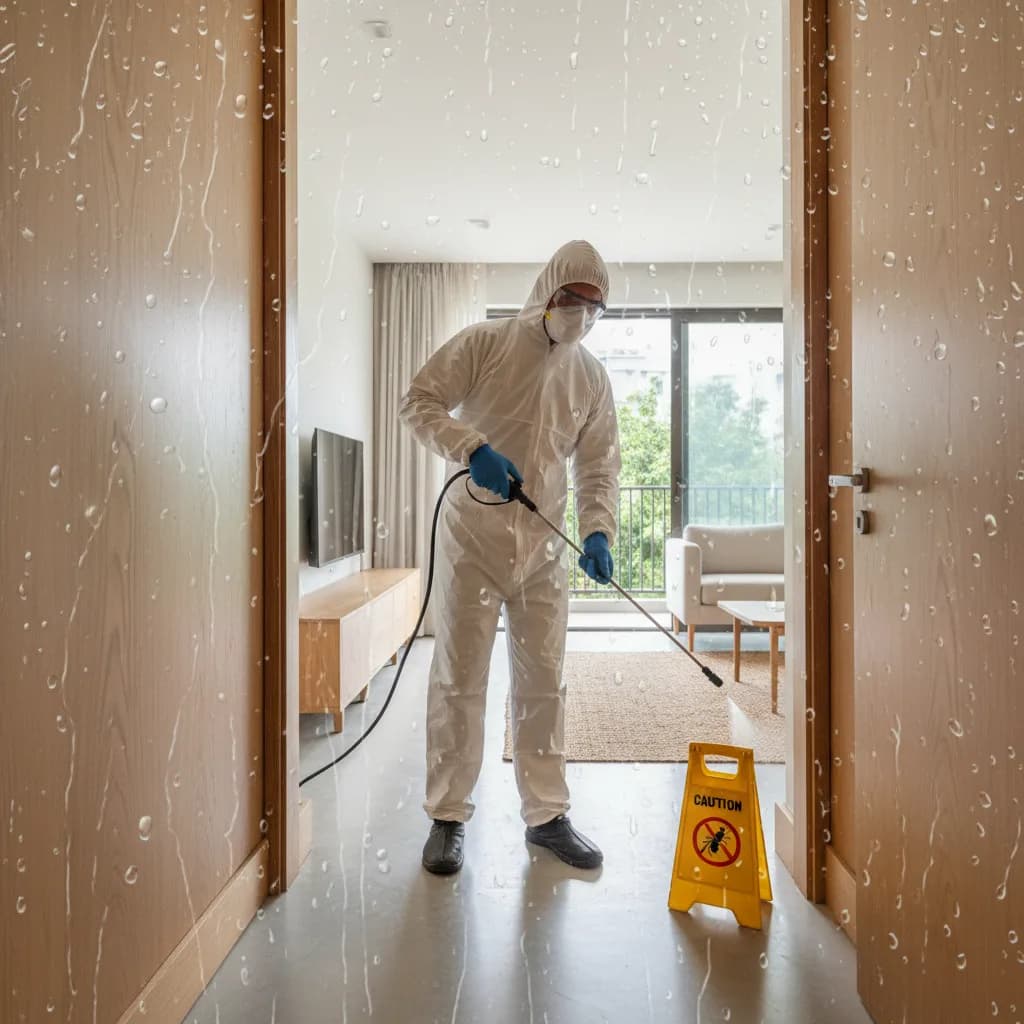
Professional treatment starts with identifying the species and the extent of the infestation, then targets the colony at its source, usually by injecting termiticide into the soil around the foundation to create a continuous barrier, treating affected wood, and setting bait stations to intercept activity. Modern soil treatments work in part because the termites carry the product back through the colony on contact, so the effect reaches beyond the point of application. A good service also advises on prevention and offers follow-up checks. When there is an active colony, it is worth booking a professional pest control service rather than treating the symptoms.
What a Treatment Involves
A thorough job starts with an inspection of the property, checking basements, wooden fixtures, and damp-prone areas for entry points and active colonies. From there the team builds a plan suited to the home, whether a barrier treatment around an existing building or bait stations to monitor and intercept termites. Treatment is applied precisely, and follow-up visits confirm the colony is gone and the barrier is holding.
Prevention holds the ground you win. Fix the leaks and drainage that keep soil and walls damp, keep firewood, timber, and cardboard off the ground and away from outside walls, leave a clear gap so you can spot mud tubes on the foundation, and have wooden structures looked at once a year. None of it replaces treating an active colony, but together it makes your home a far less inviting place for the next one.
Worried about termites before the rains? You can book a pest control service with KBS and start with a proper inspection.
Want this handled by professionals in Bengaluru? Book KBS Pest Control Service, or message us on WhatsApp.