How to Identify If Your Sump Water is Contaminated in Bengaluru (2026 Guide)

Whether your home runs on BWSSB Kaveri water, hard borewell water, or a mix, contaminated sump water is a real risk, and it is not always obvious. Catching it early protects your family's health and saves expensive plumbing repairs. Here is how to tell if your sump water is contaminated, using checks you can do yourself, and what to do if it is.
Visual Signs
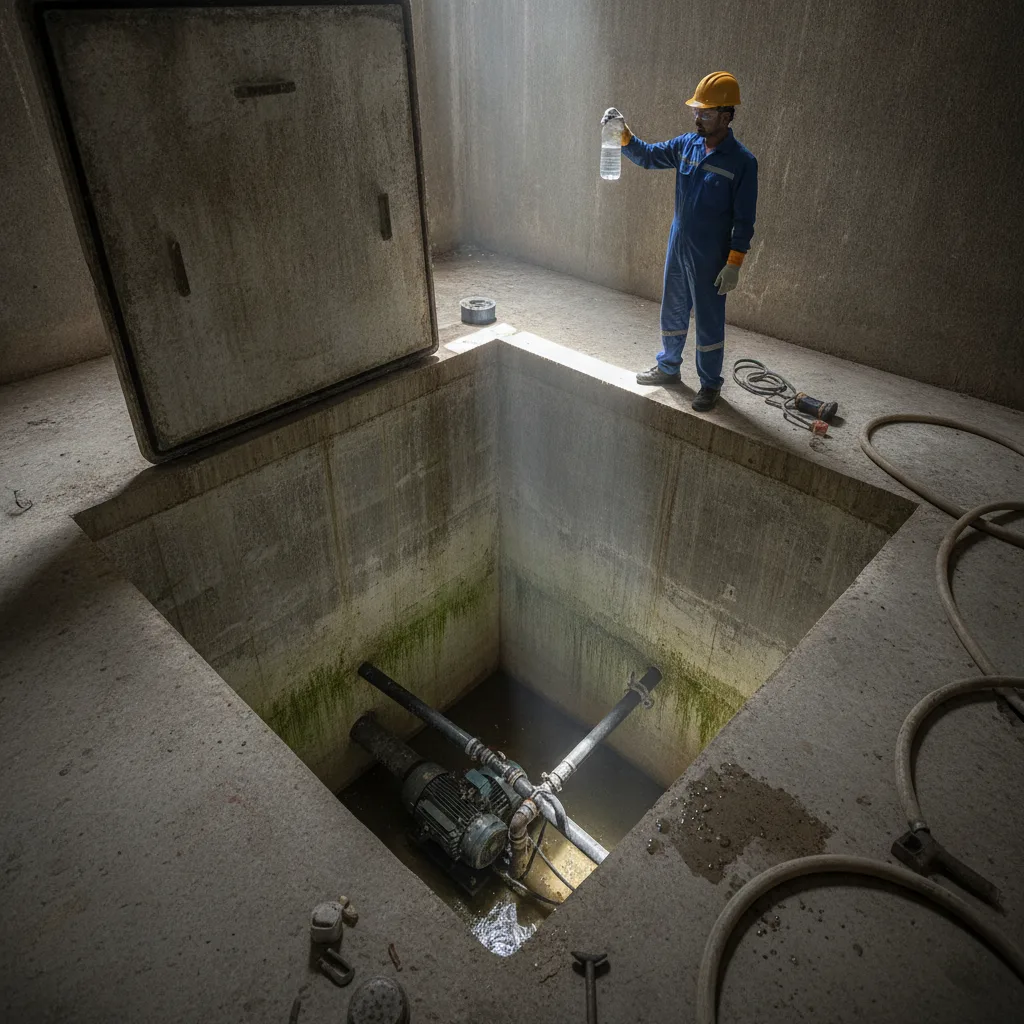
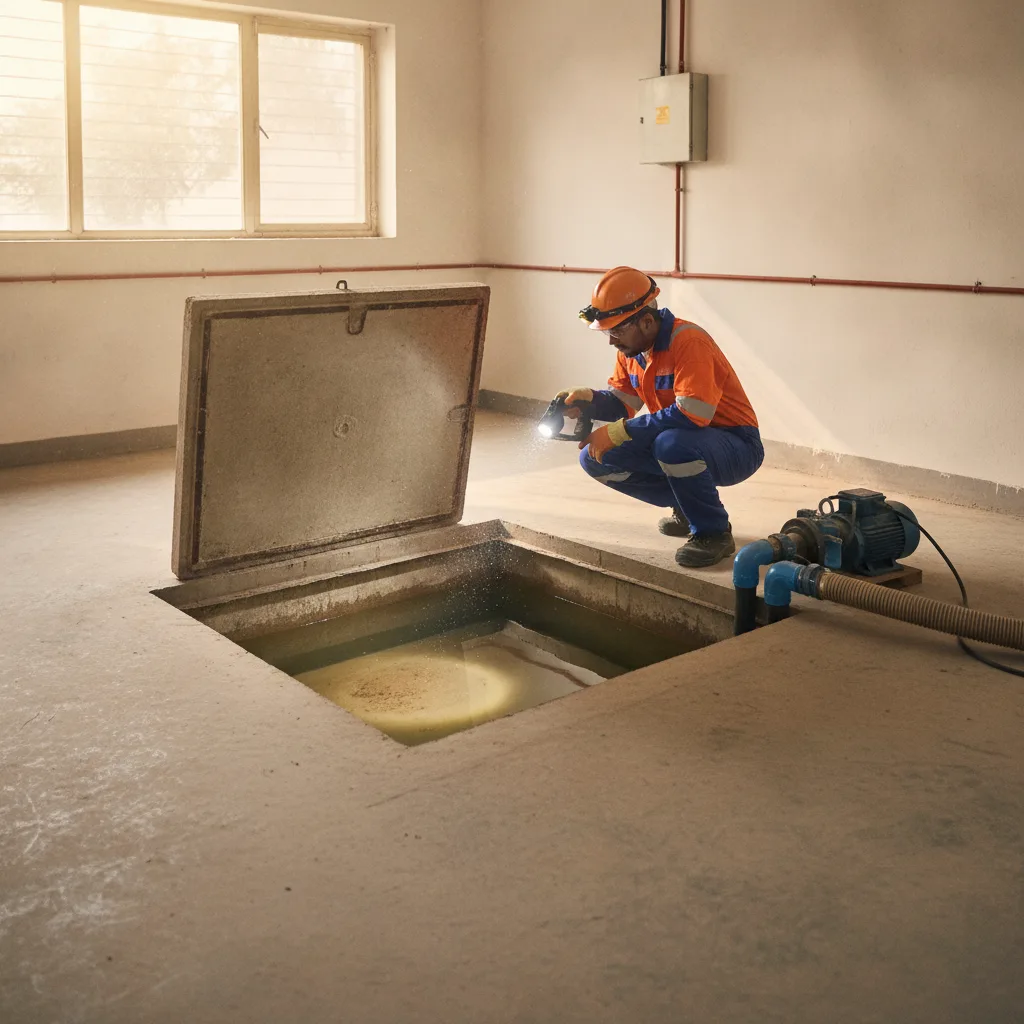
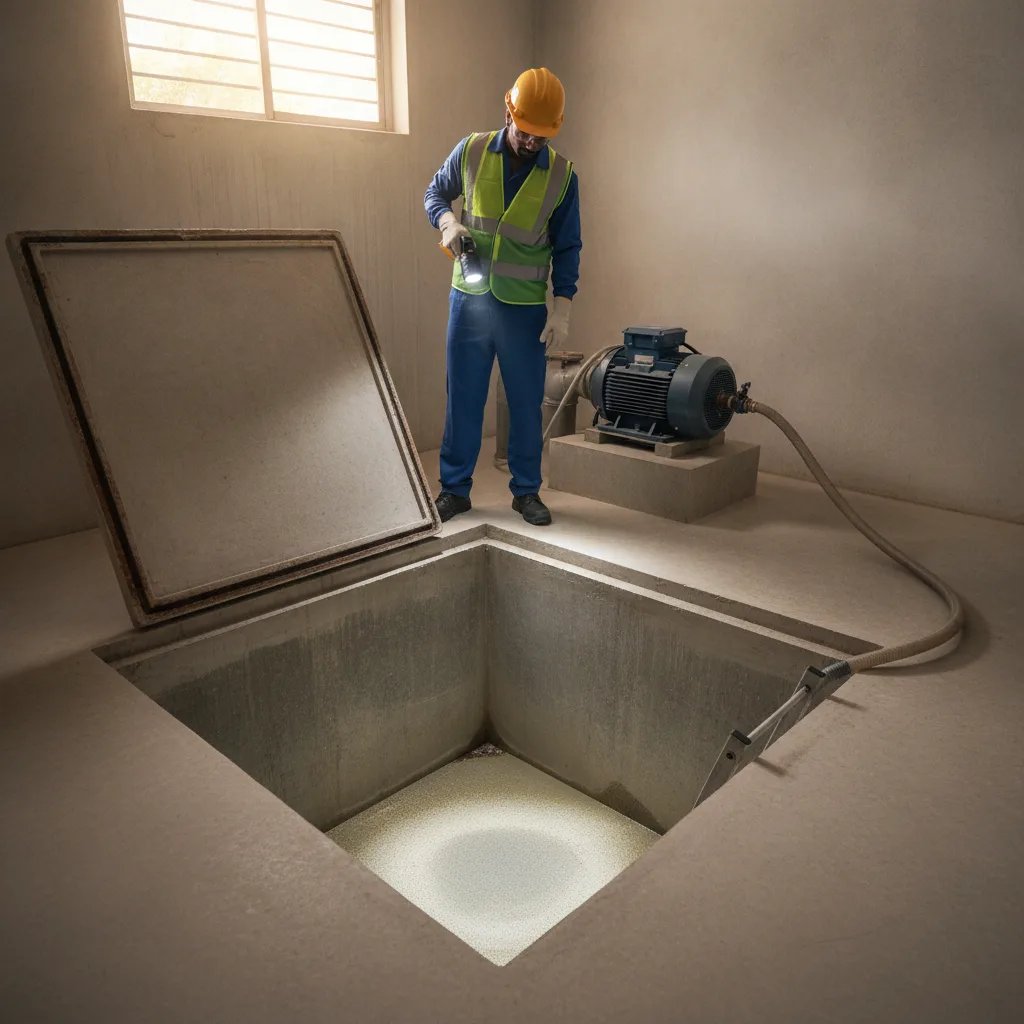
The first clue is often visible. Clean sump water should be clear with no discolouration. Watch for brown or yellow tints, which mean rust or high iron; greenish water, which means algae from light getting in; a cloudy or milky look, which points to bacteria or suspended particles; and dark grey or black water, which signals sewage infiltration or heavy bacterial growth. Open the lid in daylight and shine a torch on the surface. If you cannot see the bottom of even a shallow sump, contamination is present.
Odours
Contaminated water gives off smells clean water never should. A rotten-egg smell is hydrogen sulphide from anaerobic bacteria, common in a closed sump in warm weather. A musty or earthy smell points to algae, mould, or decaying organic matter. A chemical or fuel-like smell suggests seepage from outside. A sewage-like stench is the most serious sign and needs immediate attention.
The Jar Test You Can Do at Home
This needs no equipment. Fill a clean, clear glass jar from the sump tap, set it on a white surface in good light, and leave it undisturbed for at least 30 minutes. Then look: brown or reddish sediment at the bottom means rust and minerals; black or grey sediment suggests sewage contamination; an oily film on top, or cloudiness that will not settle, points to chemical or bacterial contamination. It is a quick, honest first check.
Professional Testing
For a full picture, NABL-accredited water testing labs across Bengaluru offer packages from about ₹1,500 to ₹5,000 depending on what is checked. Standard tests cover pH, Total Dissolved Solids, bacterial count, heavy metals, and chemical markers. It is worth doing if the home checks raise doubt, or every quarter for borewell-dependent homes.
Health Signs to Watch
Sometimes the body warns you first. If several family members get similar symptoms after using the water, contamination is likely: recurring stomach trouble, skin irritation after bathing, unexplained fever or fatigue. Children and elderly residents are most vulnerable, so if others in an apartment complex report the same, get a shared sump inspected.
Where the Contamination Comes From
- Cracked sump walls letting sewage seep in, common in older buildings with a high water table
- A poorly sealed lid letting in debris, insects, droppings, and surface runoff
- Corroded plumbing, where hard water releases rust and metals into stored water
- Septic overflow nearby, common where septic systems sit too close to storage
- Unverified tanker water from polluted sources or unhygienic tankers
- Biofilm on the walls, where bacterial colonies keep contaminating fresh water without regular cleaning
What to Do If It Is Contaminated
Act without delay. Stop using the water for drinking and cooking, and switch to packaged water for now. If you are in a complex, tell the association, since shared infrastructure affects many units. Get a professional sump cleaning and disinfection done, have a structural engineer check for cracks, repair or reseal the lid, and run a follow-up water test to confirm it is resolved.
Preventing It
Prevention is cheaper than a cleanup. Clean the sump every six months, fit a filter at the outlet to catch sediment, keep the lid sealed with proper ventilation, and test the water quarterly if you are on borewell supply. Keeping a simple record of your water sources and past test results helps you spot a change early.
Frequently Asked Questions
What is the quickest way to check my sump water at home?
The jar test: fill a clear glass, leave it 30 minutes on a white surface, and look for settled sediment, an oily film, or cloudiness. Combined with a look and a smell, it catches most problems.
How much does professional water testing cost in Bengaluru?
Around ₹1,500 to ₹5,000 at a NABL-accredited lab, depending on the parameters checked, covering pH, TDS, bacteria, and metals.
Is cloudy sump water always dangerous?
Not always; it can be harmless suspended sediment. But persistent cloudiness that will not settle points to bacterial or chemical contamination and should be tested.
Suspect your sump water? You can book a water tank and sump cleaning with KBS and get it cleaned and disinfected properly.
Want this handled by professionals in Bengaluru? Book Water Tank Cleaning, or message us on WhatsApp.