Monsoon Water Contamination in Bengaluru: Why Your Tank Needs a Post-Rain Cleaning
Every June, Bengaluru's roads flood and everyone talks about traffic. Nobody talks about what's happening to the water sitting in their overhead tank. Rainwater carries silt, leaf litter, bird droppings, and road dust into tank vents and loose lids, and once monsoon humidity sets in, that sediment doesn't just settle quietly. It feeds algae and bacteria that thrive in the warm, damp, low-light conditions a covered tank provides.
This is where seasonal tank cleaning stops being a nice-to-have and becomes basic water hygiene. If you've gone through two or three heavy spells without a check, it's worth scheduling a professional water tank cleaning service before the problem shows up as cloudy water or a musty smell at the tap.
What actually gets into your tank during monsoon
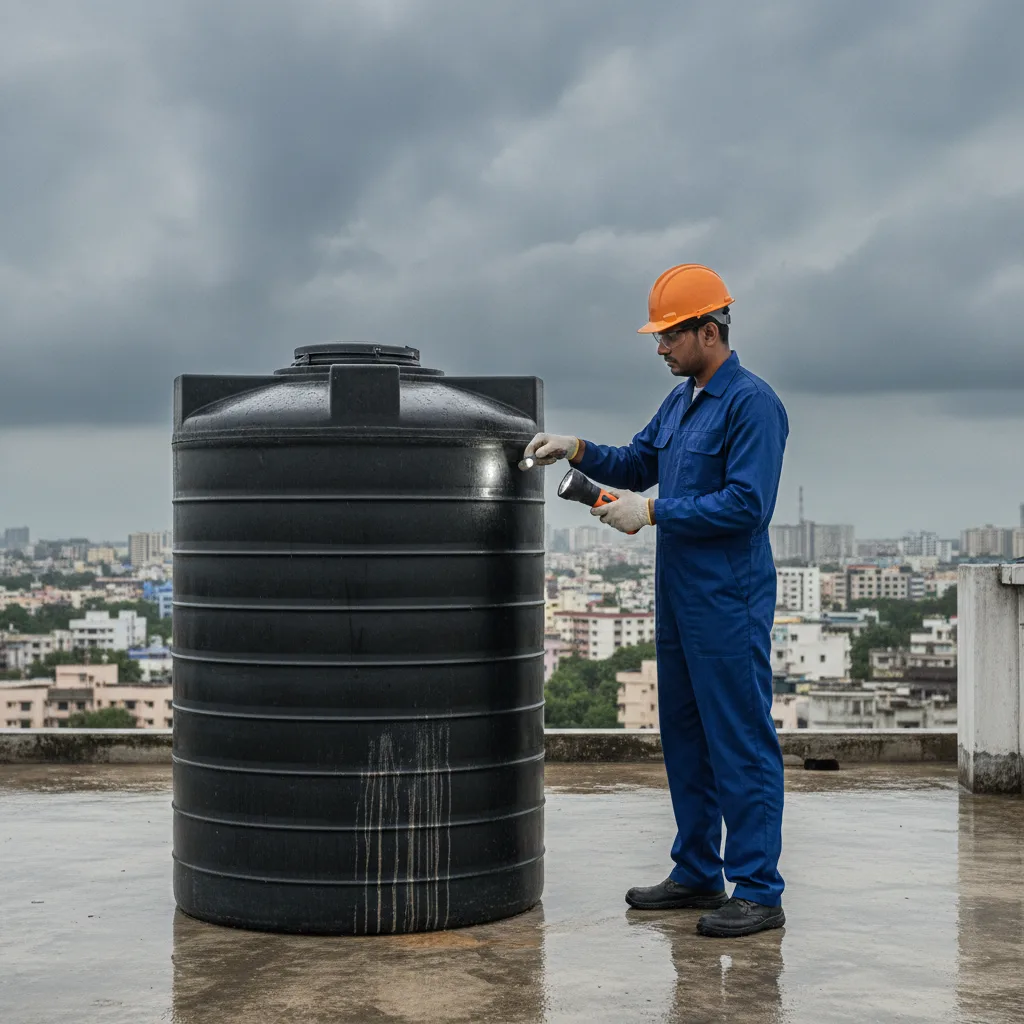
Overhead tanks in Bengaluru are rarely sealed as tightly as owners assume. Vent pipes, inspection lids, and float valve openings all give rain a way in, especially during wind-driven downpours. Once water finds a gap, it brings fine clay silt, decomposed leaves, and sometimes insect larvae with it.
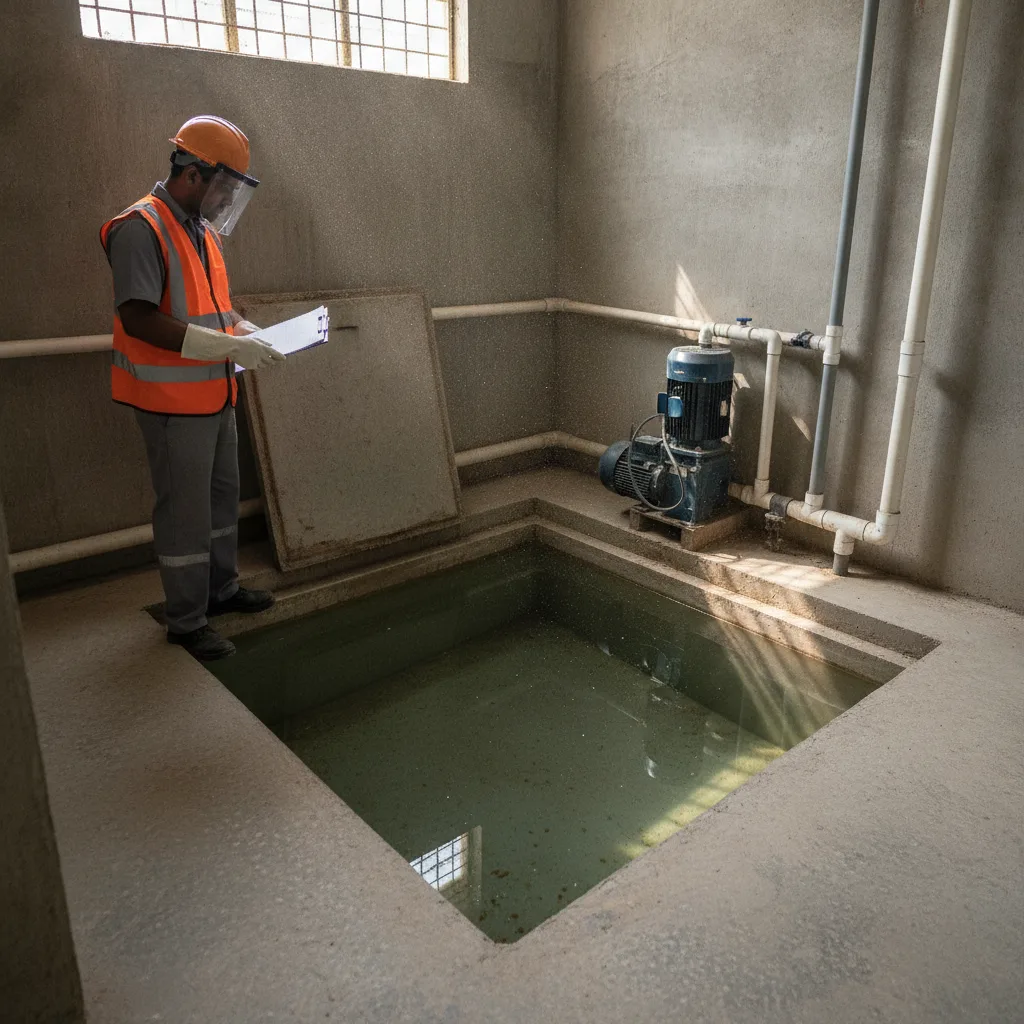
Sumps face a different risk. Ground-level sumps near compound walls or low-lying plots often see storm water seep in through hairline cracks in the tank wall, particularly in older constructions where waterproofing has worn thin. That seepage mixes with whatever sludge is already sitting at the bottom, and the result is a sump that looks fine on the surface but has a thick, soupy layer of contamination near the base.
Why humidity makes it worse, not just the water itself
Here's the part most people miss. It isn't only the rainwater getting in, it's the humidity staying in. Monsoon air in Bengaluru often sits above 80% relative humidity for weeks.
That slows down evaporation inside the tank and keeps internal surfaces damp long after a storm passes. Damp, dark, nutrient-rich surfaces are exactly where biofilm, the slimy bacterial layer you see clinging to tank walls, builds up fastest. A tank that would normally dry out in two days during summer can stay wet for a week during August rains.
Signs your tank needs attention right now
- Water has a faint earthy or musty smell, especially after the tap has been off for a few hours
- A visible film or cloudiness in a glass of water left standing for 10 minutes
- Slight discolouration, usually a light brown or yellow tinge, after a particularly heavy rain spell
- Slower flow from the overhead tank outlet, which can mean sediment is partially blocking the outlet pipe
- Any sighting of mosquito larvae near the tank lid or overflow pipe
None of these are emergencies. But all of them are your tank telling you it needs a clean, not a top-up.
Why "it rained, so it's clean" is the wrong instinct
A lot of homeowners assume heavy rain flushes a tank out naturally. It doesn't. Rain adds volume, but it doesn't remove the sediment that's already settled at the bottom.
In fact, the extra water pressure from a fuller tank can stir up old sludge and push it higher into the water column, right into the zone your tap draws from. What you're actually doing by skipping a post-monsoon clean is diluting contaminated water with more water, not removing the contamination.
The cleaning window that actually works
Most experienced technicians will tell you the same thing: don't wait until the rains fully stop. The ideal window is during a dry break of 3 to 5 days mid-monsoon, or right after the first major spell ends in your area, usually by late June or early July for Bengaluru.
Cleaning during an active dry spell means the tank has time to air out fully before the next downpour adds fresh moisture. Waiting until October, after the whole season has passed, means months of accumulated sediment and biofilm that's far harder to scrub off.
| Timing | Condition found | Cleaning difficulty |
|---|---|---|
| Mid-monsoon dry break | Light to moderate silt, early biofilm | Low, quick scrub |
| Right after monsoon ends | Thick sludge, set-in biofilm | Moderate to high |
| Skipped till next monsoon | Compacted sediment, algae growth on walls | High, often needs scraping tools |
What a proper post-rain cleaning actually involves
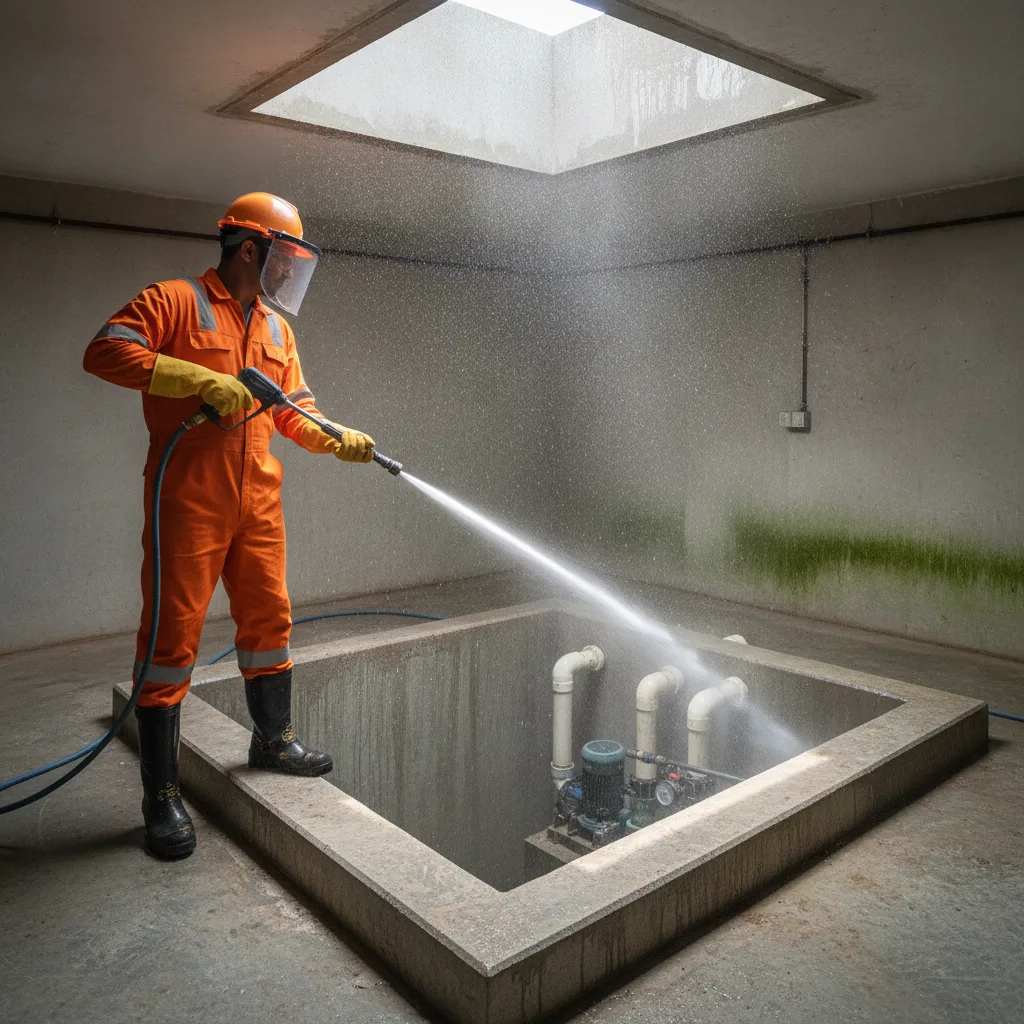
- Draining the tank fully, not partially, since partial draining leaves the heaviest sediment layer untouched
- Scrubbing all interior walls to remove biofilm, which won't rinse away with water alone
- Removing sediment from corners and the outlet area, where sludge collects most densely
- Checking and resealing the lid and vent pipe gaskets if they've degraded from constant moisture
- A final rinse and, where needed, a safe disinfection step before refilling
That gasket check in step four matters more than people realise. A warped or cracked lid seal is often the exact reason rainwater got in during the first place, so cleaning without fixing the seal just invites the same problem next spell.
Apartment complexes have it slightly harder here, since shared tanks and sumps serve dozens of families and a missed cleaning affects everyone, not just one household. If you're in a gated community, this is worth raising at the next RWA meeting rather than leaving it to individual flats.
For residents in areas like water tank and sump cleaning in Hebbal, where low-lying plots see more storm water pooling, a post-monsoon check is worth treating as non-negotiable rather than optional.
- Rain gets into tanks through vents and loose lids, not just open tops
- High humidity keeps tank interiors damp for longer, speeding up biofilm growth
- Heavy rain dilutes but never actually removes existing sediment
- The best cleaning window is a dry break mid-monsoon, not after the season ends
- A damaged lid seal is often the real entry point and needs fixing, not just cleaning
KBS has been handling Bengaluru's monsoon tank troubles for over eight years now, and the pattern repeats every single year: the homes that clean mid-season stay trouble-free, the ones that wait end up scrubbing years of buildup in one go. If your tank hasn't been touched since the rains started, Book Water Tank Cleaning and get it sorted before the next spell adds another layer.
Want this handled by professionals in Bengaluru? Book Water Tank Cleaning, or message us on WhatsApp.