Post-Monsoon Sump Inspection Checklist for Bangalore Apartments (BWSSB Supply Edition)

The rains have stopped, the roads have dried, but your sump probably hasn't recovered yet. Monsoon runoff carries silt, leaf litter and sometimes sewage overflow straight into inspection chambers that aren't sealed properly. For apartments on BWSSB supply, this is the one inspection window every facility manager should not skip.
Most residents assume BWSSB water is treated and therefore safe straight into the sump. What they miss is that the sump itself, the pipes feeding it, and the inspection chamber lid are all exposed to monsoon conditions for three to four months. A hairline crack in the chamber cover lets silty rainwater seep in every time it rains, and that sediment just sits at the bottom until someone checks.
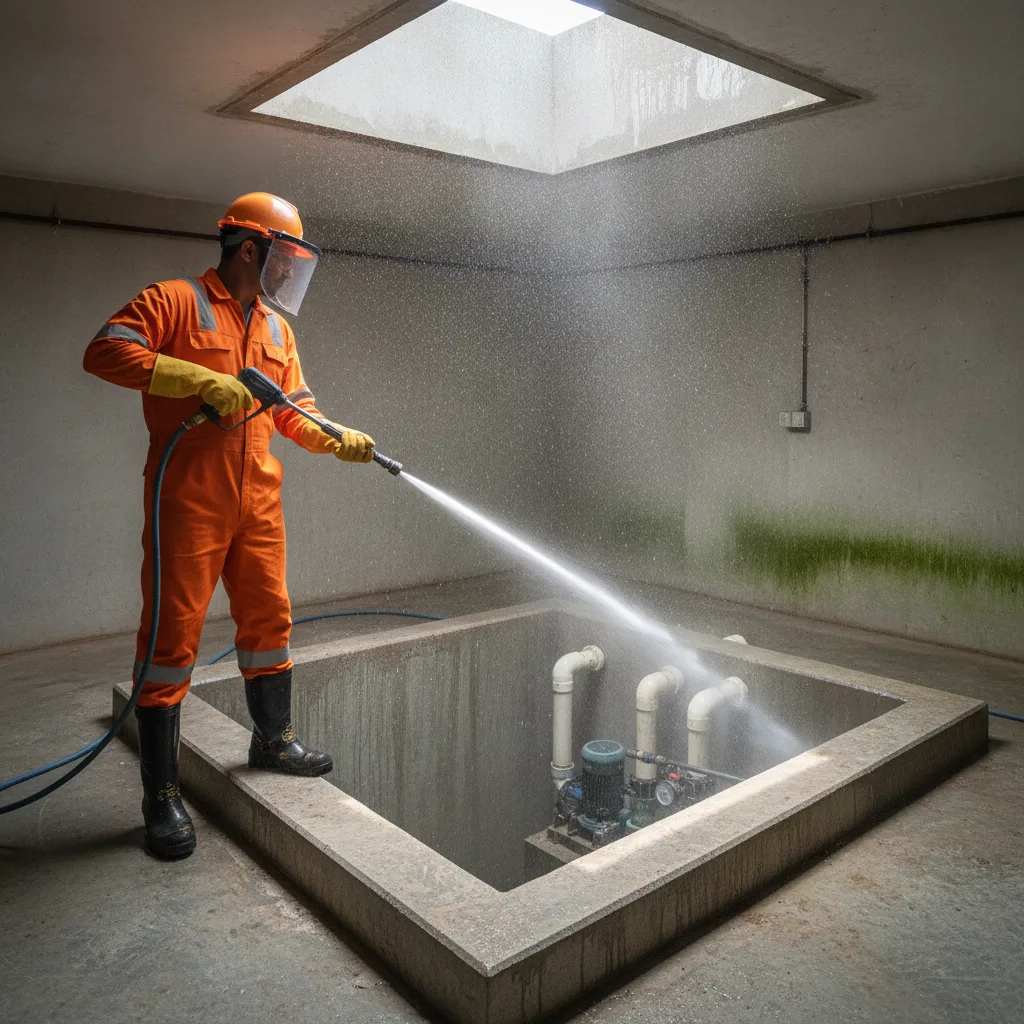
If your society hasn't done a thorough check since September, it's worth booking a professional water tank and sump cleaning service before the dry season sets in and residents start complaining about smell or taste in the water.
Why post-monsoon sumps are different from a routine clean
A sump cleaned in April (pre-monsoon) and a sump cleaned in November are dealing with completely different problems. Pre-monsoon cleaning is mostly about removing accumulated dry-season sediment and checking for cracks before heavy rain arrives. Post-monsoon is about what actually got in during those rains.
Here's the mechanism most people don't think about. Bengaluru's older apartment complexes often have sump inspection chambers at ground level, sometimes below the compound's natural water flow line. During heavy downpours, water pools around these chambers. If the rubber gasket on the lid has degraded even slightly, that pooled water (carrying road dust, leaf tannins, sometimes animal waste) gets pulled in through capillary action and minor pressure differences. It's slow, it's quiet, and nobody notices until the water starts tasting earthy.
The inspection checklist
- Chamber lid and seal: Check for cracks, gaps, or a gasket that's gone brittle. Rubber seals typically last 3-4 years in Bengaluru's climate before UV exposure and monsoon moisture cycles make them crack.
- Water clarity test: Draw a bucket from the sump outlet. If it's cloudy or has a faint grey tinge, silt has entered. Clear BWSSB water should look glass-clear, not milky.
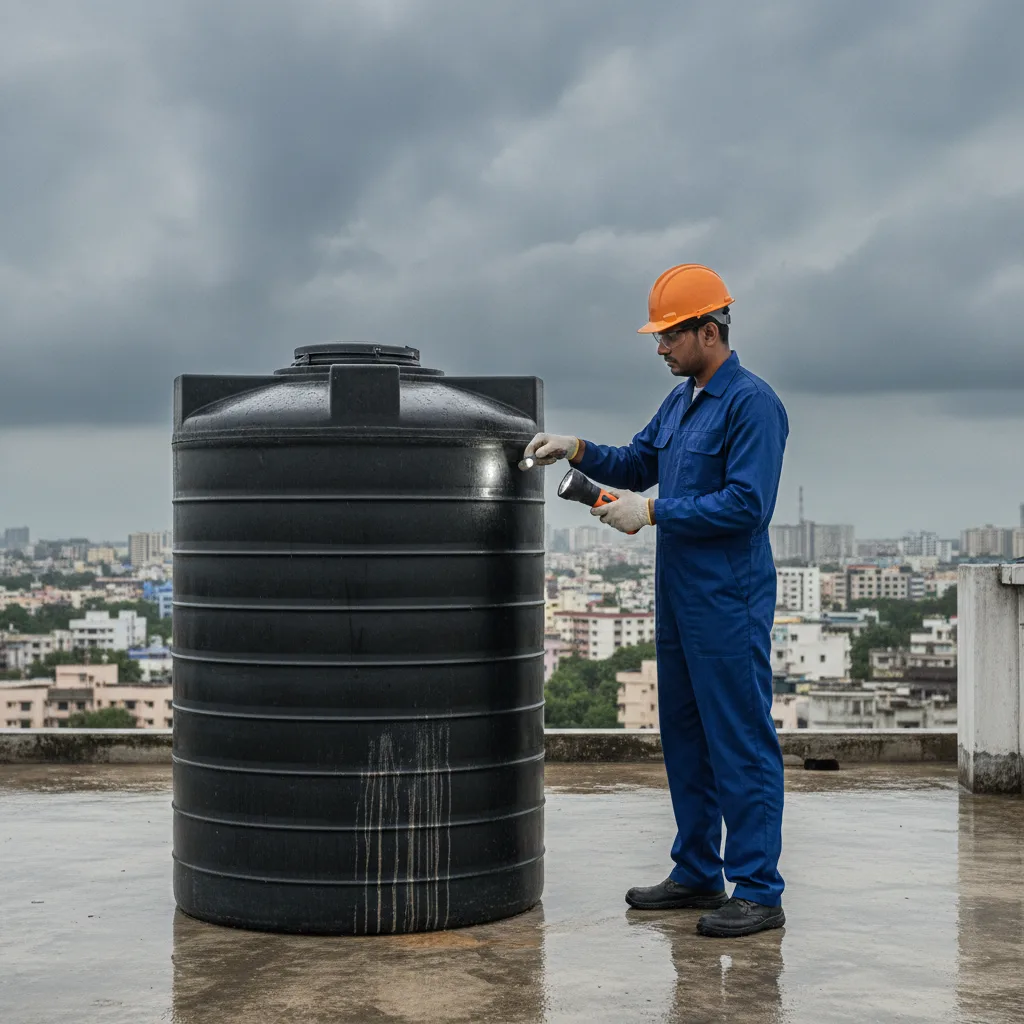
- Sediment depth at the base: Lower a torch and a pole if you can safely access the sump. Anything over 2-3 inches of settled silt at the bottom means a full clean is overdue, not optional.
- Overflow pipe check: Monsoon-level water pressure often pushes debris up through overflow pipes that don't have mesh covers. Look for leaves or twigs lodged at the pipe mouth.
- Inlet pipe from BWSSB line: Check the joint where the municipal line meets your sump inlet. Loose joints here are a common entry point for ground seepage during heavy rain.
- Smell test: A faint musty or earthy smell is normal after monsoon. A sulphurous or sewage-like smell is not, and points to possible cross-contamination from a nearby drain or septic line.
- Mosquito larvae check: Stagnant water pockets near the inspection chamber rim (not the main sump, the rim area where small puddles form) are common larvae breeding spots this time of year.
Running through this list takes about twenty minutes for one sump. For a complex with two or three sumps feeding different blocks, budget an hour and do it as a walk-through with your facility staff present.
What a technician actually finds in November
In our experience, post-monsoon sumps in Bengaluru apartments typically show one of three patterns. Either a thin, even layer of fine silt across the base (normal, from minor seepage), or a thick clay-like sediment concentrated near the inlet pipe (points to a specific leak point that needs fixing, not just cleaning), or in older buildings, a slightly discoloured upper water layer with clear water below (this usually means recent contamination, within the last week or two, and needs both cleaning and a water quality check).
That middle pattern, the clay buildup near one specific inlet, is the one that gets missed most often because residents only check water clarity and skip the physical sediment inspection.
BWSSB supply quirks worth knowing
BWSSB water pressure and supply timing shifts after monsoon as reservoir levels change and the board manages distribution across zones. Some apartments see a few weeks of irregular supply timing in November as the system stabilises. This matters for your sump because irregular filling means the water sits longer between refills, giving any existing sediment more time to settle and, in warmer spells, more time for biofilm to form on the sump walls.
If your complex is in an area that also relies partly on borewell backup, like many in water tank and sump cleaning in Marathahalli, the post-monsoon period is also when borewell water tables rise and mineral content can shift, so it's worth checking both supply sources rather than assuming the municipal line is the only variable.
How often should this happen
For apartments on BWSSB supply, a full professional clean twice a year, once before monsoon and once after, covers most buildings well. Complexes with visible seepage issues or older plumbing (15+ years) often need a mid-monsoon check as well, roughly every 4 months during the wet season itself.
| Sump condition | Recommended action | Typical frequency |
|---|---|---|
| Clear water, minimal sediment | Visual inspection only | Monthly |
| Cloudy water, light sediment | Professional cleaning | Post-monsoon + pre-monsoon |
| Discoloured water, heavy sediment | Full cleaning + seal inspection | Immediately, then every 4 months |
One thing we tell every RWA: don't wait for a complaint to trigger the next clean. By the time residents are calling about smell or taste, the sediment has usually been sitting for weeks.
- Check the chamber lid seal first, it's the most common entry point for monsoon seepage
- Clay-like sediment near the inlet pipe signals a specific leak, not just routine buildup
- Irregular BWSSB supply timing post-monsoon means water sits longer, letting sediment settle more
- Twice-yearly professional cleaning (pre and post monsoon) covers most Bengaluru apartments
- A musty smell is normal after rains, a sulphurous smell is not and needs immediate attention
Run this checklist now while the dry weather makes access easy, and your sump will be in good shape well before the next monsoon arrives. If the inspection turns up sediment or seal damage, KBS's team can get your complex's Book Water Tank Cleaning scheduled this week, before the water sits any longer than it already has.
Want this handled by professionals in Bengaluru? Book Water Tank Cleaning, or message us on WhatsApp.