Rainy Season Water Tank Cleaning: Protect Your Family from Waterborne Diseases
The moment the first heavy rains hit Bengaluru, something shifts inside every overhead tank and sump in the city. Runoff carries silt, leaf litter and road dust into open inlets. Humidity slows down drying between fills. And a tank that looked fine in April can turn cloudy by July.
This isn't about scaring anyone. It's just how water behaves once the weather changes, and knowing the mechanism helps you time your cleaning right.
What actually changes in your tank during monsoon
Overhead tanks in Bengaluru rarely have perfectly sealed lids. Most have a small gap around the inlet pipe or a lid that doesn't sit flush, and during dry months that's a minor issue. Once the rain starts, that gap becomes an entry point for airborne dust that's now wet and sticky, plus the odd insect looking for shelter.
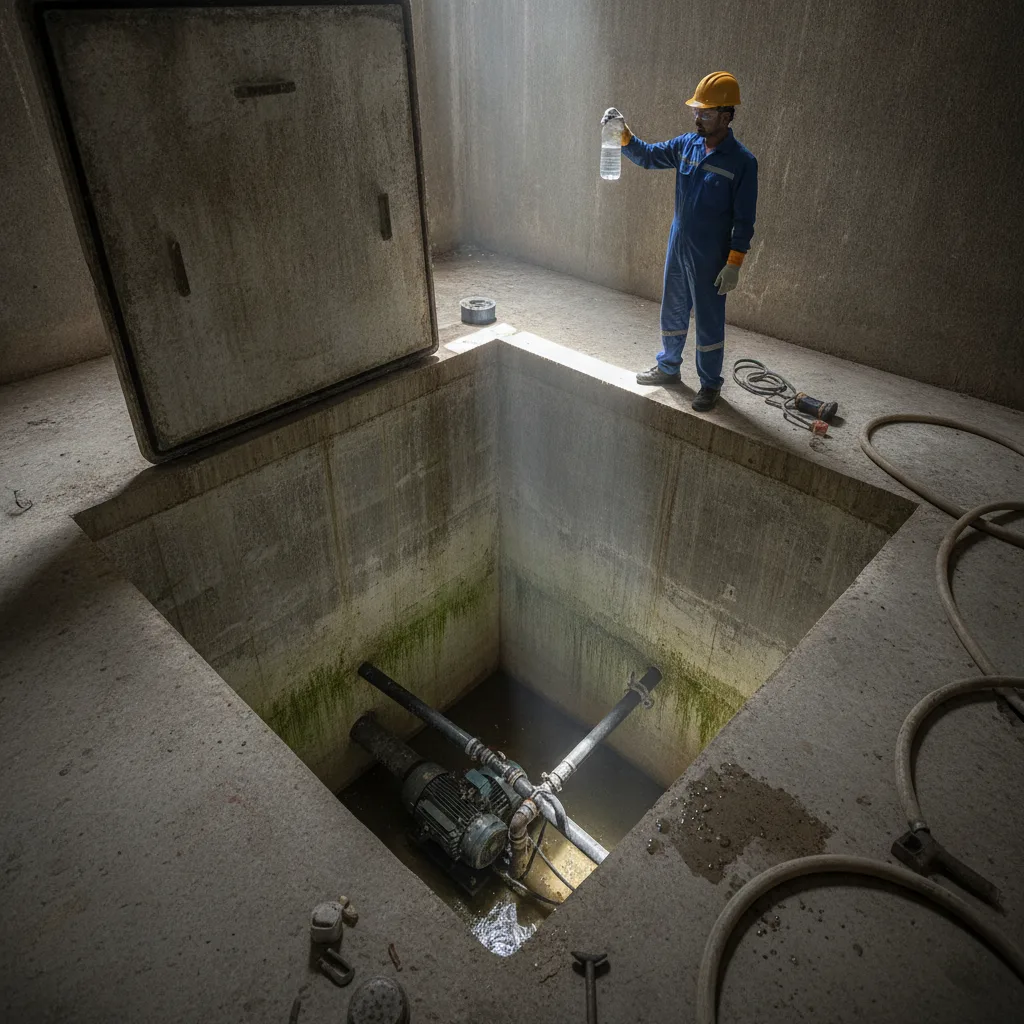
Sumps face a different problem. They sit below ground, often close to stormwater drains or compound walls, and a poorly sealed sump lid lets surface runoff seep in during heavy downpours. That runoff isn't clean. It's picked up soil bacteria, vehicle residue and whatever organic matter was sitting on the compound floor.
If you're on BWSSB supply, there's a second layer to this. Old or cracked pipelines running near sewage lines can develop cross-contamination during heavy rain when both lines are under pressure. It doesn't happen every year, but when BWSSB water suddenly smells off after a storm, this is usually why.
Why algae growth speeds up so fast this season
Algae needs three things to multiply: light, warmth and stagnant water. Monsoon gives it all three in a strange way. The humidity keeps tank walls damp even between refills, and warm ground temperatures under overcast skies create ideal conditions inside a sump that isn't fully sealed from light.
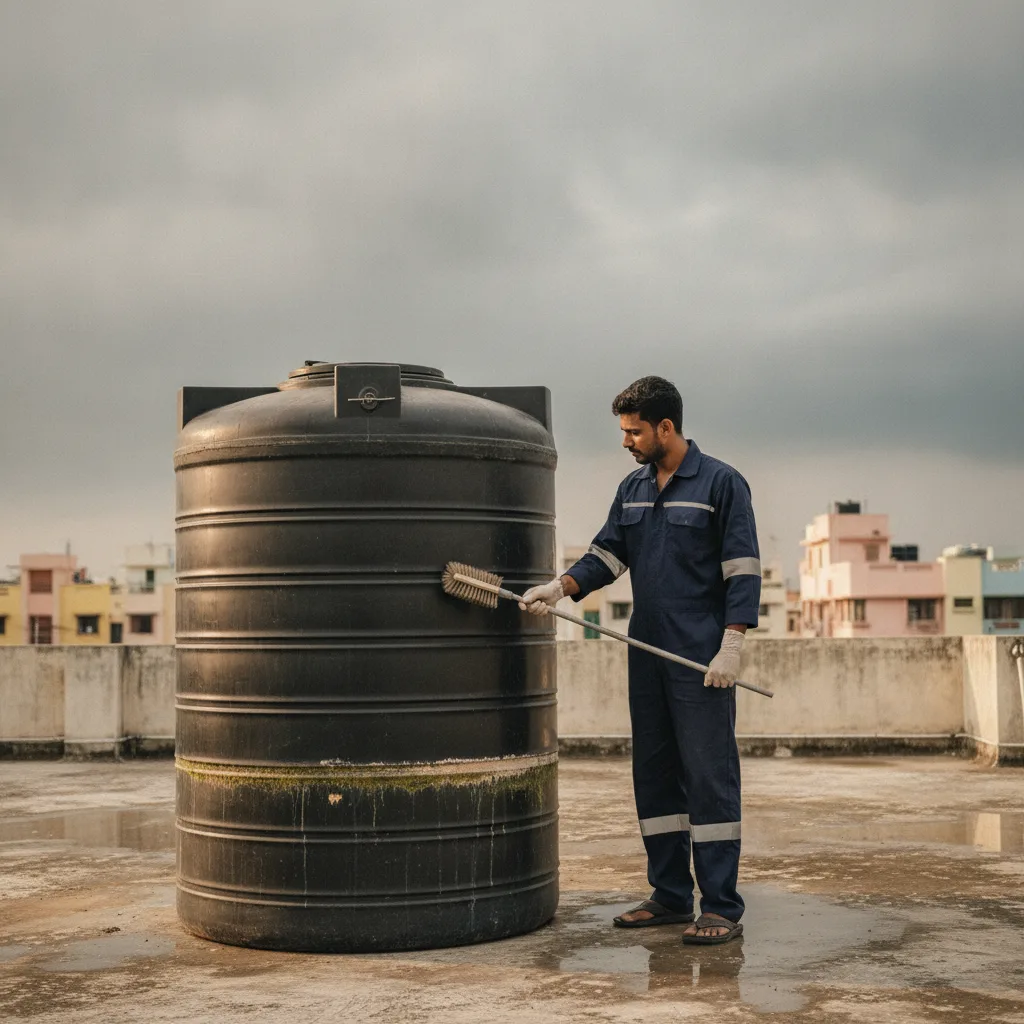
What you'll notice first is a faint green tinge on the inner walls near the waterline, or a slimy film on the ladder rungs if your tank has one. That's biofilm, a layer of algae and bacteria stuck to the surface. It doesn't wash off with just fresh water flowing through. It needs to be physically scrubbed off, which is exactly the part homeowners can't do themselves without draining and entering the tank.
The health angle, explained plainly
Waterborne illness during monsoon isn't folklore, it's a documented seasonal pattern in most Indian cities because contaminated water sources multiply during heavy rain. Cases of typhoid, jaundice and gastroenteritis tend to rise in July and August across Bengaluru, and stored water quality is one of the variables doctors look at.
The mechanism is simple. Bacteria like E. coli thrive in warm, organically rich water, which is exactly what a tank full of monsoon runoff and settled sediment becomes. A family drinking or cooking with that water over weeks is taking on a low but real risk, especially children and elderly residents whose immunity is more sensitive to gut infections.
This is why timing your water tank and sump cleaning service to land just before or early into the monsoon matters more than doing it once a year at a random point.
Signs your tank needs cleaning right now
- Cloudy or slightly yellow water straight from the tap, especially after the first heavy rain of the season.
- A musty or earthy smell when you fill a bucket, which usually means sediment has been disturbed at the tank base.
- Visible particles settling at the bottom of a clear glass of water left standing for ten minutes.
- Slower water flow than usual, which can mean silt has partially blocked the outlet pipe inside the tank.
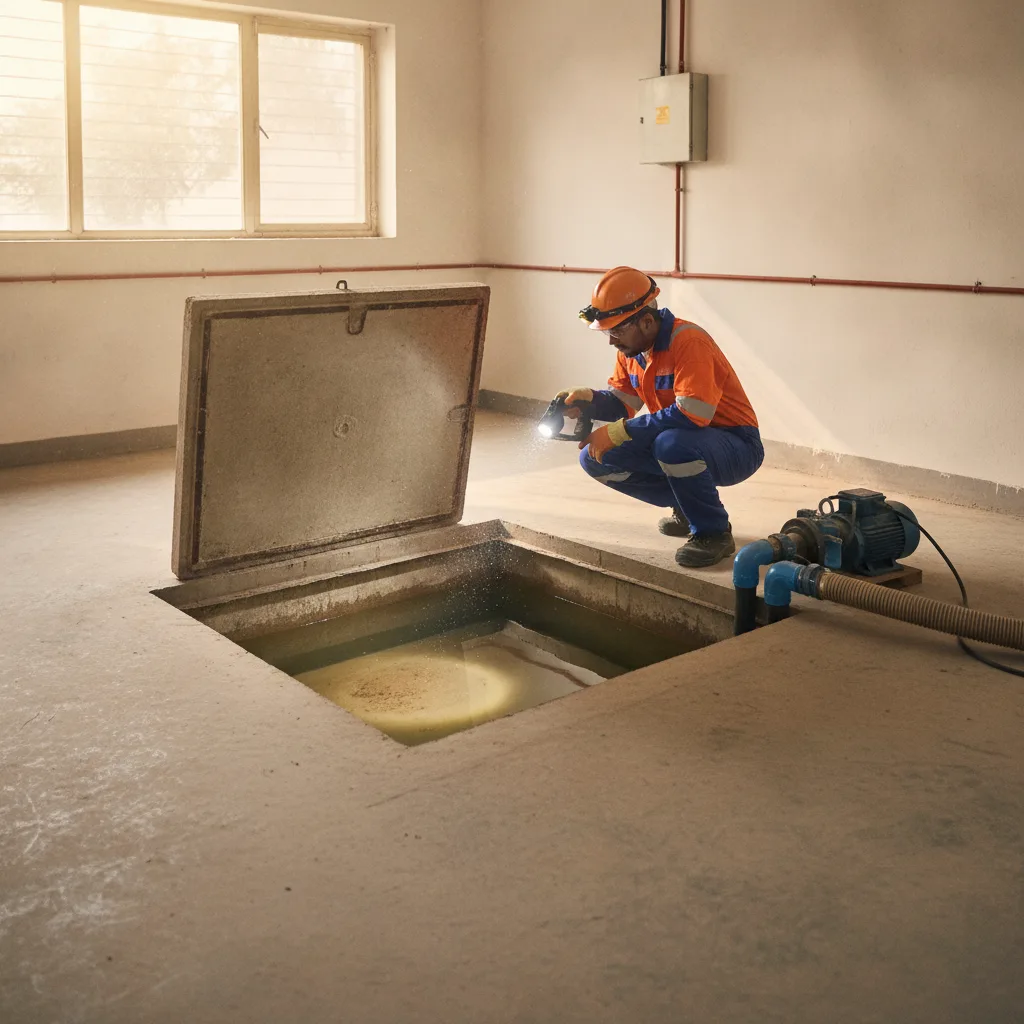
- A green or brown film visible if you shine a torch through the inspection lid.
Any one of these on its own isn't necessarily an emergency. Two or more together, especially right after heavy rain, means it's time to get the tank checked.
How often to clean during the rainy months
Outside monsoon, a six-month cleaning cycle for overhead tanks works fine for most Bengaluru homes. During July to September, that gap should tighten to every three to four months if your tank has any known sealing issues, or if you've had contamination once before.
Sumps generally need less frequent cleaning than overhead tanks because they hold larger volumes and see less light, but a sump with a compromised lid seal is the exception. If your compound floods even slightly during heavy rain, treat that sump as high-risk and get it inspected right after the first big spell of the season.
What a proper monsoon cleaning actually involves
A rushed clean that just hoses down the visible surface doesn't remove biofilm stuck to the walls. A proper job drains the tank fully, scrubs the walls and floor by hand or with a mechanical brush, removes accumulated sediment from the base, and disinfects with a safe, potable-water-grade solution before refilling.
For sumps specifically, technicians also check the inlet and overflow pipe seals while they're in there, since monsoon is when a small gap becomes a real leak point. This is the kind of detail that gets missed when cleaning is done casually rather than as a proper service.
Simple things you can do between professional cleans
- Check that your overhead tank lid sits flush and isn't cracked at the edges. A five-minute visual check after every heavy rain catches most problems early.
- Keep the area around your sump inlet clear of leaves and debris so runoff doesn't pool and seep in.
- If you notice discoloured water, avoid drinking it straight away and switch to boiled or filtered water until the tank is inspected.
- Don't ignore a slow trickle from the tap. It's often the first sign of sediment build-up inside the tank or pipe.
- Monsoon humidity and runoff speed up algae growth and sediment build-up inside tanks and sumps.
- Cloudy water, musty smell or visible particles are early warning signs worth acting on.
- Tighten your cleaning cycle to every three to four months during July to September if your tank has any seal issues.
- A proper clean scrubs the walls and disinfects, not just rinses the surface.
- Small checks like lid seals and drain clearance between cleans go a long way.
Monsoon in Bengaluru is short but intense, and tank hygiene during these months matters more than most people realise until the water starts smelling off. If it's been a while since your last clean, or you've never actually had one done professionally, get it sorted before the next big spell hits. Book Water Tank Cleaning with KBS and let a team that's handled Bengaluru's monsoon water problems for eight years take care of it properly.
Want this handled by professionals in Bengaluru? Book Water Tank Cleaning, or message us on WhatsApp.