Sump Cleaning After BWSSB Water Contamination in Bangalore: A Practical Guide

Bengaluru has seen several BWSSB water-quality alerts in recent years, from boil-water advisories in supply-mixed zones to reports of coliform bacteria in piped supply. These are not one-offs; an ageing underground network and rain-driven pressure changes can let sewage backflow into supply pipes. What many homeowners miss is that the contamination does not stay in the pipes. It settles in the sump. Here is what to do after an advisory.
Why the Sump Is the Problem
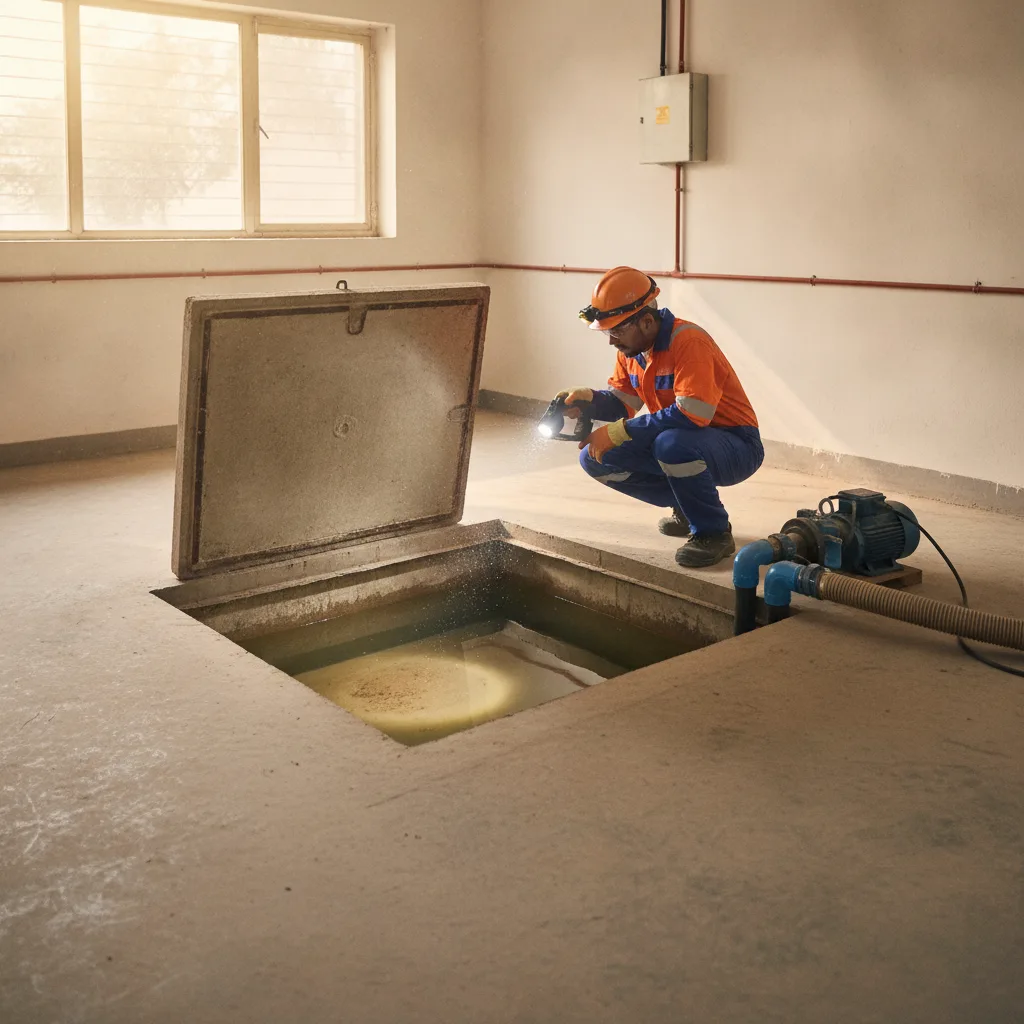
When supply water is contaminated, it flows first into the underground sump before being pumped to the overhead tank. Bacteria, sediment, and particulates settle on the sump walls and floor and stay there long after the supply is cleared. A clean supply line does not clean a dirty sump. Boiling water drawn from the sump kills the bacteria in that water, but it does nothing about the bacterial film on the walls, which re-contaminates the next batch that enters.
How Contamination Gets Into the Supply
It helps to understand the mechanism, because it explains why the sump is the weak point. Bengaluru's underground pipes are not all young, and supply is intermittent, so lines sit empty and then refill under pressure. When a line loses pressure, anything around a cracked joint or a leak can be drawn in, and in older areas a water pipe and a sewage line sometimes run close together. That is how sewage backflow ends up in supposedly treated supply after heavy rain or a pressure drop.
Once that water reaches your building, it flows into the sump first. The sump sits at ground level under a lid, holds water for long stretches, and is the low point of the system, which is exactly the environment where whatever came in settles and takes hold. A clean overhead tank downstream cannot undo a contaminated sump feeding it.
Signs Your Sump May Be Contaminated
- Tap water smells slightly sulphurous or earthy after the pump runs
- The water tastes different despite a clean overhead tank and filters
- A boil-water advisory was issued for your area in the last few months
- Family members have had unexplained stomach upsets after drinking tap water
- The sump has not been cleaned in more than 12 months
What to Do After a Contamination Advisory
First, stop using tap water for drinking and cooking until the advisory lifts and the sump is cleaned. Bottled water, or a UV or RO-with-UV purifier that handles bacteria, is the safe option in the meantime. Once BWSSB restores and declares the supply clean, book a sump cleaning before you resume using tap water for cooking. Cleaning at this point removes the film and sediment left by the contamination and stops your own storage from re-contaminating fresh water.
What the Cleaning Involves
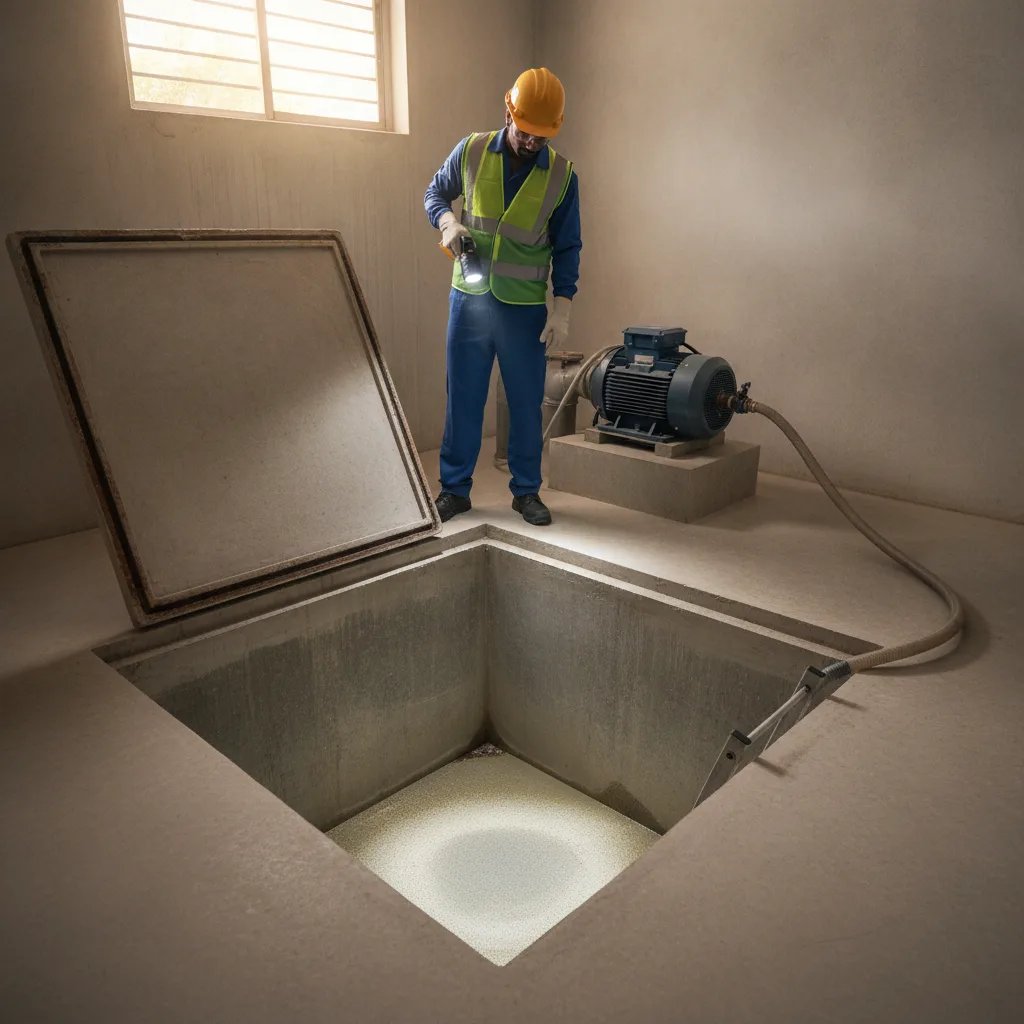
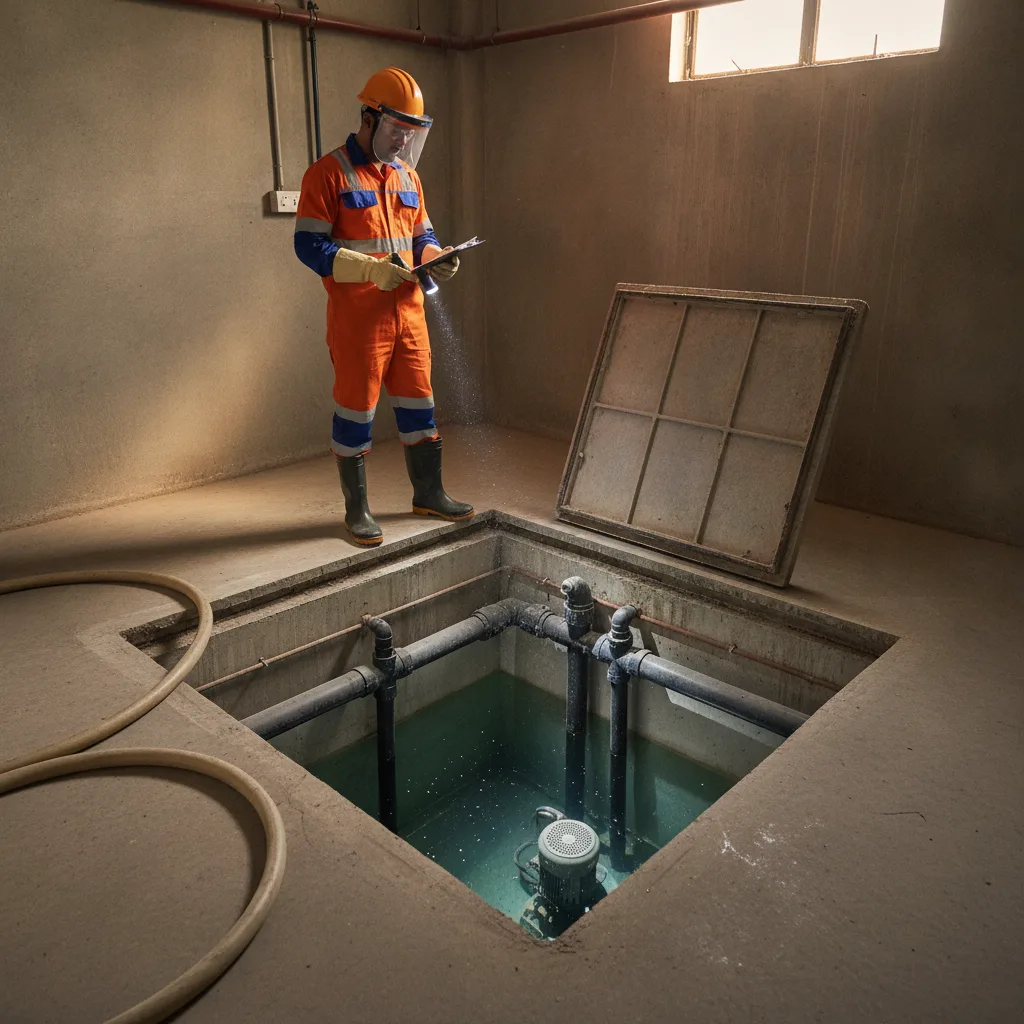
A post-contamination sump clean uses the same physical scrubbing and disinfection as a regular clean, but with a stronger disinfectant dose and a longer contact time on the walls before rinsing. It is also worth flushing the overhead tank if there is any chance contaminated water reached it before the pump was stopped. After refilling, draining the first full cycle once removes any residual disinfectant and confirms the system is clean before the family drinks from it. This is exactly what a careful sump cleaning after a contamination event should cover.
Why contact time matters more than dose
Disinfecting a contaminated sump is not just about pouring in more chemical. A disinfectant needs contact time on the surface to actually kill the bacteria sheltering in the biofilm, so a careful team leaves it on the scrubbed walls for a set period before rinsing rather than washing it straight off. Too short a contact time and even the strongest dose leaves live bacteria behind. This is the step a rushed job skips, and the reason a botched contamination clean can seem fine for a week and then smell again.
How Soon Can You Use the Water?
After the clean and the one-drain cycle, the water is usually safe for cooking and drinking the same day, as long as the supply itself has been declared clean. If any sediment or odour returns in the following weeks, call the team back to re-check rather than waiting.
When Regular Cleaning Is Not Enough
A routine six-month clean handles normal sediment and biofilm. A contamination event is different: it can leave a heavier bacterial load, and it may point to a cracked lid or a poorly sealed inlet that let the bad water in. In that case the cleaning should come with an inspection of the lid, inlet, and overflow, so the entry point is found and sealed, not just the symptom cleaned.
Had a contamination alert in your area? You can book a water tank and sump cleaning with KBS and get the sump properly cleaned before you use the water again.
Want this handled by professionals in Bengaluru? Book Water Tank Cleaning, or message us on WhatsApp.