Sump Cleaning in Bangalore Apartments vs. Water Tank Cleaning: Key Differences and What to Expect

Many Bangalore apartment residents use "sump" and "water tank" to mean the same thing. But they are two different storage systems, and cleaning each one takes different work, time, and cost. Knowing the difference helps you book the right service and understand the price.
Sump vs Water Tank: What Each One Is
A sump, also called an underground tank, is the large pit built below the building at or near ground level. It is where BWSSB or borewell water arrives first. A pump then pushes that water up to the overhead tank on the terrace, which feeds each flat by gravity.
A sump in a 20-unit complex often holds 10,000 to 25,000 litres, while the overhead tank for the same building holds 5,000 to 10,000 litres. In independent houses the words are used loosely, but the roles are the same: the underground pit collects water, the overhead tank distributes it.
Why Sump Cleaning Takes More Work
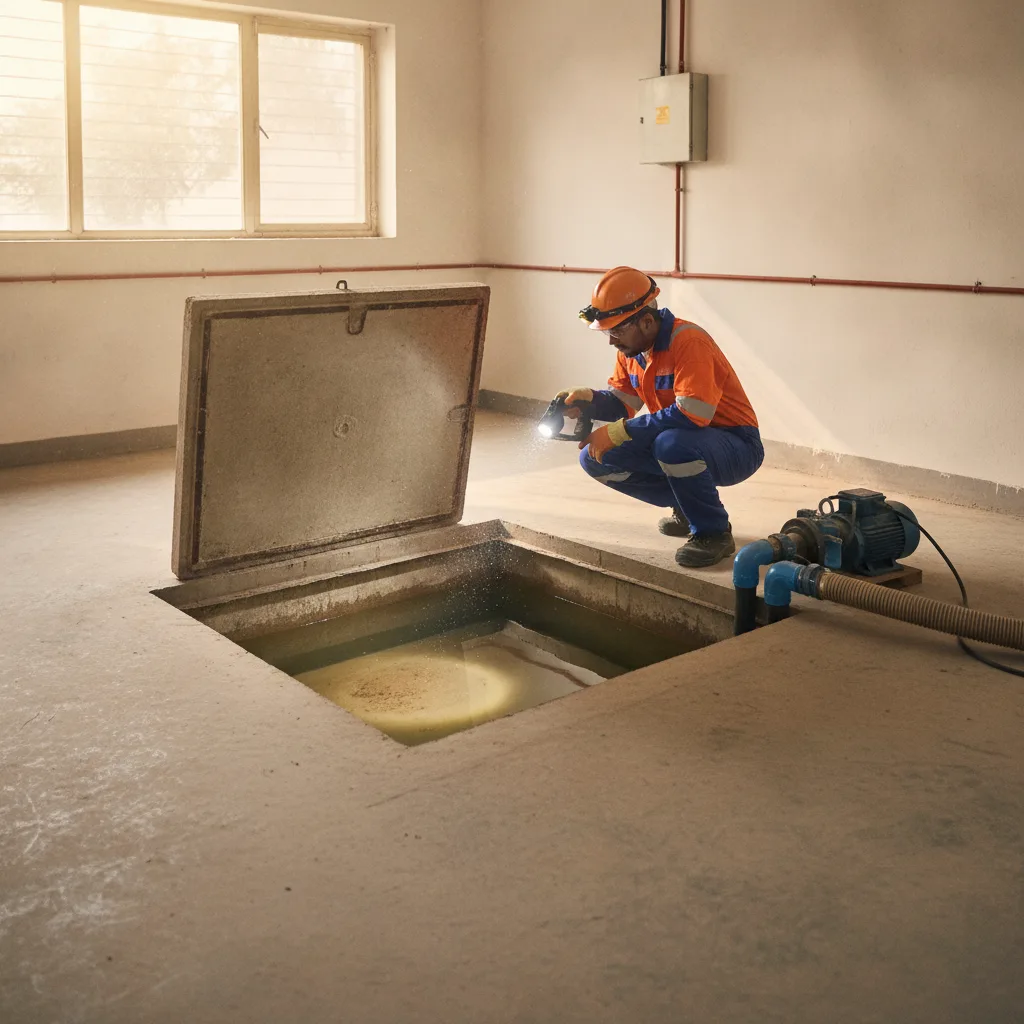
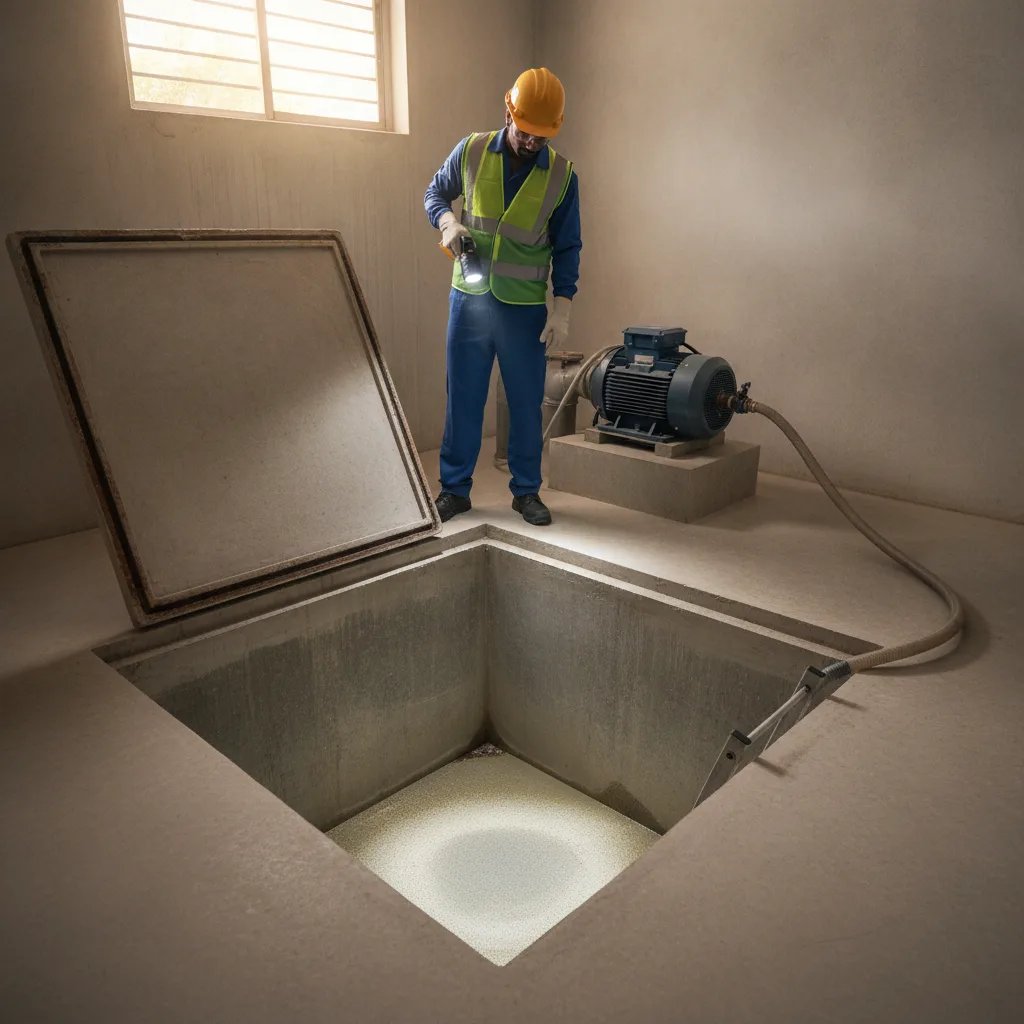
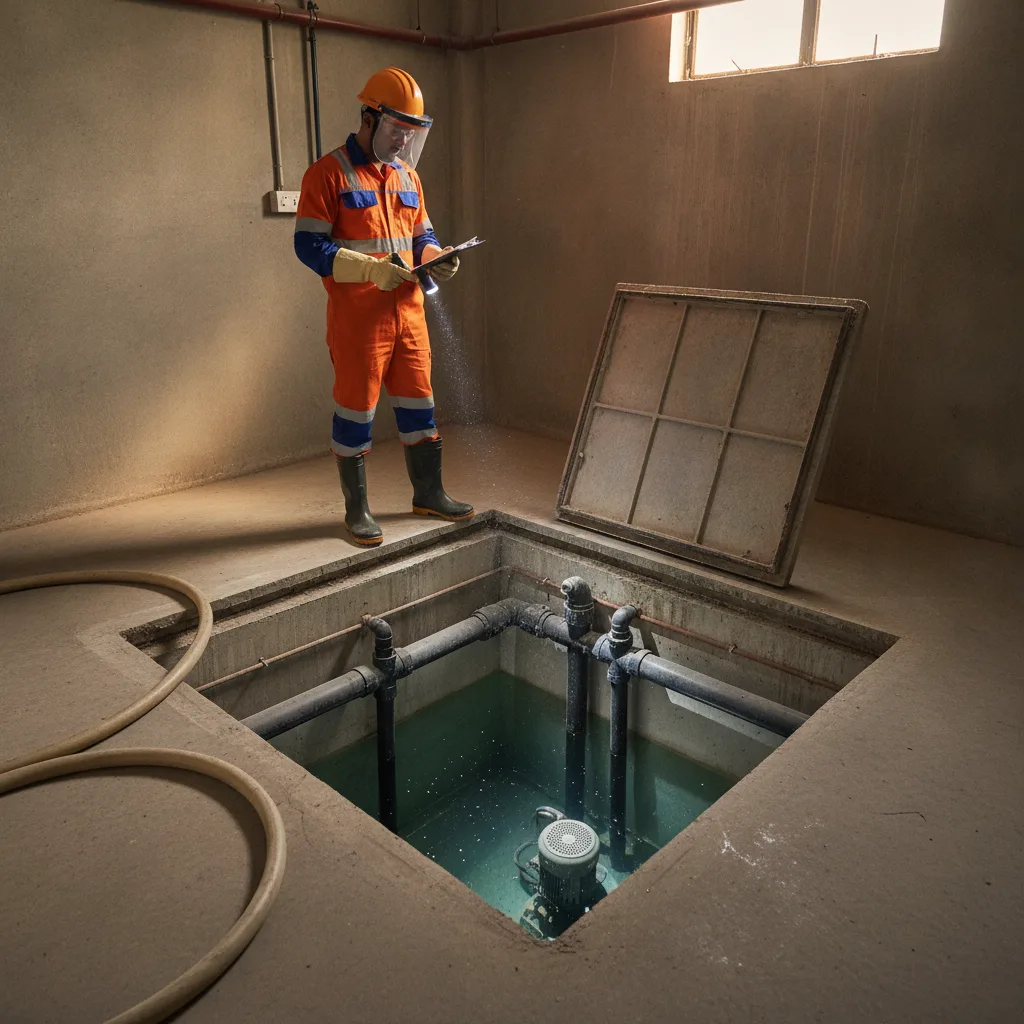
Three things make a sump harder to clean than an overhead tank. Access: it is underground, so the technician works in a cramped, low-ventilation space with safety gear and a second person up top. Volume: a 10,000-litre sump holds several times the sediment of a 2,000-litre tank. Drainage: the sump must be pumped out fully before cleaning, which takes time, especially in older buildings with no dedicated drain valve.
What Happens During the Job
At KBS, a sump cleaning follows a fixed process. The team closes the inlet valve, pumps out any remaining water, and scrubs the walls, floor, and inlet and outlet pipes by hand with cleaning agents that lift algae and biofilm without leaving residue. A food-grade disinfectant then kills bacteria and clears odour. The sump is rinsed, the first refill is drained once to remove any residual disinfectant, and it is sealed and returned to use. A professional sump cleaning follows the same steps every time, so nothing is skipped.
Overhead tanks follow the same steps but faster. Plastic tanks are easy to scrub through the hatch; concrete tanks take a little longer but are still a much shorter job than a sump.
How Often Should Each Be Cleaned?
Clean underground sumps at least once a year, or twice if you are on borewell supply or face frequent BWSSB disruptions, since water sits longer and sediment builds up faster. Clean overhead tanks every six months; they collect less sediment but grow algae on the walls in warm weather. A musty smell when the tap first opens after the pump runs is a good sign the sump needs attention.
Why Tank Material Changes the Job
What an overhead tank is made of decides how it cleans up. Most homes use a moulded plastic tank, and its smooth, non-porous inner wall is the easiest surface to scrub: algae and biofilm sit on top and lift off cleanly. A cement or RCC tank is different. Concrete is slightly porous and its surface is rougher, so grime keys into it and it takes more scrubbing to get properly clean. That is also why cement and RCC tanks are quoted after a quick look rather than off a fixed price, since the effort genuinely varies with the surface.
Sumps are almost always concrete or RCC by nature, being built into the ground, which is one more reason they take longer than a plastic overhead tank of the same size. The porous walls hold biofilm more stubbornly and need thorough hand-scrubbing rather than a quick wipe.
Why overhead tanks grow algae and sumps grow sludge
The two tanks get dirty in different ways, which is worth knowing. An overhead tank sits in the heat on the terrace, and if the plastic lets any light through, algae can bloom on the walls in warm weather. A sump sits in the dark underground, so instead of algae it collects settled sediment and biofilm. Same goal, different job, which is another reason the two are priced and cleaned separately even when they are done in one visit.
Price: Sump vs Overhead Tank
Sump cleaning with KBS starts at ₹1,249, with the final price set by the sump's capacity and access. Overhead tank cleaning starts at ₹599 for a plastic tank up to 1,000 litres, with larger and concrete tanks priced by capacity. The two are different jobs, so the price gap reflects the work involved, not one being a better deal than the other. If both are due, cleaning them in one visit costs less than two separate bookings.
Frequently Asked Questions
Is the sump the same as the overhead tank?
No. The sump is the underground tank that collects supply water; the overhead tank sits on the roof and feeds your taps. Water is pumped from the sump up to the overhead tank.
How long does sump cleaning take?
Most home sumps take two to four hours depending on size, sediment, and access. Large apartment sumps take longer and are quoted after a look.
Which needs cleaning more often?
Sumps collect more sediment and should be cleaned at least once a year, more on borewell water. For overhead tanks, every six months is a sensible default.
Not sure which your home needs? You can book a water tank and sump cleaning with KBS and the team will handle both in one visit.
Want this handled by professionals in Bengaluru? Book Water Tank Cleaning, or message us on WhatsApp.