DIY vs Professional Sump Cleaning in Bangalore: True Cost Analysis 2026
Every so often the DIY-versus-professional question comes up for sump cleaning, and it is fair to ask. Cleaning products are easy to buy, there are tutorials online, and hiring help feels optional. But once you add up the real numbers, and what each approach actually delivers, the picture is clearer than it first looks.
What DIY Actually Costs
People price the cleaning powder and forget the rest. Here is a realistic breakdown for a standard 5,000 to 8,000-litre home sump:
| DIY item | Rough cost |
|---|---|
| Waterproof boots and gloves (one-time) | ₹500 to ₹800 |
| Cleaning chemicals and tools (per clean) | ₹400 to ₹700 |
| Submersible pump rental to drain | ₹600 to ₹1,200 |
| Your time | 4 to 6 hours |
| Water used in rinsing | 500 to 1,000 litres |
That comes to roughly ₹1,500 to ₹2,700 out of pocket, not counting your time or the effort of working in a confined space. A professional sump clean for the same size runs in a similar range, and it delivers what you cannot replicate at home.
What You Get With a Professional Clean
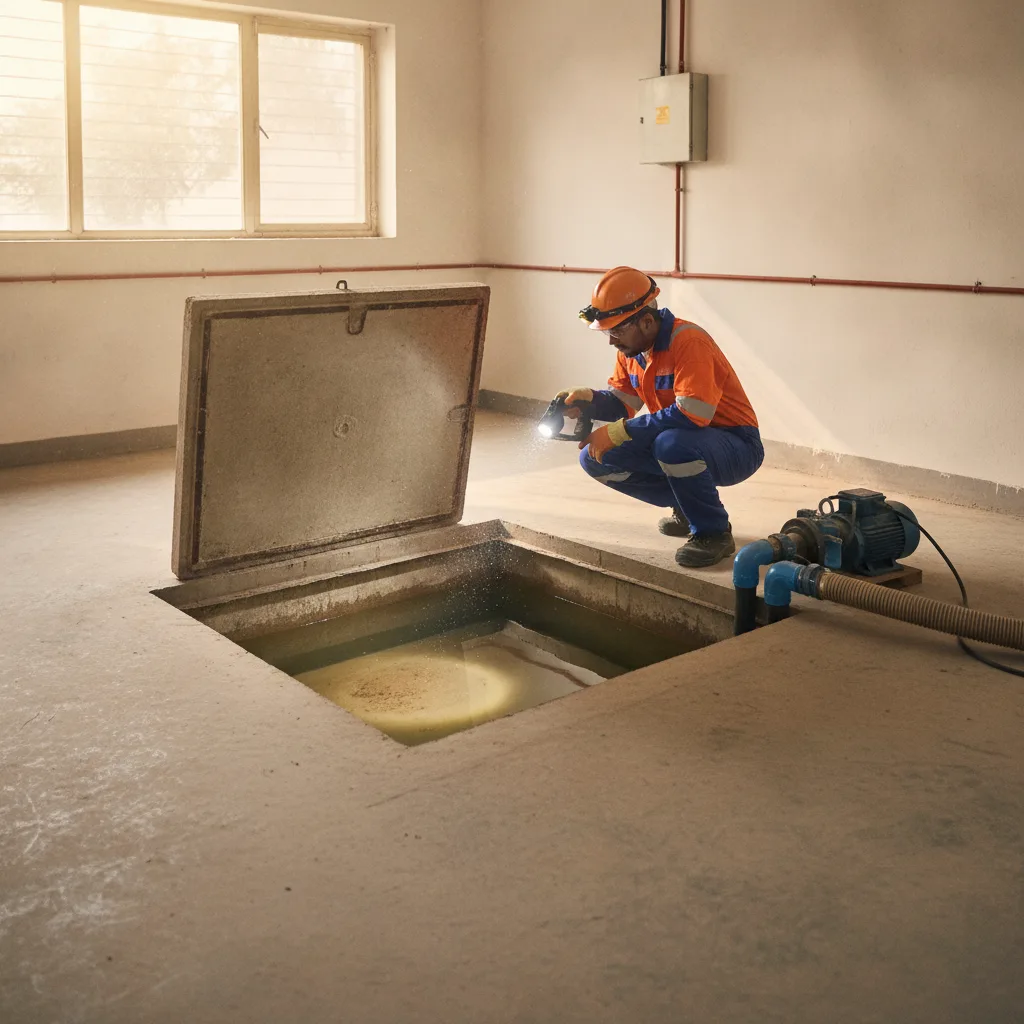
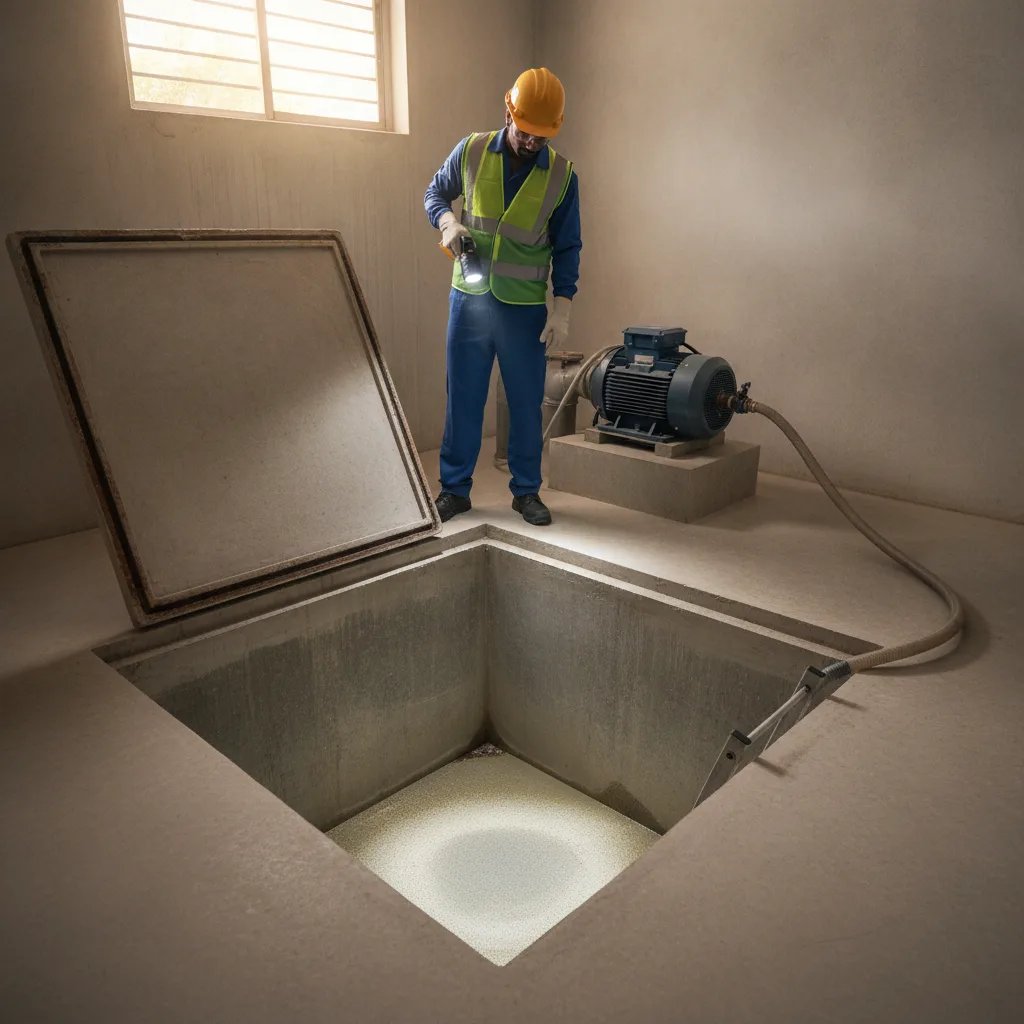
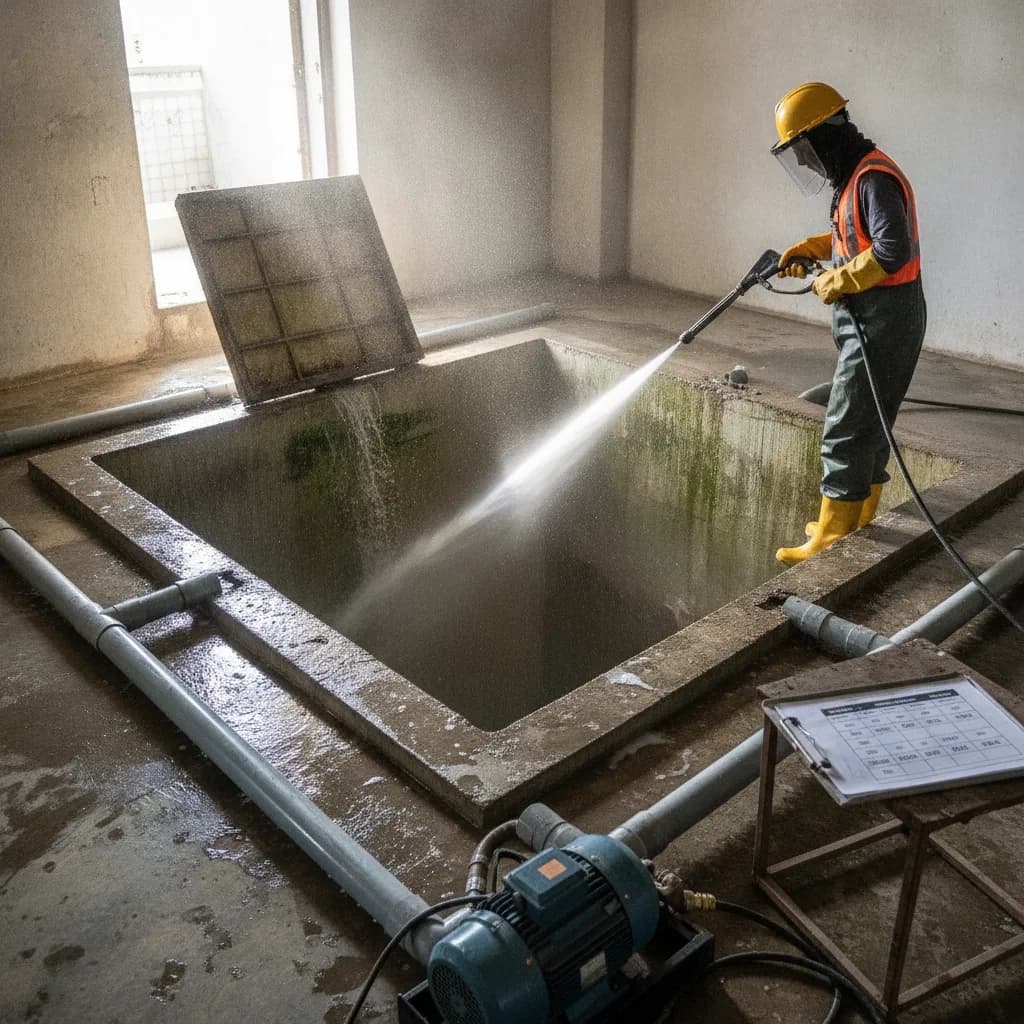
Thick sludge at the sump floor, often several inches, is invisible from the surface, and a brush from above does not touch it. Proper cleaning means someone working inside the sump with high-pressure equipment. A professional job includes:
- Full drainage and physical sludge removal, not chemical poured from the top
- High-pressure jetting of the walls and floor
- A check of inlet, outlet, and overflow pipes for blockages
- Disinfection with a food-grade product safe for drinking water
- A service report, which matters for apartment societies
The disinfection is the part that matters most. Consumer cleaning powders are not the same as food-grade sodium hypochlorite at the right concentration. The wrong product or dose can leave residue or simply fail to kill bacteria like E. coli that thrive in a dark, moist sump. This is what a proper professional sump cleaning gets right.
The Hidden Costs of an Incomplete Clean
A half-done clean creates a bigger problem a few months later. Residual sludge is a seed bed for bacterial regrowth, so DIY homes often need to clean more often, not less. Add the costs that never appear in the DIY sum:
- Illness: a bout of typhoid or gastroenteritis costs far more in treatment and lost days than the clean would have
- Faster filter wear: a poorly cleaned sump chokes RO membranes and pre-filters sooner
- Damage risk: scrubbing the walls wrongly can harm the sump's waterproofing and lead to seepage
When DIY Is and Is Not Sensible
There is one case where basic DIY works: a small overhead tank under 1,000 litres that is accessible and cleaned every two to three months without fail, with a proper food-grade disinfection rinse. Beyond that, it is not worth the risk. DIY is not sensible if:
- The sump has not been cleaned in six months or more
- You are on borewell water, which carries a higher mineral and microbial load
- There has been any flooding or sewage contamination nearby
- Your household includes elderly people, young children, or anyone with low immunity
- The sump holds more than about 3,000 litres
In these cases, sending someone down with a mop is not a clean; it is a health risk left unaddressed.
Why the Sludge at the Bottom Is the Real Work
The reason a surface rinse fails comes down to where the trouble sits. Heavier particles, sand, silt, rust flakes, and dead organic matter, settle to the sump floor and compact over months into a dense layer. On top of that, a biofilm forms on the walls, a slimy film of bacteria that anchors itself to the concrete and shields the colony underneath from any chlorine poured from above.
Chlorine needs direct contact and time to disinfect. Poured onto a biofilm, it is consumed by the outer layer within minutes and never reaches the living bacteria below. That is why a chemical dose from the top looks like action but changes little. The only reliable fix is to physically dewater the sump, lift out the sludge by hand and vacuum, and scrub the walls so the biofilm is removed, not just wetted.
The Safety Side Most People Underestimate
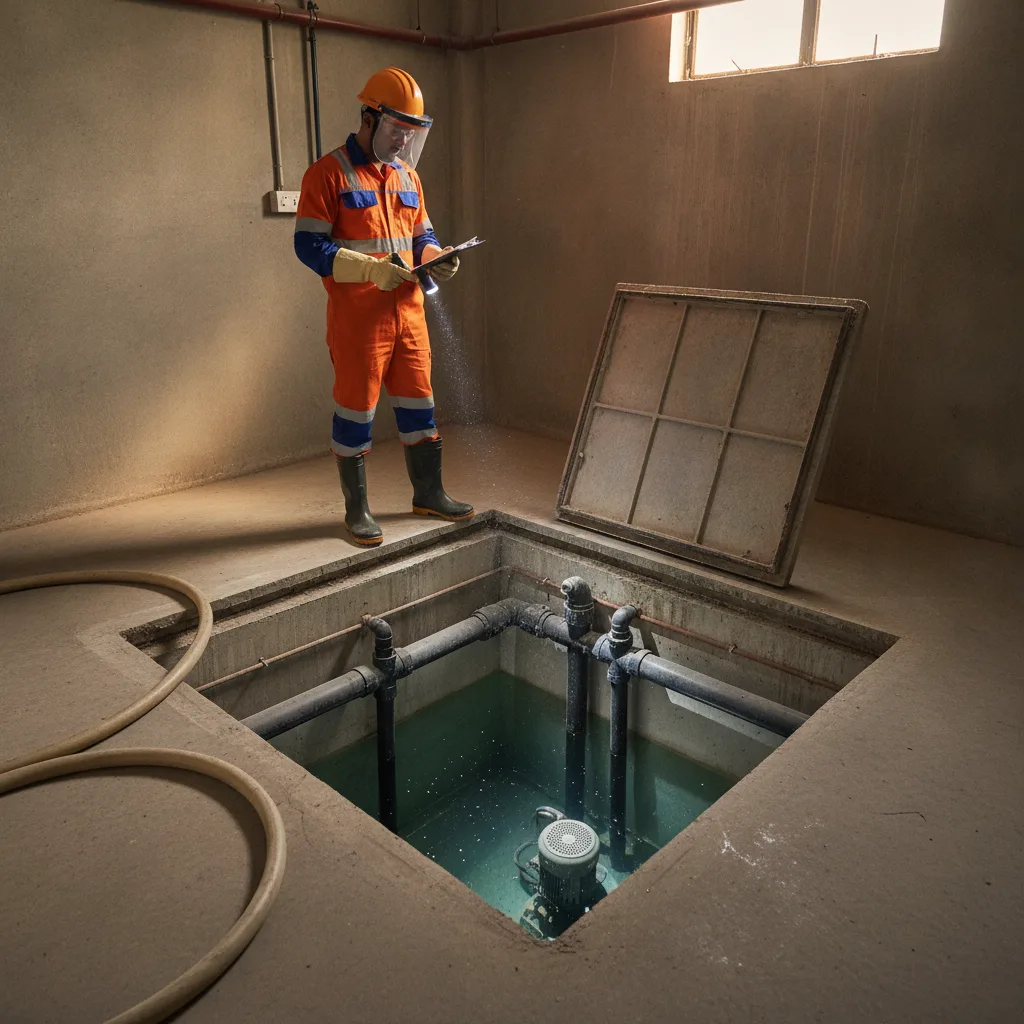
A sump is a confined space, and that is not a small detail. A closed, ground-level tank that has held still water can hold pockets of low-oxygen or foul air, especially if organic matter has been decomposing at the bottom. Climbing in without checking is genuinely risky, and doing it alone is worse.
Trained crews treat a sump the way it should be treated. They ventilate it first, never send one person in without a second person at the mouth, and use proper footing on wet, sloped floors. The waterproof-boots line in a DIY budget does not cover any of that. When you weigh DIY against a professional clean, the safety gap matters as much as the cleaning quality. A KBS sump clean starts at ₹1,249, priced after a short remote assessment so the figure is fixed before anyone arrives.
Frequently Asked Questions
How often should a sump be professionally cleaned?
Twice a year is the standard. On borewell water, or after any contamination event, every three to four months is better.
Is DIY sump cleaning safe?
For a small, accessible tank cleaned regularly, it can be managed. For any sump over about 2,000 litres, or one left for months, it is neither safe nor effective without proper equipment and trained people.
What chemical do professionals use that I cannot buy?
Food-grade sodium hypochlorite at a concentration matched to the tank volume. Consumer bleach is a different product and is not safe for drinking-water storage at the doses most people use.
Want it done properly, from drainage to disinfection with a service report? You can book a water tank and sump cleaning with the KBS team.
Want this handled by professionals in Bengaluru? Book Water Tank Cleaning, or message us on WhatsApp.