Essential Pre-Monsoon Sump Cleaning Tips for Bengaluru Homes
Before the monsoon sets in, the sump that stores your home's water is worth a proper clean. Through the dry months it collects sediment, sludge, and algae, and the rains raise groundwater and contamination risk, turning a neglected sump into a source of trouble just when you rely on it most. Here is why a pre-monsoon sump clean matters, what the process involves, and how to keep it clean between services.
Why It Matters Before the Rains
Your sump is the primary reservoir for the household, so its cleanliness directly sets the quality of the water you use. Cleaning before the monsoon:
- Prevents waterborne disease. A contaminated sump breeds the bacteria behind typhoid, cholera, and dysentery in stagnant water.
- Keeps water quality up. A clean sump sends sediment-free, odour-free water to your overhead tank.
- Protects the plumbing. Sediment clogs pipes and wears out pumps, leading to costly repairs.
- Restores capacity. Sludge at the bottom quietly cuts how much usable water the sump holds.
- Reduces pests and odour. Stagnant, dirty water smells and draws mosquitoes.
Why the Rains Change the Risk
Through the dry months the threat to a sump is mostly what settles inside it: fine sediment carried in from the supply, dissolved minerals, and a slick biofilm that builds along the walls at the waterline. Biofilm is a thin, slimy layer that bacteria anchor themselves in, and it clings far more stubbornly than loose silt.
The monsoon adds a second threat from outside. Rising groundwater and surface runoff push contamination toward any sump that is not fully sealed, and even a hairline crack in the wall or a lid that no longer seats can let silty, bacteria-laden water seep in. A sump cleaned in May goes into the season with sound walls and a sealed lid, which is as much of the protection as the scrubbing itself.
The Cleaning Process
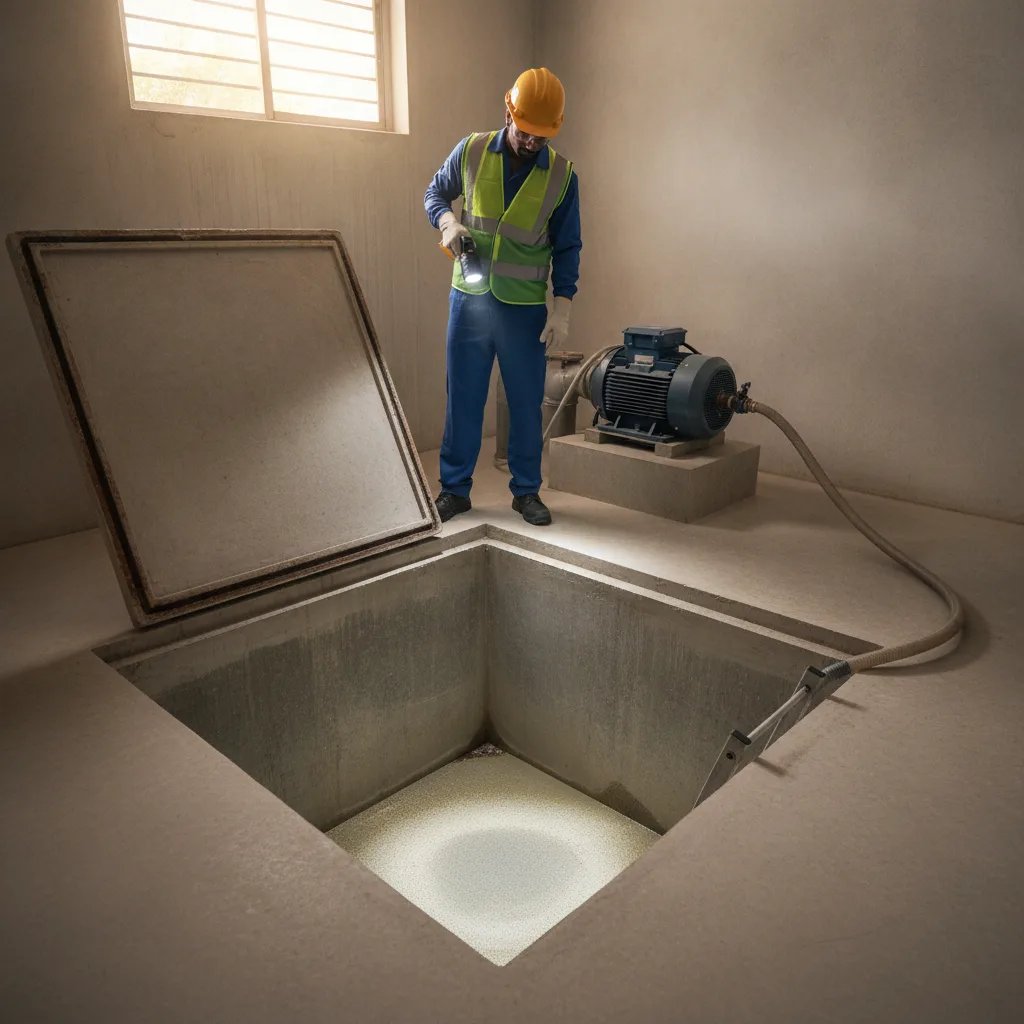
- Dewatering. The sump is drained fully with pumps.
- Sludge removal. The settled silt and debris, where most contaminants sit, are removed by hand or machine.
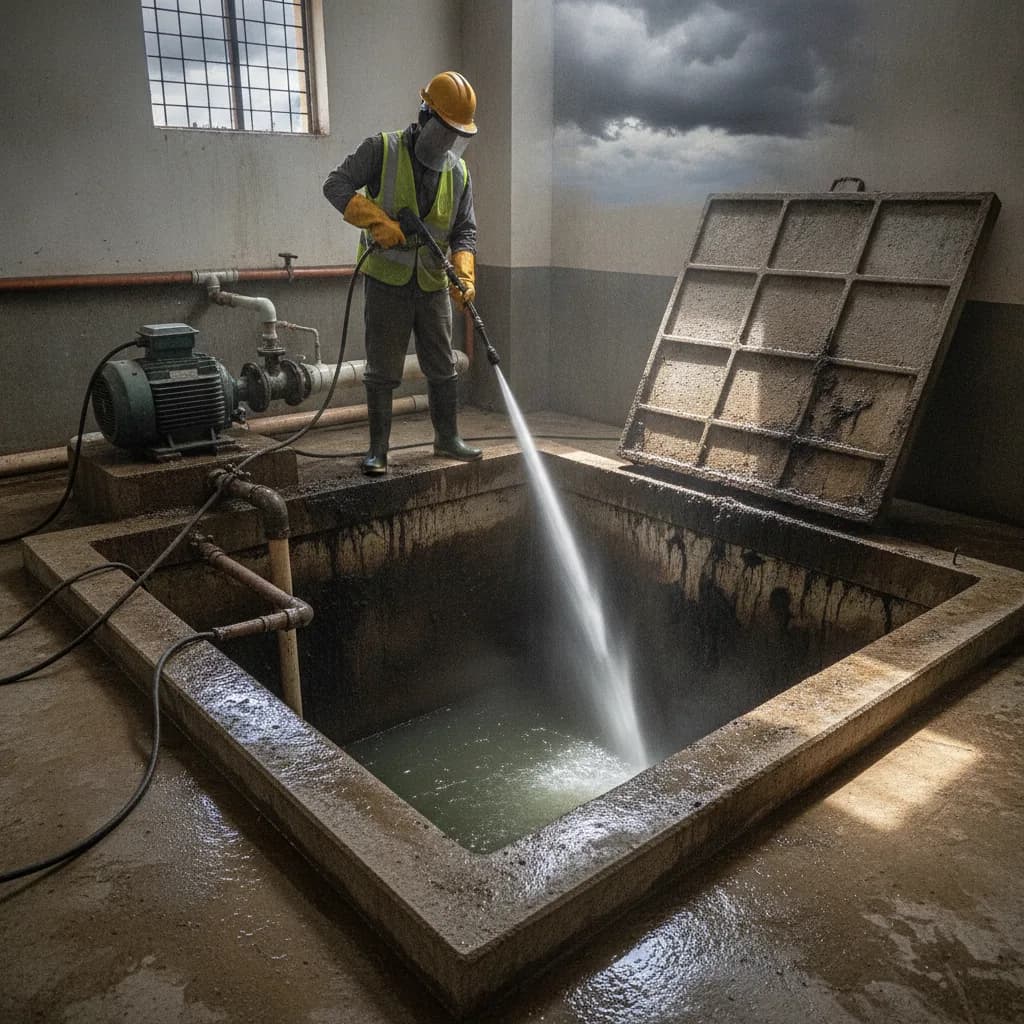
- High-pressure jetting. The walls and floor are cleaned to dislodge grime, algae, and biofilm.
- Scrubbing and disinfection. Surfaces are scrubbed and treated with a food-grade disinfectant to kill remaining pathogens.
- Rinsing. The sump is rinsed to clear all cleaning residue.
- Refill. It is left to dry, then refilled with fresh water.
A proper sump cleaning follows every step, since the disinfection is what actually makes the water safe. At KBS a sump clean starts from ₹1,249, priced after a short remote assessment where we look at the size and access, and every clean runs the same way: draining, hand-scrubbing, food-grade disinfection, rinse, and a water check before it goes back into use. There is no GST added, as we work under the composition scheme, so the figure you are quoted is what you pay.
Keeping It Clean Between Services
Professional cleaning is best done twice a year, ideally before the monsoon around May or June and after it around October or November, but a few habits help in between:
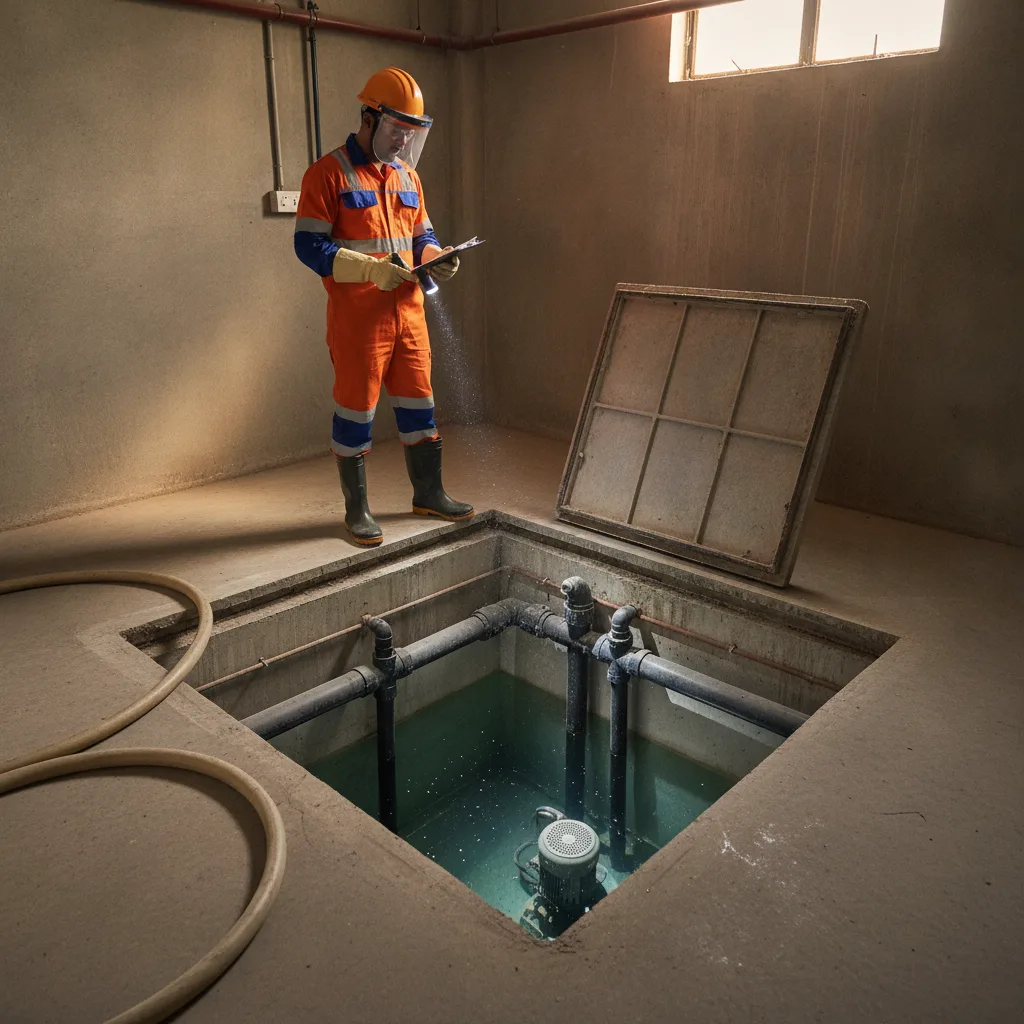
- Check periodically for discolouration, odour, algae, a drop in water pressure, or frequent pump trouble
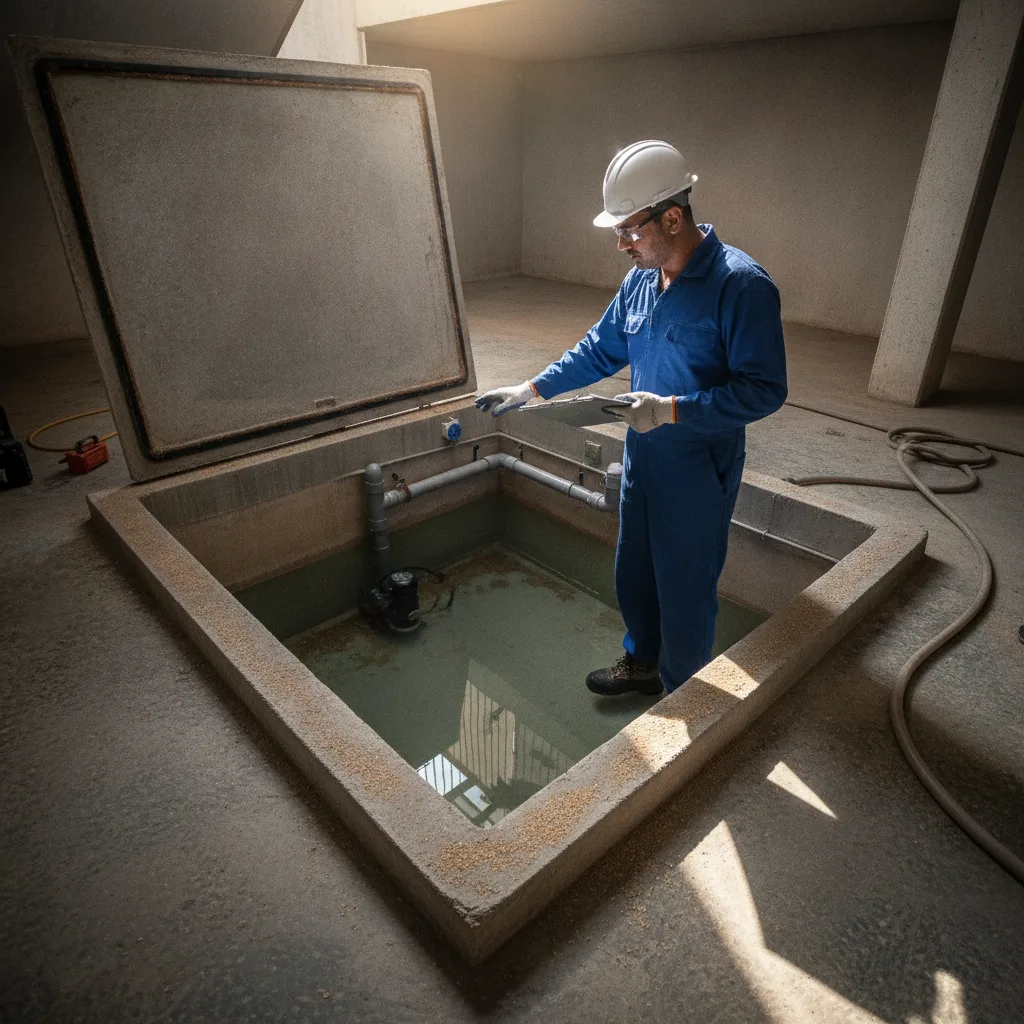
- Make sure the lid seals with no cracks or gaps that let in pests or runoff
- Get borewell water tested if the taste or smell changes
- Ensure no external pipe or drain empties into the sump
- Keep the area around the sump clear of debris and standing water
These are maintenance steps, not a replacement for a thorough professional clean. Homes on borewell supply are the exception to the twice-a-year rule: borewell water carries more dissolved sediment and minerals, so it settles faster, and those sumps do better on a shorter cycle of every three to four months.
Choosing a Service
When picking a provider, look for real experience, proper equipment like high-pressure jets and submersible pumps, safe and effective disinfectants, trained technicians who follow confined-space safety, genuine reviews, and adherence to health standards. A provider that gives a post-clean check and a clear scope is the one to trust.
- A neglected sump breeds the bacteria behind typhoid, cholera, and dysentery
- Sludge cuts storage capacity and clogs pipes and pumps
- A proper clean means dewatering, sludge removal, jetting, and disinfection
- Clean twice a year, before and after the monsoon
- Sealing the lid and clearing the surroundings help between cleans
Getting your sump ready for the rains? You can book a water tank and sump cleaning with KBS, trusted by 15,000+ Bengaluru homes.
Want this handled by professionals in Bengaluru? Book Water Tank Cleaning, or message us on WhatsApp.