How Contaminated Water Tanks Cause Typhoid: A Bangalore Homeowner's Guide
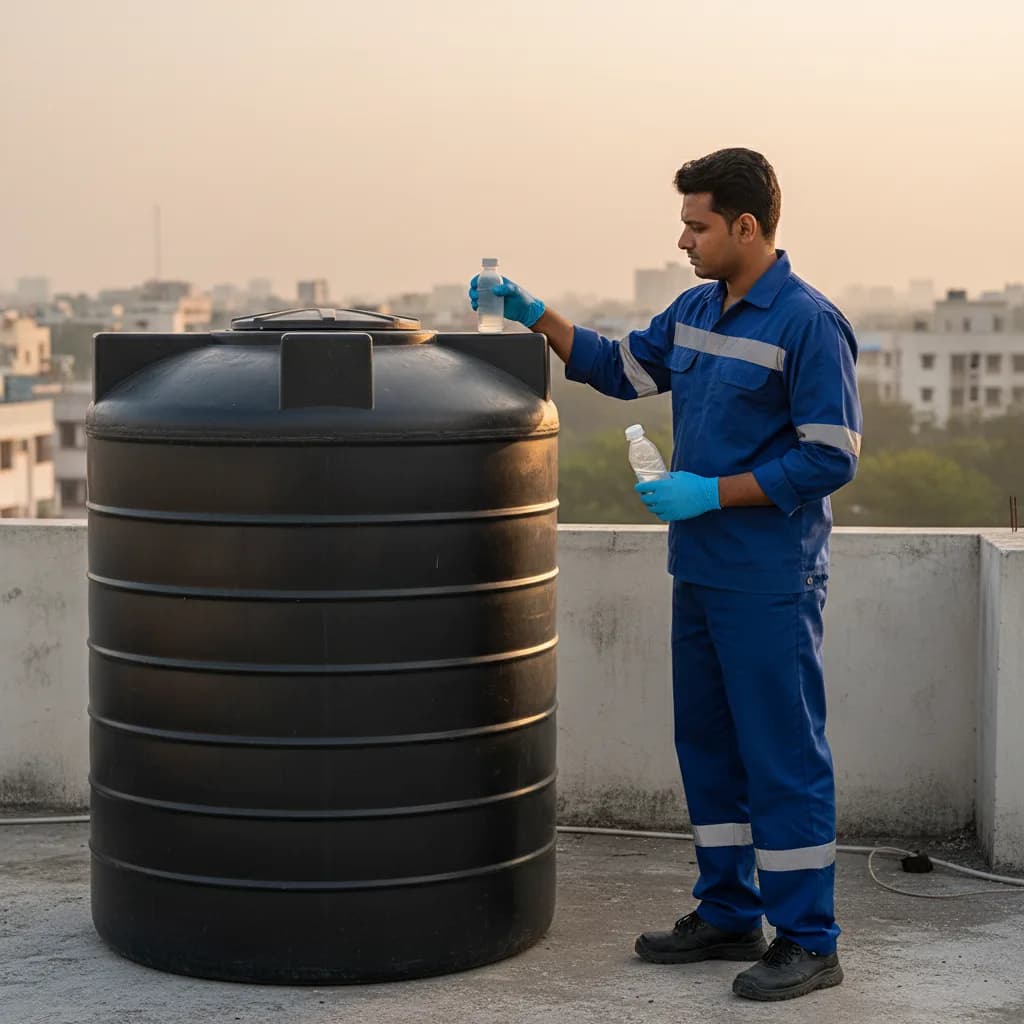
Bengaluru sees a steady stream of typhoid cases, and a significant share trace back to a preventable source: dirty water tanks. Understanding how a contaminated tank leads to typhoid is not academic; it is practical safety for every home. The bacterium responsible, Salmonella Typhi, enters a tank through cracked lids, unfiltered supply, or borewell water affected by surface runoff, then multiplies in the warm, low-oxygen sludge at the bottom. Here is how the chain works and how to break it.
The Transmission Chain Inside a Tank
Typhoid does not appear randomly; there is a traceable chain, and the tank is often the key link:
- Entry. Salmonella Typhi gets in through contaminated supply during low-pressure events, through cracked or uncovered lids, or via borewell water from shallow, polluted aquifers.
- Colonisation. It settles into the sludge and biofilm at the bottom, which offers both nutrients and protection from weak chlorination.
- Amplification. Bengaluru's warm temperatures let a small load grow to infectious levels within a few days.
- Exposure. The water is used for drinking, cooking, or brushing teeth, and it takes only a small dose to cause illness, less in children and the elderly.
- Illness. After an incubation of one to several weeks, the person develops sustained fever, abdominal pain, and weakness.
Why Bengaluru's Water Raises the Risk
Many buildings mix BWSSB, borewell, and tanker water in one storage system, and older sumps receive tanker water of unverified quality alongside treated supply. The pre-monsoon and monsoon months raise the risk further, as rain lifts the water table and pushes surface contaminants, including sewage runoff, into shallow borewells. And while chlorination works in the main line, it fades fast once water sits in an uncleaned tank, because the biofilm on the walls consumes the chlorine before it can disinfect. That makes the assumption that treated water is always safe at the tap unreliable.
Warning Signs Your Tank May Be Contaminated
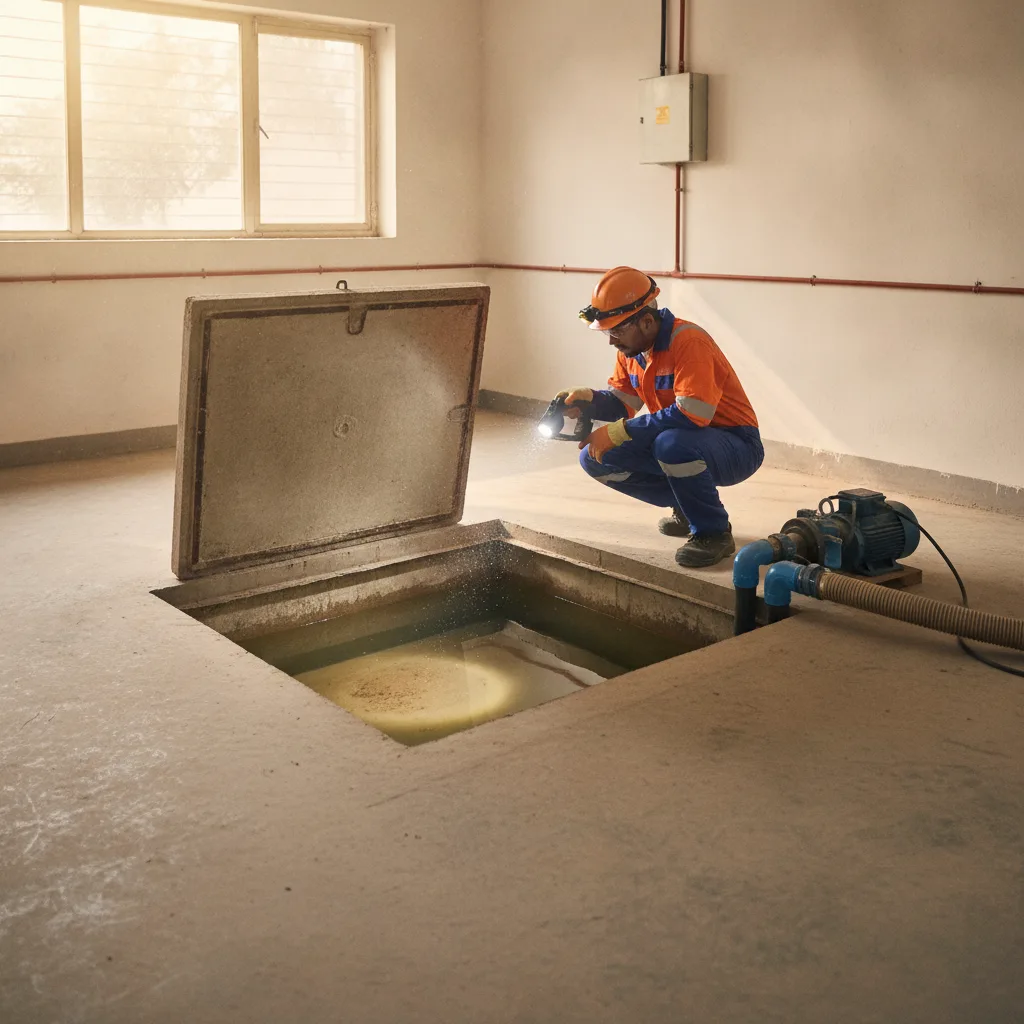
- Yellow or brown discolouration, especially after a refill
- A musty, sulphurous, or earthy smell in the water
- Visible slime or black streaks on the tank walls
- Recurring stomach illness among several family members, the most urgent signal
- More than six months since the last professional clean
The absence of these signs is not a guarantee. Water can be clear and odourless and still carry an infectious load if the bottom sludge has not been mechanically removed, so only a proper clean plus a water test confirms a tank is safe. And if two or more people at home develop typhoid-like symptoms within weeks of each other, treat a shared water source as the prime suspect. Ask your doctor for blood cultures, and arrange a clean and a water test at the same time rather than waiting for results before removing the source.
What Professional Cleaning Does
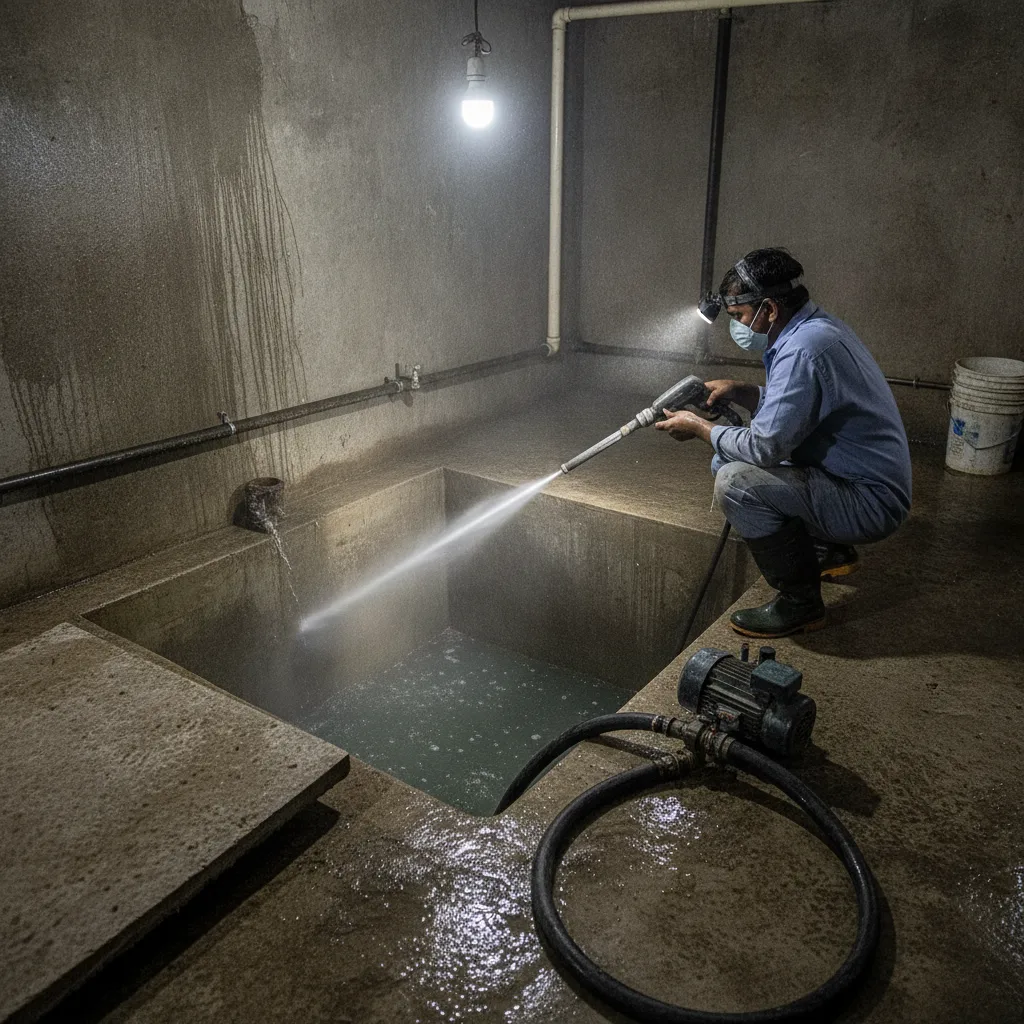
A mop-and-flush does not work against Salmonella Typhi, which sits inside biofilm that resists scrubbing and dilute chlorine applied without dwell time. A proper clean fully dewaters the tank, mechanically extracts the sludge and biofilm where the bacteria live, scrubs with a food-grade disinfectant at the correct concentration and contact time, disinfects the inlet and outlet pipes so the recontamination paths are covered, and finishes with a post-clean water check. A thorough water tank and sump cleaning is what actually removes the risk, not a rinse.
How Often to Clean
The recommendation is at least every six months. Given borewell dependency and the monsoon window, quarterly cleaning is the safer standard for apartments, and twice a year, ideally before and after the rains, is the baseline for homes on treated supply with tanks in good condition.
How the Bottom Sludge Keeps a Tank Reinfecting Itself
The reason typhoid keeps returning to some buildings is that the source is never removed. Salmonella Typhi does not float in the open water where a scoop or a rinse would catch it. It lives in the sludge and biofilm at the bottom and on the walls, in a low-oxygen layer that shelters it and feeds it.
Every time fresh water enters, a little of that contaminated layer mixes back into supply. So a tank that is topped up but never fully emptied and scrubbed carries its own reinfection engine. Breaking the chain means dewatering completely and mechanically removing that layer, which is exactly why a rinse leaves the problem in place.
What a Post-Clean Water Check Actually Confirms
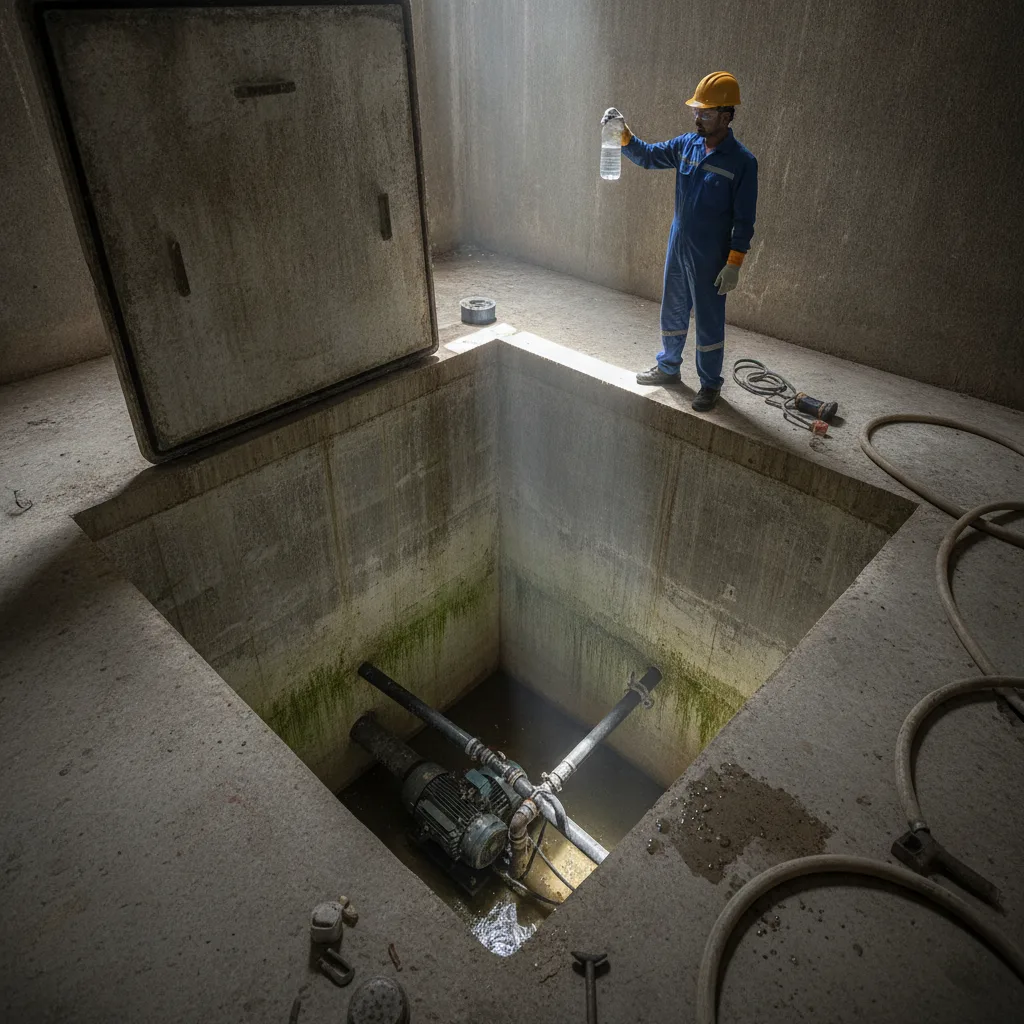
A water check after cleaning is not a formality. It is the step that turns a clean tank into a verified-safe one. A simple check looks at whether the water runs clear, whether any disinfectant residue has been flushed to a safe level, and whether the smell and appearance are right before the tank goes back into daily use.
This closes the loop the eye cannot. As covered above, water can look and smell fine and still carry a load, so the value of the check is that it confirms the clean worked rather than assuming it did. If you ever arrange a clean during an active illness in the house, ask for the water check to be done at the end so you are not guessing. Every KBS clean includes that draining, hand-scrubbing, food-grade disinfection, rinse, and final water check as standard.
Concerned about your water? You can book a water tank and sump cleaning with KBS, trusted by 15,000+ Bengaluru homes.
Want this handled by professionals in Bengaluru? Book Water Tank Cleaning, or message us on WhatsApp.