How Often Should Your Apartment Sump Be Cleaned in Bangalore? BWSSB and Safety Guidelines
Ask ten apartment secretaries in Bengaluru how often their sump should be cleaned and you'll get ten different answers. Some say once a year. Some say every six months. A few haven't checked in over two years and don't want to admit it.
The truth depends on your water source, tank material, and how many families are drawing from it daily. BWSSB has guidelines, but they're broader than most people realise, and the real-world answer for a 200-flat complex on borewell water is different from a 20-flat building on Cauvery supply.
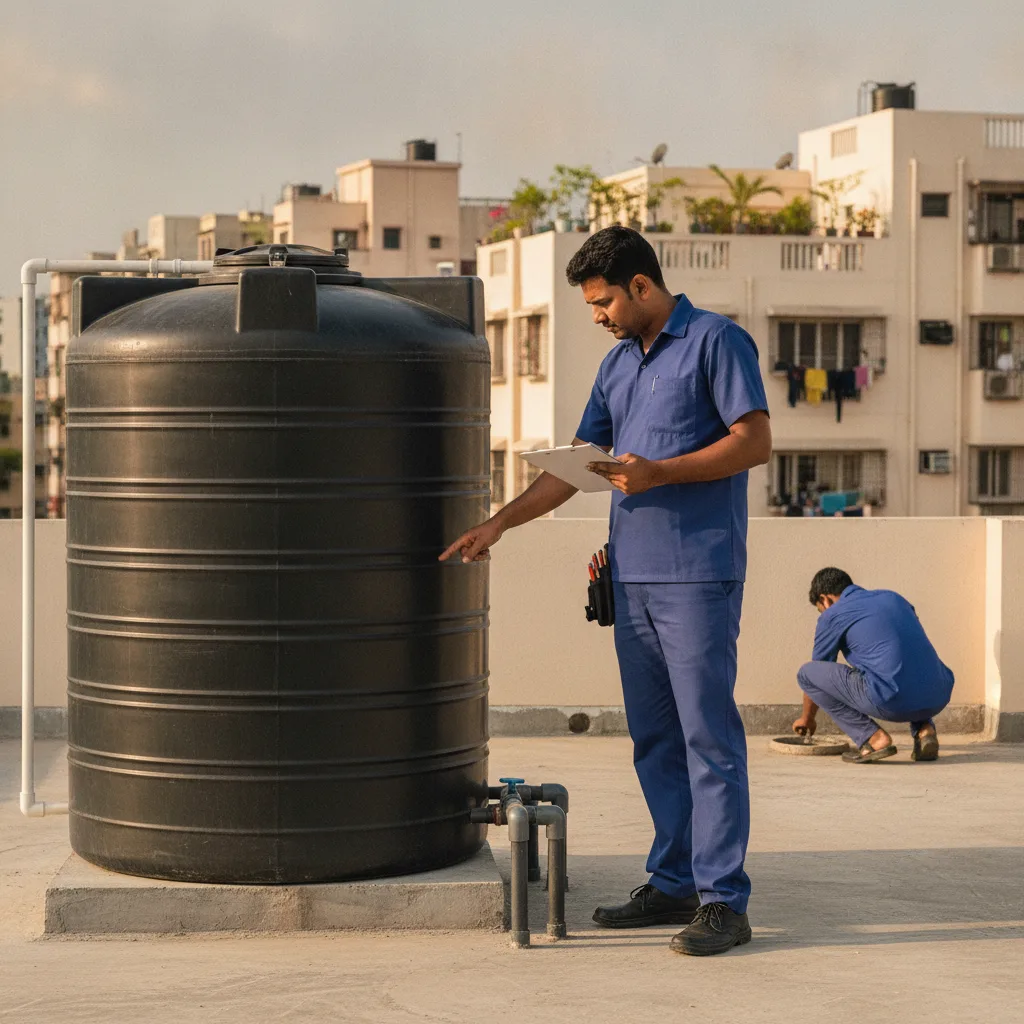
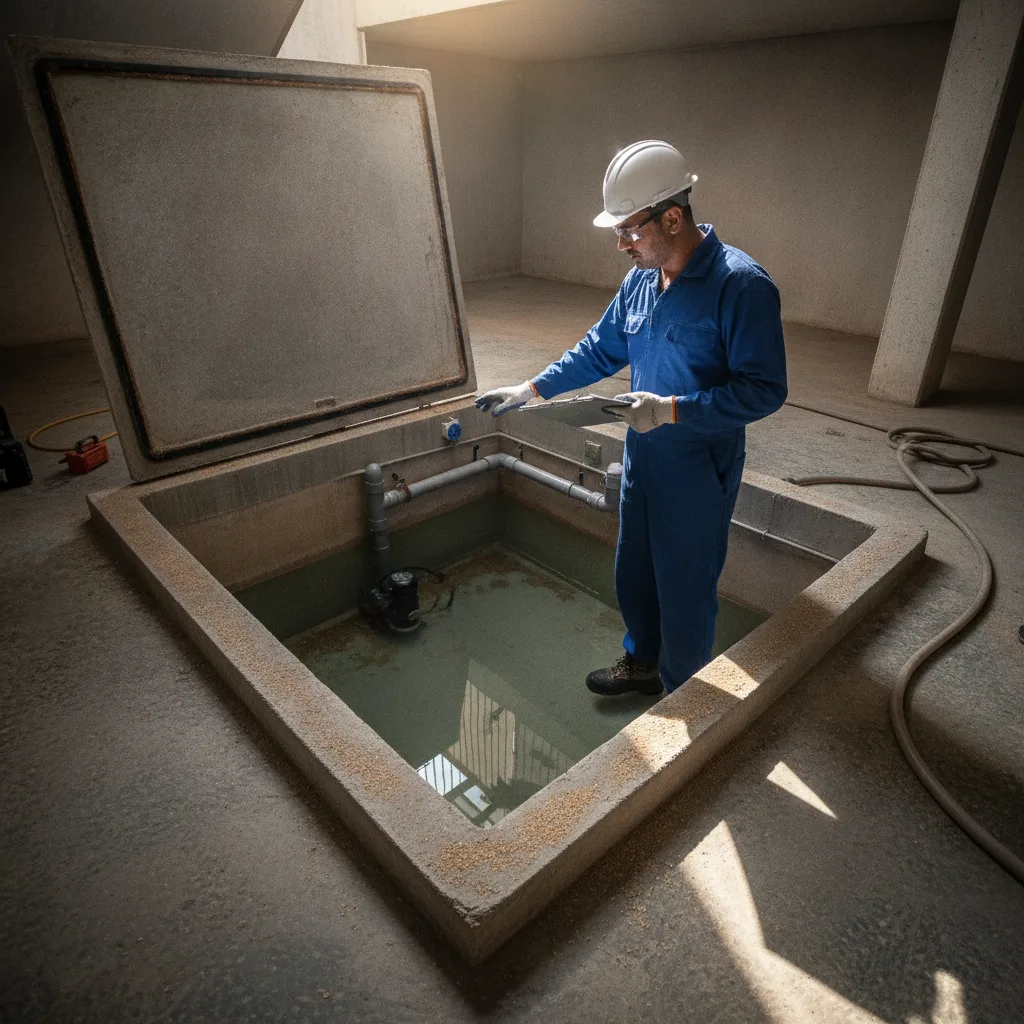
If your last clean was more than eight months ago, it's worth getting a proper water tank and sump cleaning service scheduled rather than guessing. A quick inspection tells you more than any calendar rule ever will.
What BWSSB actually recommends
BWSSB's guidance for residential and apartment sumps is to clean underground and overhead tanks at least once every three to six months, depending on usage intensity. This isn't a strict enforced law with penalties attached, it's a public health recommendation, similar to how BBMP advises fogging during monsoon.
The three-month mark applies to high-occupancy buildings, meaning apartments with 50+ units where water turnover is constant and sediment builds up faster. The six-month mark is more realistic for smaller buildings or independent houses with lower daily consumption.
What BWSSB doesn't spell out clearly is what happens between cleanings. That's where a lot of associations go wrong. They treat the guideline as a fixed date to circle on the calendar instead of a baseline to adjust based on what's actually happening inside the tank.
Why borewell water changes the timeline
If your building runs partly or fully on borewell water, the frequency should shift closer to three months, sometimes even less. Borewell water in Bengaluru carries dissolved iron, calcium, and often a fine silt that Cauvery water simply doesn't have in the same quantity.
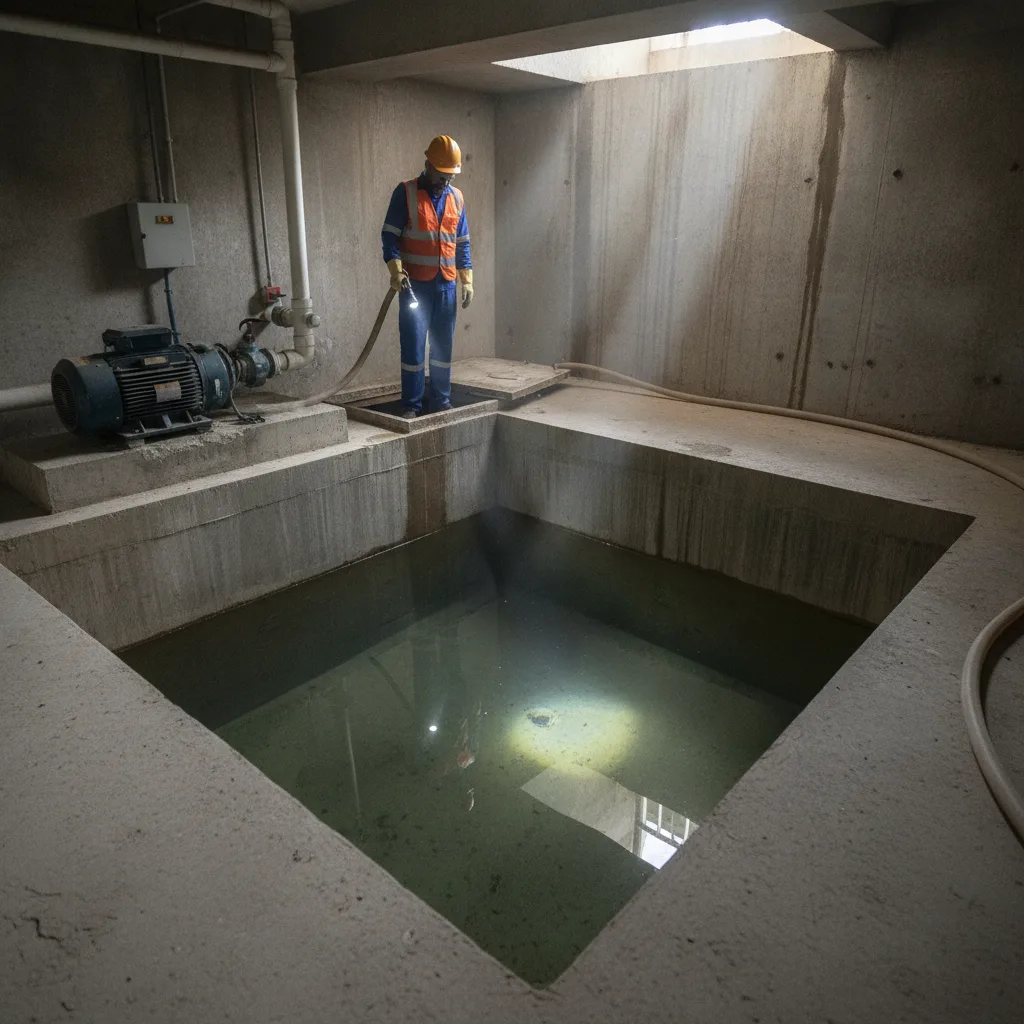
Over weeks, that mineral content settles at the bottom of the sump as a grey-brown sludge layer. Technicians call it scale buildup, and it's the same process that clogs pipes and stains bathroom tiles over time. In a sump, it doesn't just sit there quietly. It breaks down and feeds bacterial growth, especially in warmer months.
Buildings with mixed supply, part BWSSB, part borewell, tend to get away with the standard six-month cycle. Pure borewell-dependent buildings need to tighten that to every three to four months to stay ahead of sediment accumulation.
Signs your sump needs cleaning sooner than scheduled
- Water has a faint earthy or metallic smell when it comes out of the tap
- Visible cloudiness or a yellowish tint, especially right after the motor starts
- A layer of film or particles settling at the bottom of stored water in buckets
- Increased complaints of stomach upset among residents in the same block
- Visible algae or greenish tinge near the tank's inlet or overflow pipe
Any one of these on its own might mean nothing. Two or more together, especially the smell and cloudiness combination, usually means the sump is overdue regardless of what the calendar says.
Tank material matters more than people think
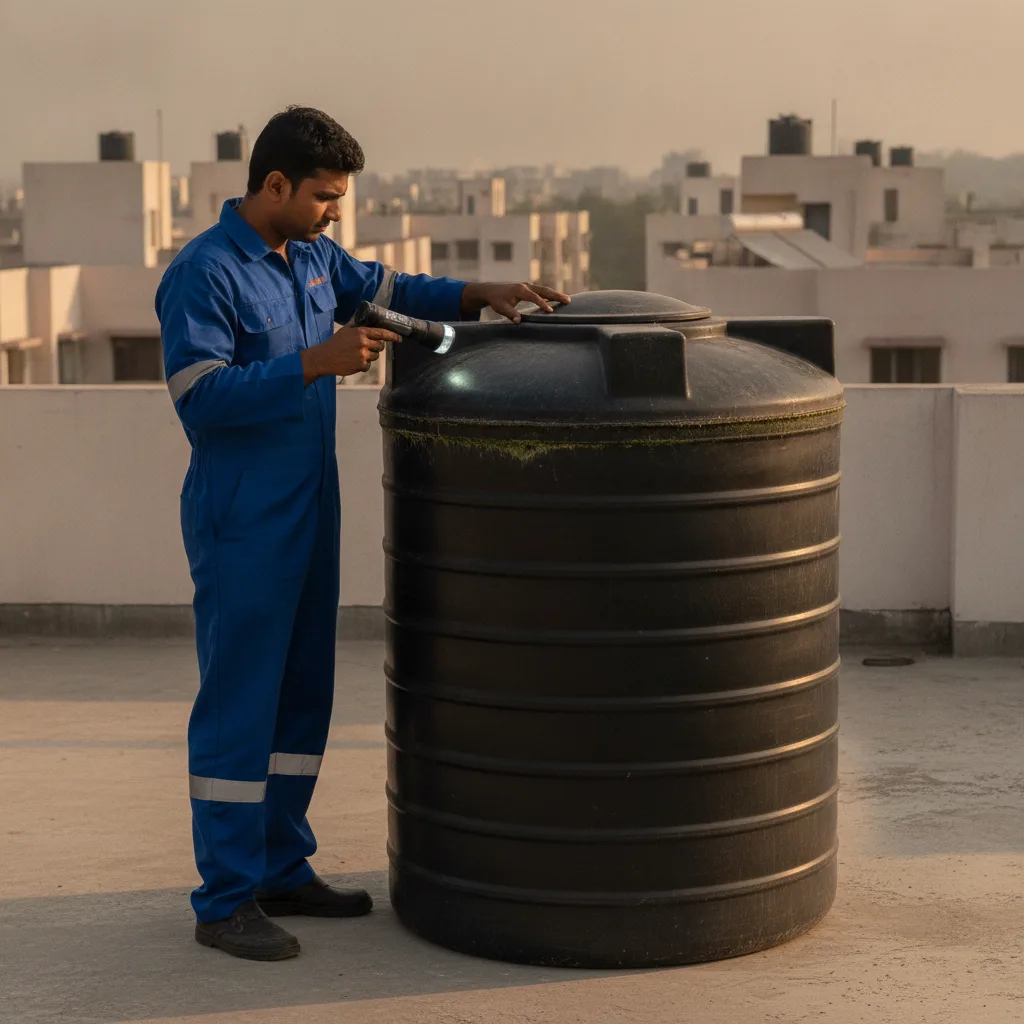
Concrete sumps, which is what most older Bengaluru apartments have, are more porous than the newer PVC or fibre-reinforced tanks. That porosity means concrete absorbs a small amount of moisture into its walls, which in turn keeps the surface consistently damp between fill cycles. Damp concrete is a much better surface for bacterial films and algae to cling to than smooth plastic.
Apartments built in the last five to seven years, particularly premium projects, are increasingly using PVC or HDPE overhead tanks that resist this buildup better. If your building still runs on an older concrete sump, add a month or two of buffer to whatever frequency you're planning. It's cheap insurance against a bigger, dirtier job later.
Monsoon changes the equation too
June through September brings a second reason to clean more often. Rainwater runoff, however well the tank is sealed, tends to sneak in through poorly fitted lids and hairline cracks in older sumps. That extra moisture speeds up algae growth and gives mosquitoes a stagnant surface to breed on within days.
Most experienced facility managers in the city schedule one clean right before the monsoon starts and another right after, regardless of what their regular cycle says. It's a practical adjustment, not a BWSSB rule, but it works because it targets the two moments water quality is most likely to dip.
| Building type | Water source | Recommended frequency |
|---|---|---|
| Large apartment (50+ units) | Borewell or mixed | Every 3 months |
| Mid-size apartment (20-50 units) | Mixed supply | Every 4 months |
| Small apartment/villa | BWSSB Cauvery | Every 6 months |
| Any building | Any source | Add 1 extra clean pre-monsoon |
What happens if you skip cleanings
Nothing dramatic happens after one missed cycle. The risk builds quietly. Sediment layers compound, bacterial films thicken, and by the time residents notice smell or taste changes, the sump usually needs a deeper, more time-consuming clean than a routine one would have been.
We've walked into sumps that hadn't been touched in over eighteen months and found sludge nearly four inches thick at the base. That job takes double the time and double the water for rinsing compared to a tank on a normal schedule. Associations that skip cleanings to save money often end up paying more per clean in the long run, just less frequently.
- BWSSB recommends cleaning sumps every 3 to 6 months depending on building size and usage
- Borewell-dependent buildings need cleaning every 3 to 4 months due to mineral sediment
- Concrete sumps trap moisture and need slightly more frequent attention than PVC tanks
- Add an extra clean just before monsoon to counter rainwater seepage and algae growth
- Delayed cleaning means thicker sludge and longer, costlier cleaning jobs later
If it's been a while since your building's last clean, or nobody quite remembers when it was, that's usually the clearest sign it's due. Reach out to KBS Home Services and we'll get your sump checked and cleaned properly, on a schedule that actually fits your building, not just a generic date on a form. Book Water Tank Cleaning and let our team handle the inspection first.
Want this handled by professionals in Bengaluru? Book Water Tank Cleaning, or message us on WhatsApp.