Pre-Monsoon Sump Cleaning Checklist for Bangalore Apartments
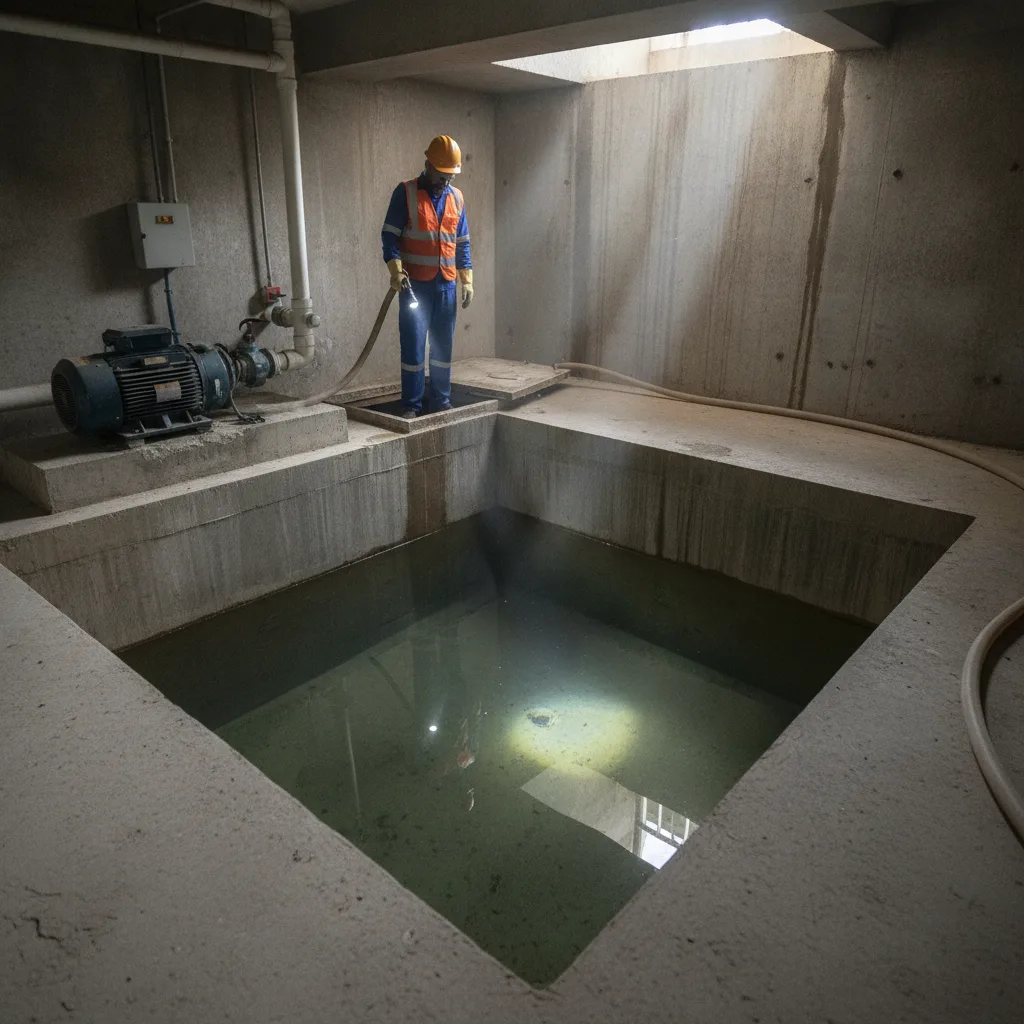
June brings the first real spells of monsoon rain to Bengaluru, and that's when apartment sumps take the biggest hit. Runoff carries silt, leaf litter and road dust straight into overflow pipes and inlet points. A sump that looked fine in April can turn cloudy within two weeks of steady rain.
Most apartment associations wait until residents complain about smelly or discoloured water before calling anyone. That's backwards. If you get ahead of it now, you avoid the scramble later when every cleaning crew in the city is booked solid. It's worth lining up a professional water tank and sump cleaning service before the rains peak rather than after residents start complaining.
Why sumps get hit harder in monsoon
An underground sump sits close to the water table and often has an overflow pipe connected to the storm drain or the compound's rainwater line. When that drain backs up during heavy rain, dirty surface water can siphon back into the sump through the same pipe.
Humidity is the other factor nobody thinks about. Bengaluru's monsoon air holds enough moisture to slow down evaporation inside the sump chamber, which means any algae or biofilm that starts forming on the walls doesn't dry out and flake off on its own. It just keeps spreading.
Checklist: what to inspect before the rains set in
Walk through these points with your building's facility team or plumber before the monsoon really gets going.
- Inlet and overflow pipes: Check that the overflow outlet is above ground level and doesn't connect directly into a storm drain that could back up. If it does, get a non-return valve fitted.
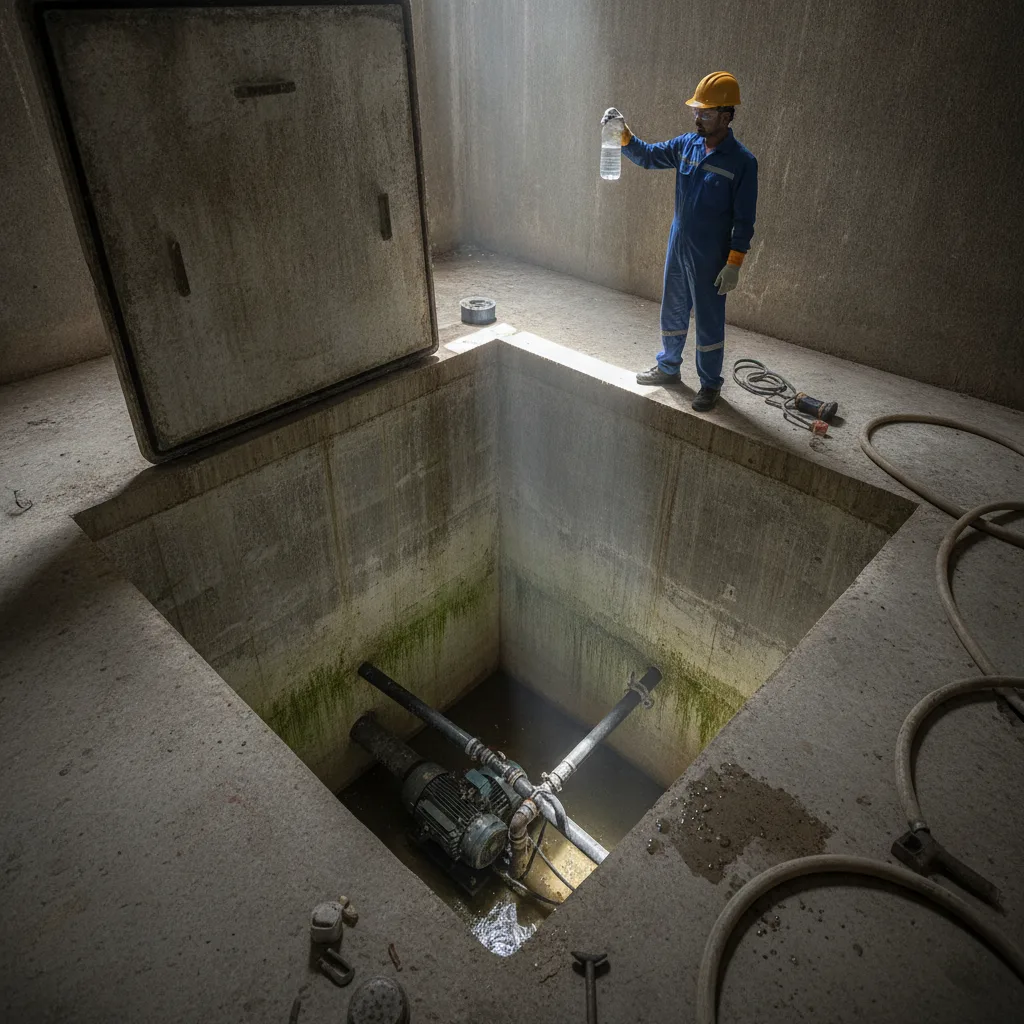
- Lid and manhole seal: A cracked or loose sump lid lets rainwater seep in around the edges. Even a 2mm gap is enough for silty runoff to trickle through during a downpour.
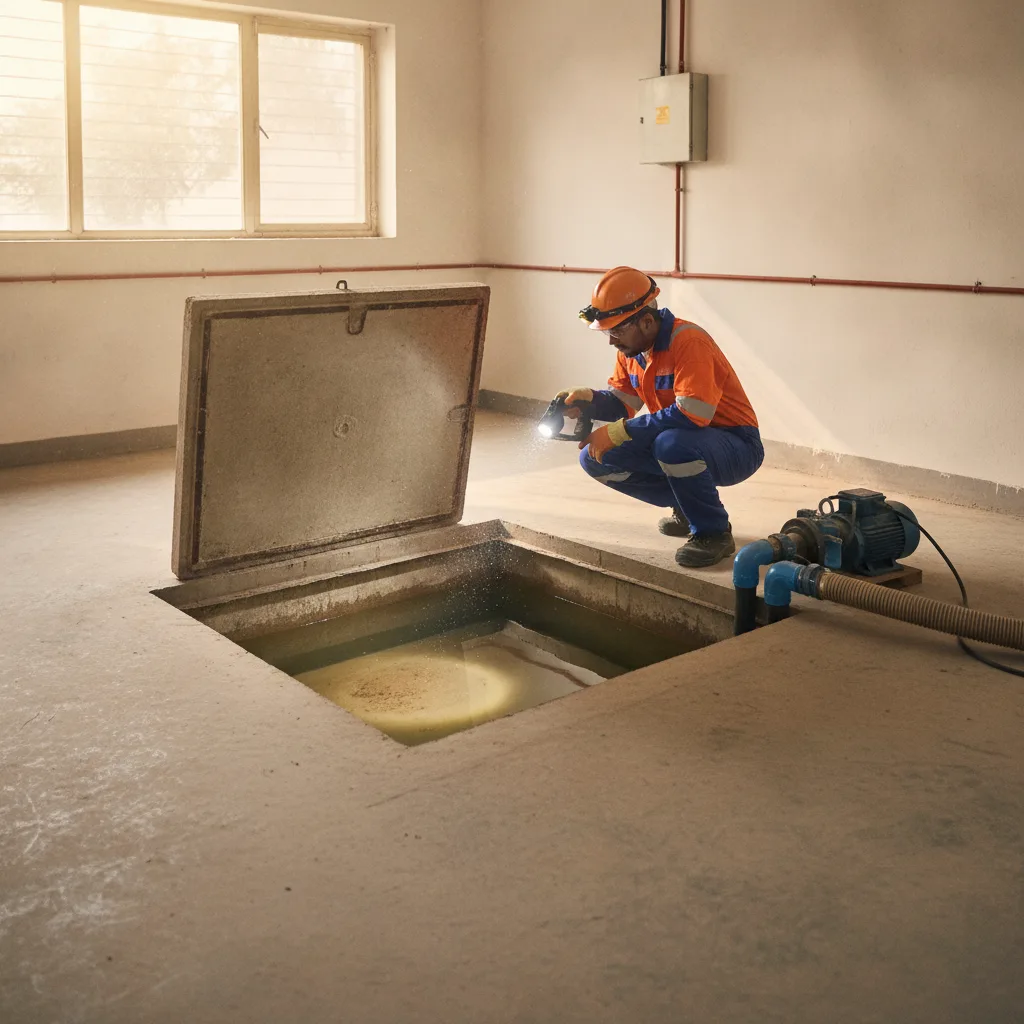
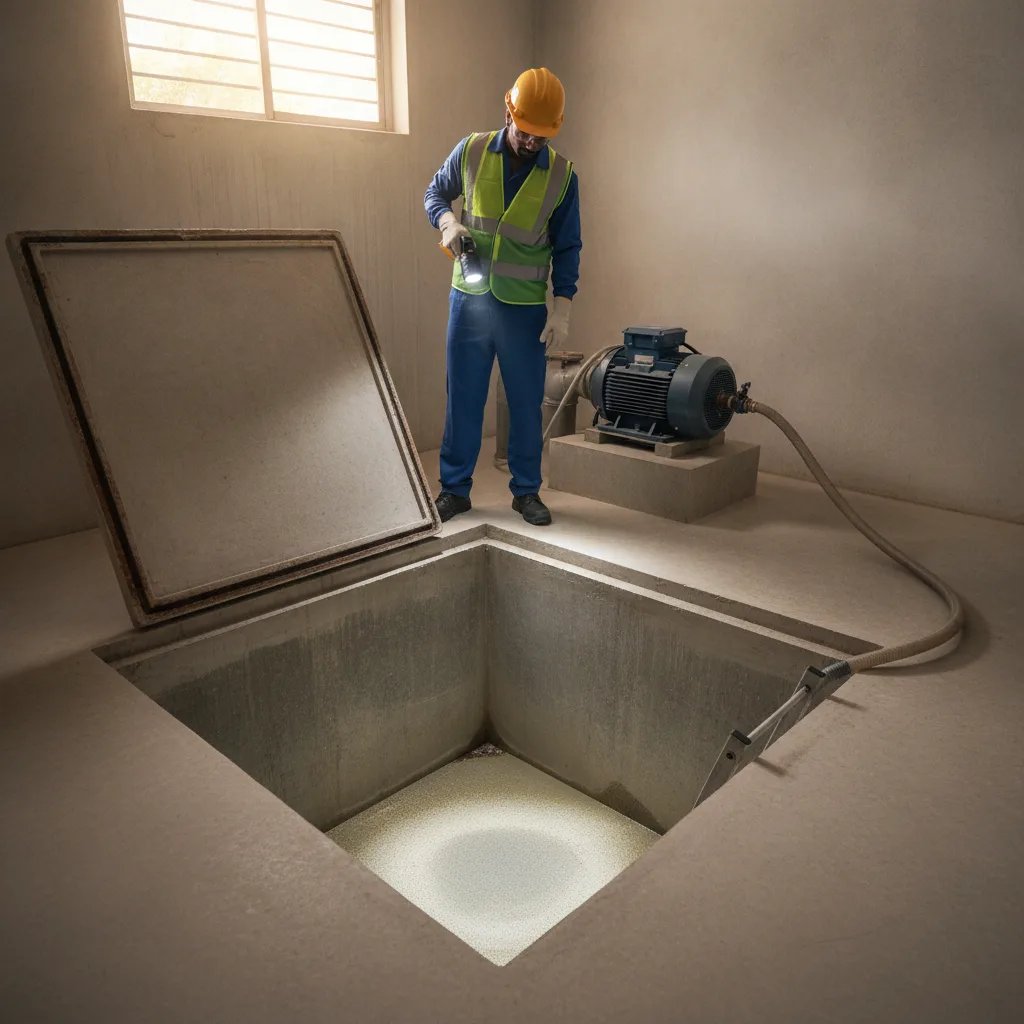
- Sludge depth: Lower a torch and check how much sediment has settled at the bottom. Anything more than an inch of sludge means the last cleaning cycle is overdue.
- Wall staining and biofilm: Dark, slippery patches on the inner walls are early-stage algae growth. This spreads fast once monsoon humidity sets in.
- Motor and float valve: Confirm the pump isn't drawing water from right above the sludge layer. If the intake pipe sits too low, every draw stirs up sediment into the household supply.
Cleaning frequency that actually makes sense for the season
KBS generally recommends water tanks get cleaned every 3 to 4 months. Sumps, because they sit lower and collect more sediment from ground-level runoff, often need a monsoon-specific cleaning even if the last scheduled one was only two months back.
If your building is in a low-lying pocket or near a stormwater drain, that gap should shrink further. Waterlogging in the compound during heavy rain is a strong sign the sump is taking in more than it should.
What a pre-monsoon clean should cover
A proper pre-monsoon sump cleaning bangalore apartments need isn't just a quick rinse. It should include full sludge removal from the base, scrubbing of the inner walls to strip biofilm before it hardens, and a check on the pipe joints for cracks that widen when the ground shifts slightly from saturated soil.
Chlorination after cleaning matters more in this season too, since bacterial regrowth happens faster in humid, warm conditions than in the dry months.
A quick example from the field
We've opened sump lids in July and found what looks like wet clay coating the bottom, sometimes three to four inches thick, in buildings that skipped their April cleaning. That's not unusual for basements near open drains. It just means the schedule needs to shift earlier, not that anything unusual happened.
Getting your building's timeline right
Apartment committees in Bengaluru that plan well usually finish their pre-monsoon cleaning by the last week of May. That gives a buffer before the first heavy spells typically arrive in early June. Waiting until the rain has already started means working around a wet, harder-to-access sump chamber and losing water supply during peak usage hours.
- Check overflow pipes and manhole seals for gaps before the first heavy rain
- An inch or more of sludge at the sump base means cleaning is overdue
- Humidity slows natural drying, so algae spreads faster once monsoon sets in
- Aim to finish cleaning by late May, ahead of the June rains
- Chlorinate after cleaning since bacterial regrowth is quicker in humid weather
If your building hasn't scheduled its sump check yet, don't wait for the first complaint about smelly water to come in. Book Water Tank Cleaning with KBS and get it sorted while your sump is still easy to access and the rains haven't made the job harder.
Want this handled by professionals in Bengaluru? Book Water Tank Cleaning, or message us on WhatsApp.