Lingarajapuram Sewage Contamination Scare: How Water Tank and Sump Cleaning Protects Your Family
In early 2026, residents of the KSFC Layout area of Lingarajapuram noticed their tap water carrying a foul smell and a dirty tinge, collecting that way in their underground sumps. Within days, families along the lane reported vomiting, diarrhoea, and stomach infections, and some needed hospital treatment. Investigators traced it to damaged pipes that let sewage seep into the drinking-water supply. BWSSB halted supply to the stretch, arranged tanker water, and restored it only after repairs and a quality clearance. The incident was contained, but the lesson applies to every home: contamination that enters the supply does not stay in the pipe. It settles in your sump and tank and stays there long after the pipeline is fixed.
What Happened, and Why It Matters Everywhere
The Lingarajapuram case was a classic cross-connection: a sewage line and a water line running close, with damaged pipes letting one leak into the other. Because the bad water looked and smelled wrong only after it had been pumped into home sumps, many residents were exposed before anyone identified the problem. BWSSB did the right things, stop supply, send tanker water, inspect and repair the line, and clear it by testing. But there is a gap civic action cannot close for you: once contaminated water has filled your sump and tank, fixing the public pipeline does not clean your storage.
Why Your Storage Turns a Pipeline Problem Into a Household One
A supply pipeline is flowing and chlorinated. Your sump and tank are the opposite, still, warm, and dark, and when even a little contaminated water enters, three things happen:
- It settles and concentrates. Solids and organic matter sink into a sludge layer where bacteria like E. coli and Salmonella Typhi survive and multiply.
- Chlorine protection disappears. Any residual disinfectant is used up within a day by the biofilm on the walls, leaving the stored water unprotected.
- Re-exposure continues for weeks. Every time the pump runs, it stirs that sludge back into the water you drink and cook with, long after the supply is declared safe.
This is why a contamination report anywhere in your area is a signal to clean your own storage, even if BWSSB says the line is fixed. The pipeline is their responsibility; the sump and tank are yours.
Warning Signs Your Water May Be Contaminated
- A foul, sewage-like, or musty smell from the tap, especially right after the sump refills
- Cloudy, yellow, or brown water, or particles in a clear glass
- Two or more family members with vomiting, diarrhoea, or stomach infection at the same time
- Black or slimy streaks on the sump or tank walls
- Any known supply disruption, repair, or contamination report in your locality
The dangerous part is that water can look and taste normal even when it is unsafe, once it has settled for a day. When in doubt, do not wait for symptoms.
What to Do If You Suspect Contamination
- Stop drinking and cooking with the water; switch to bottled or verified tanker water.
- Do not simply drain and refill, fresh water over a contaminated sludge layer is contaminated again within hours.
- Report a suspected supply-side leak to BWSSB so the public line can be checked.
- Arrange a professional clean with mechanical sludge removal and disinfection, not a surface rinse.
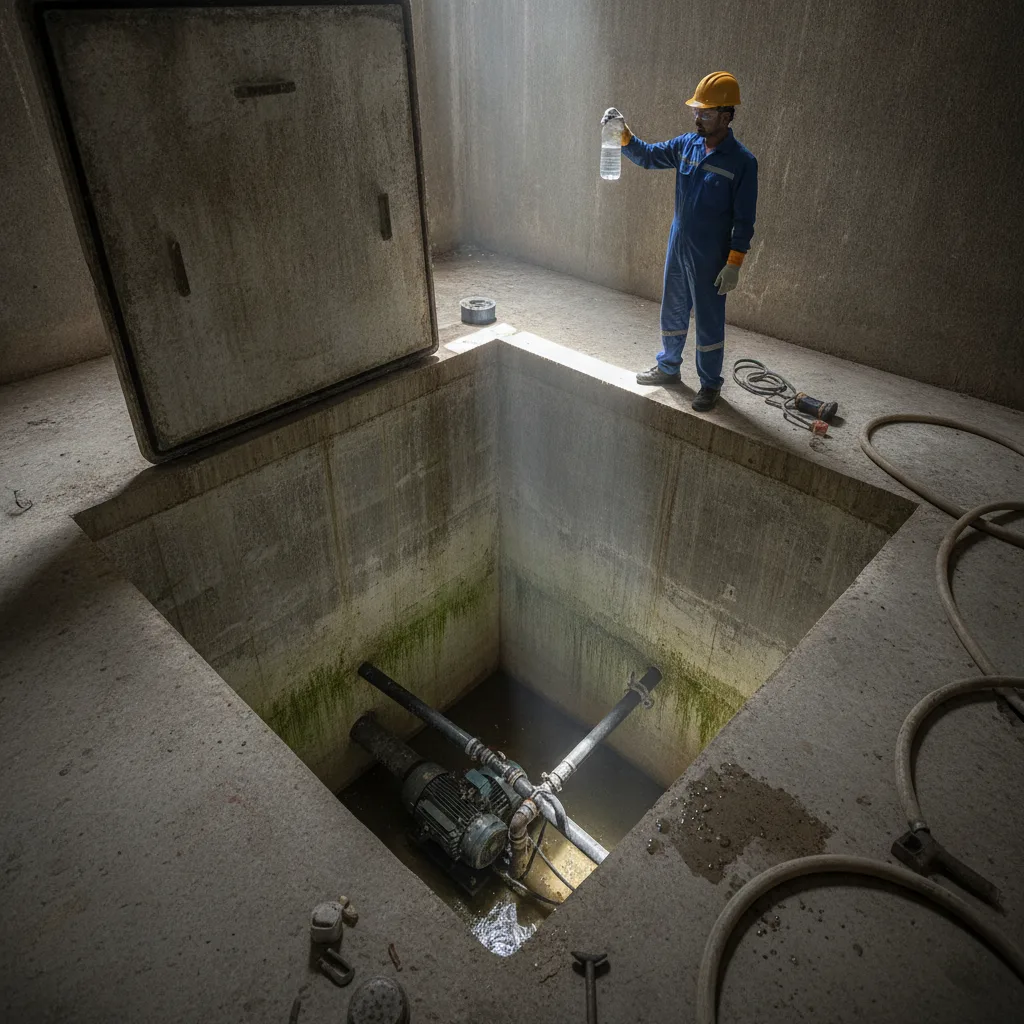
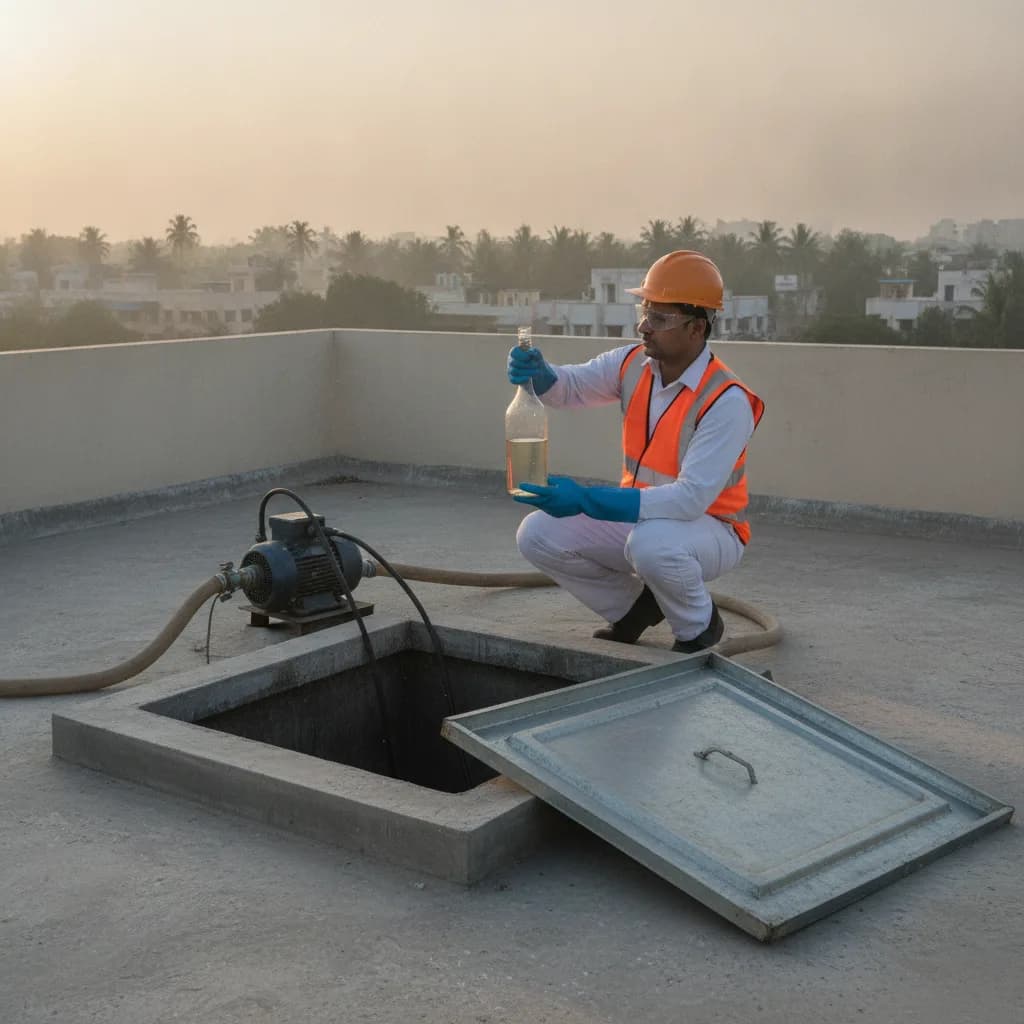
- Ask for a post-clean water check before you drink from the tank again.
How Professional Cleaning Removes the Risk
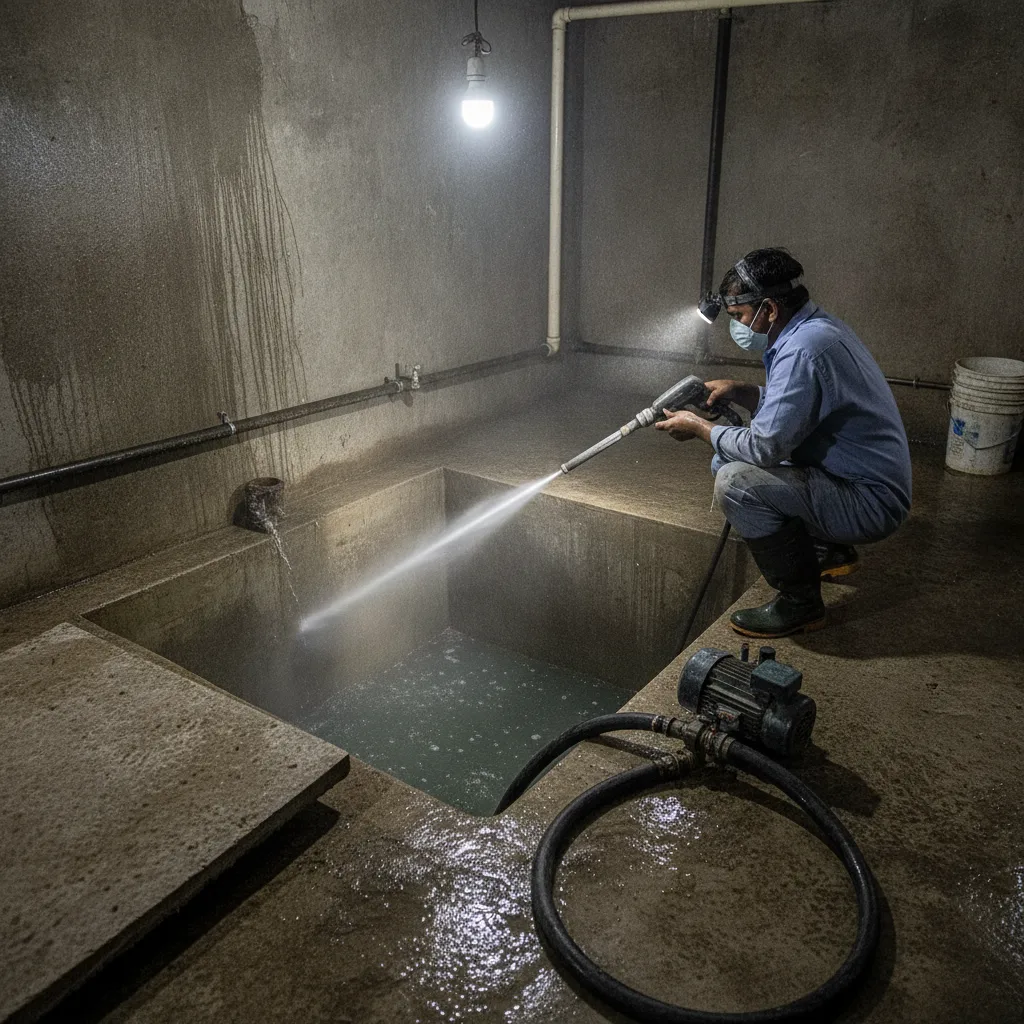
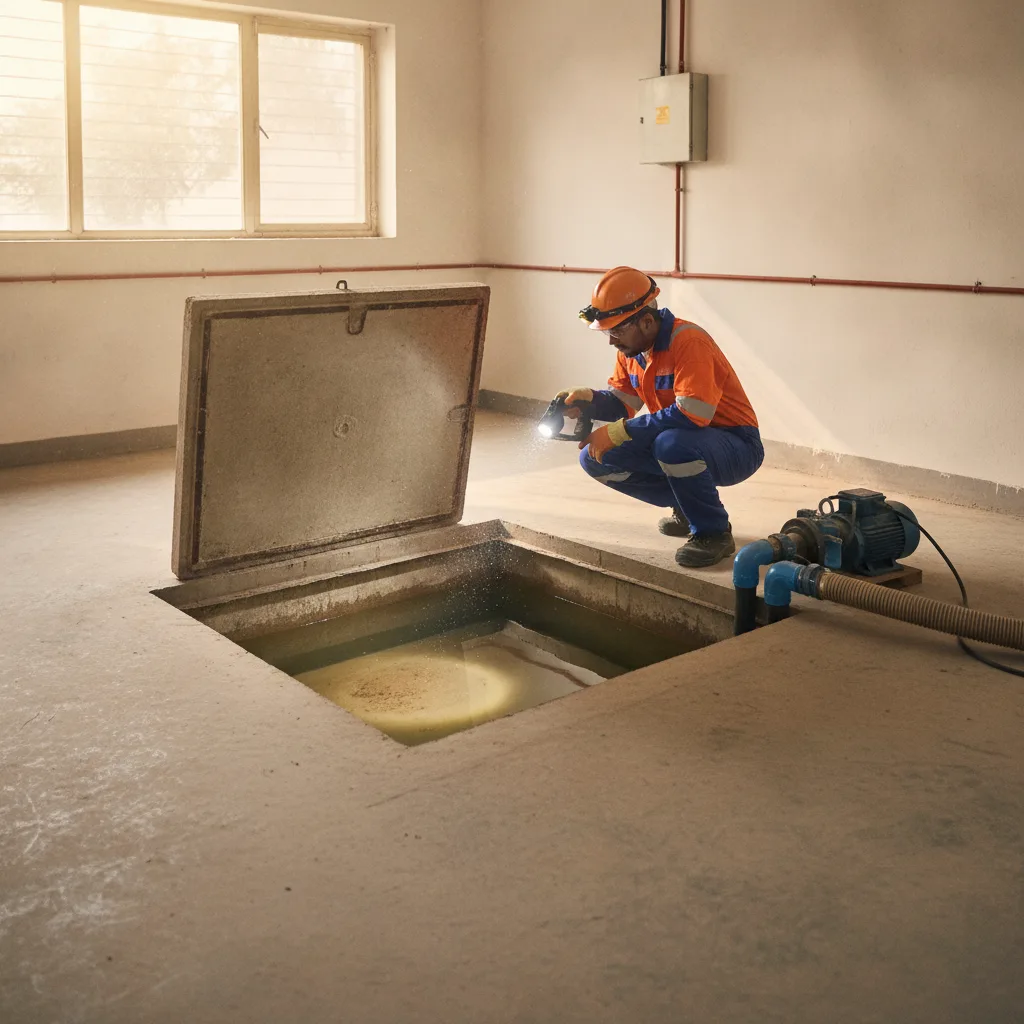
Scrubbing the walls with a mop and flushing with tap water cannot remove the biofilm and sludge where pathogens survive, and entering a confined sump without safety gear is dangerous. A proper clean fully dewaters the tank, mechanically extracts the sludge and biofilm with high-pressure jets and suction, disinfects with potable-water-safe agents at the right concentration and dwell time, treats the inlet and outlet pipes so the recontamination paths are covered, and hands back a tank you know is safe. A prompt water tank and sump cleaning is the direct defence against a repeat of what those families went through. For most homes and apartment sumps, the clean itself takes only a few hours, and many providers can attend the same day during a scare.
How Often to Clean
Health authorities recommend cleaning storage at least every six months. In older, densely built areas where contamination risk is higher, every three to four months is safer, and an immediate clean is warranted after any local contamination report, disruption, or visible change in the water. The cost of a clean is a fraction of a single hospital visit.
Worried about your water after a contamination report nearby? You can book a water tank and sump cleaning with KBS and protect your family's water before the next incident.
Want this handled by professionals in Bengaluru? Book Water Tank Cleaning, or message us on WhatsApp.