Pre-Monsoon Sump and Water Tank Cleaning Checklist for Bangalore Homes
Before Bangalore's monsoon sets in, the water sitting in your sump and overhead tank is worth a proper check. Months of dry-season sediment settle at the bottom of both, and the first heavy rains push dust, debris, and surface runoff towards an underground sump. A pre-monsoon clean is the simplest way to keep the water your family uses through the rainy months safe. Use this checklist to get both tanks ready.
Why a Pre-Monsoon Clean Matters
Bengaluru water arrives through BWSSB supply, borewells, and tankers, and all three drop sediment that settles through the dry months. When humidity and temperature rise with the rains, that settled sludge turns into an active layer for bacteria and algae. Rain also finds every weak point around an underground sump: poorly sealed lids, hairline cracks, and low surroundings let runoff seep in with soil, sewage traces, and mosquito eggs. Cleaning before the peak rains removes that head start.
Your Sump Checklist
Work through these before the heavy spells settle in:
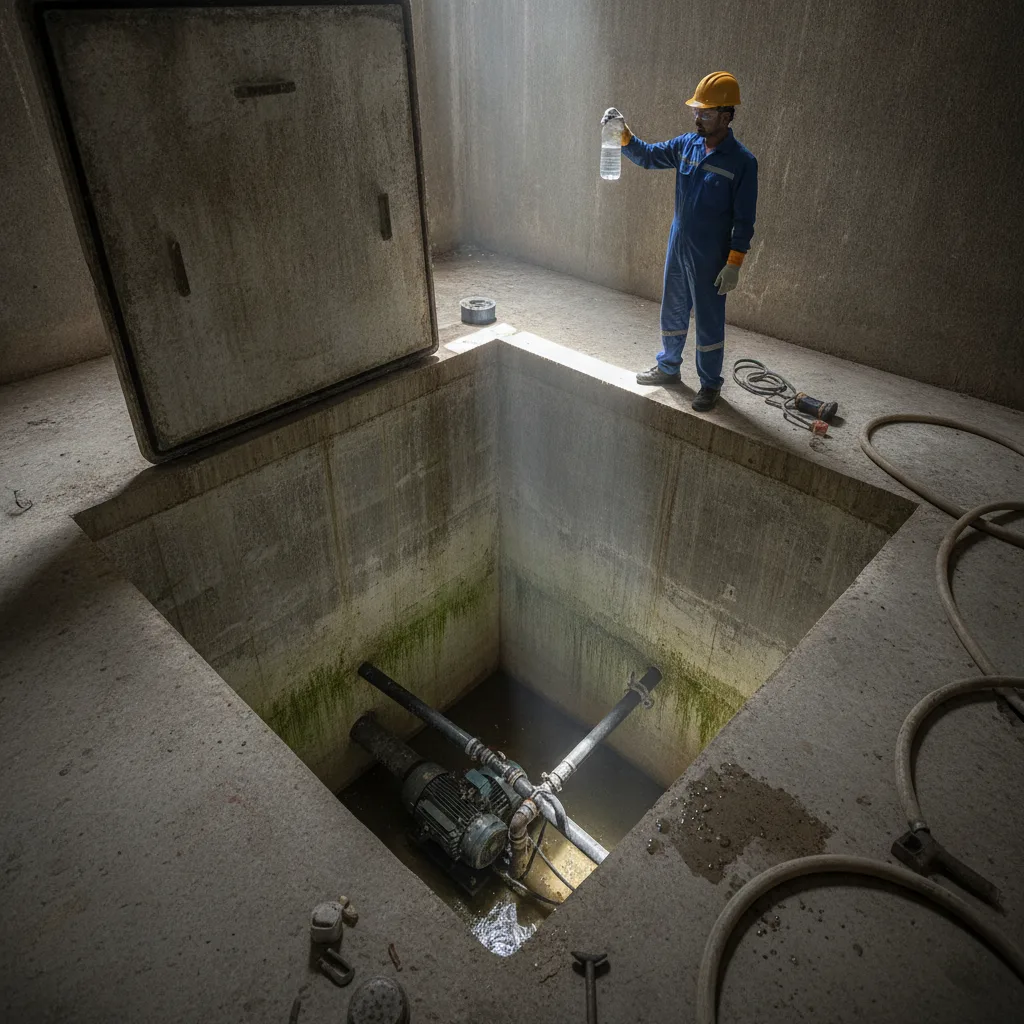
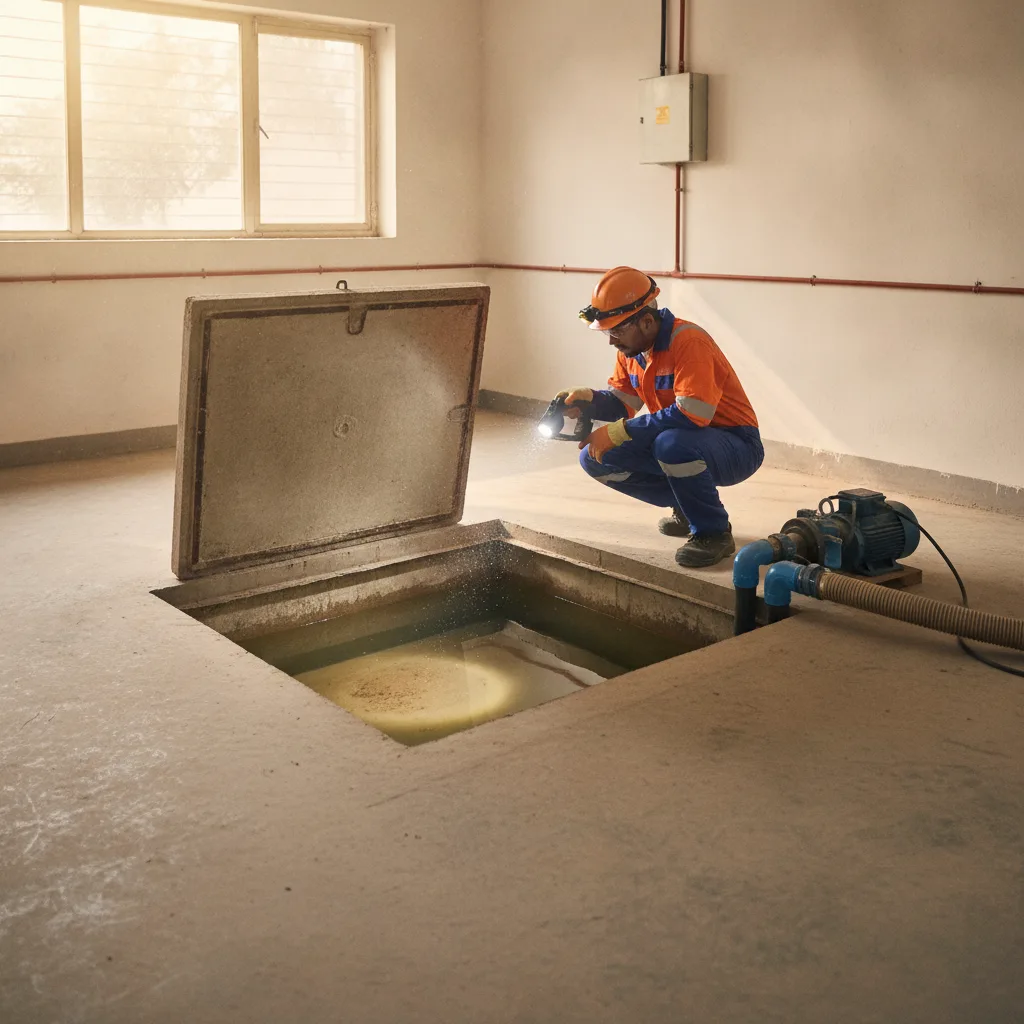
- Empty and inspect. Drain the sump fully and look at the bottom. A brown or black sludge layer means the water you pump up has been passing over contamination.
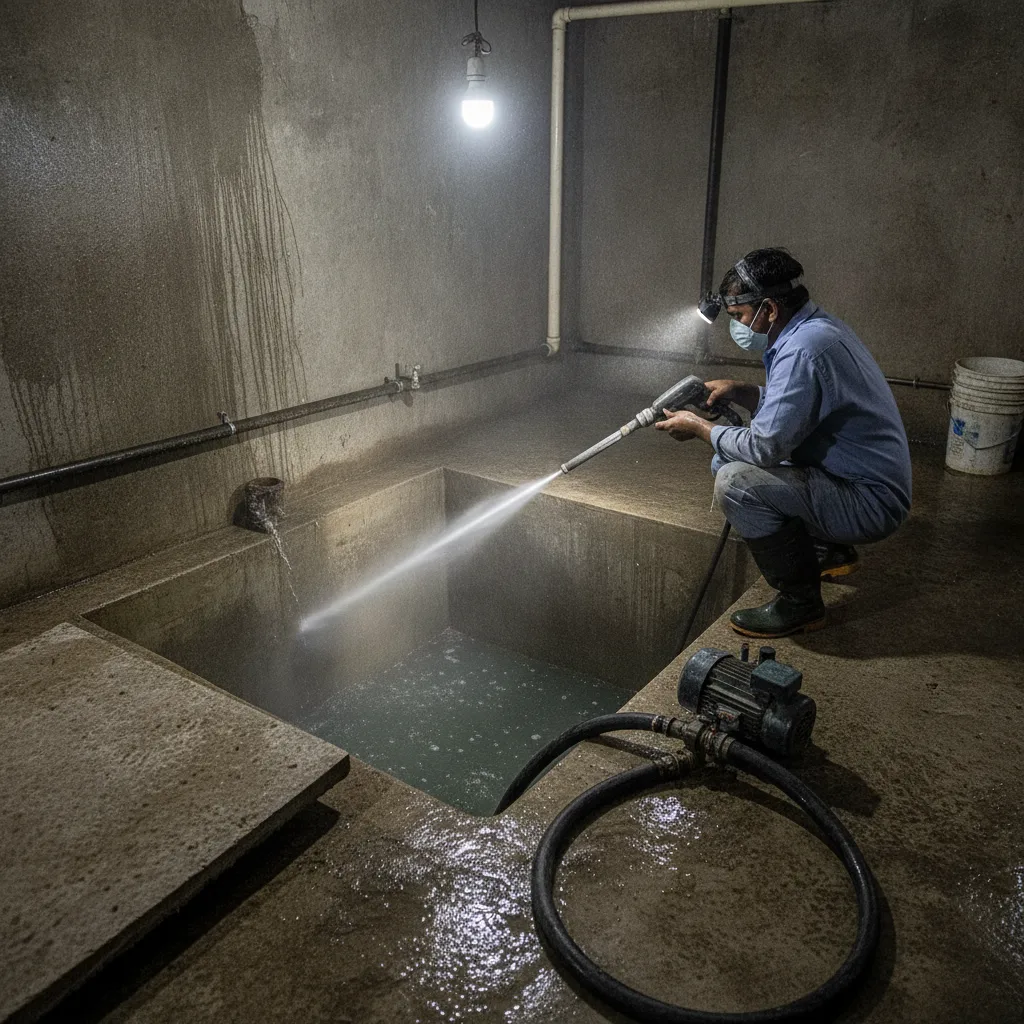
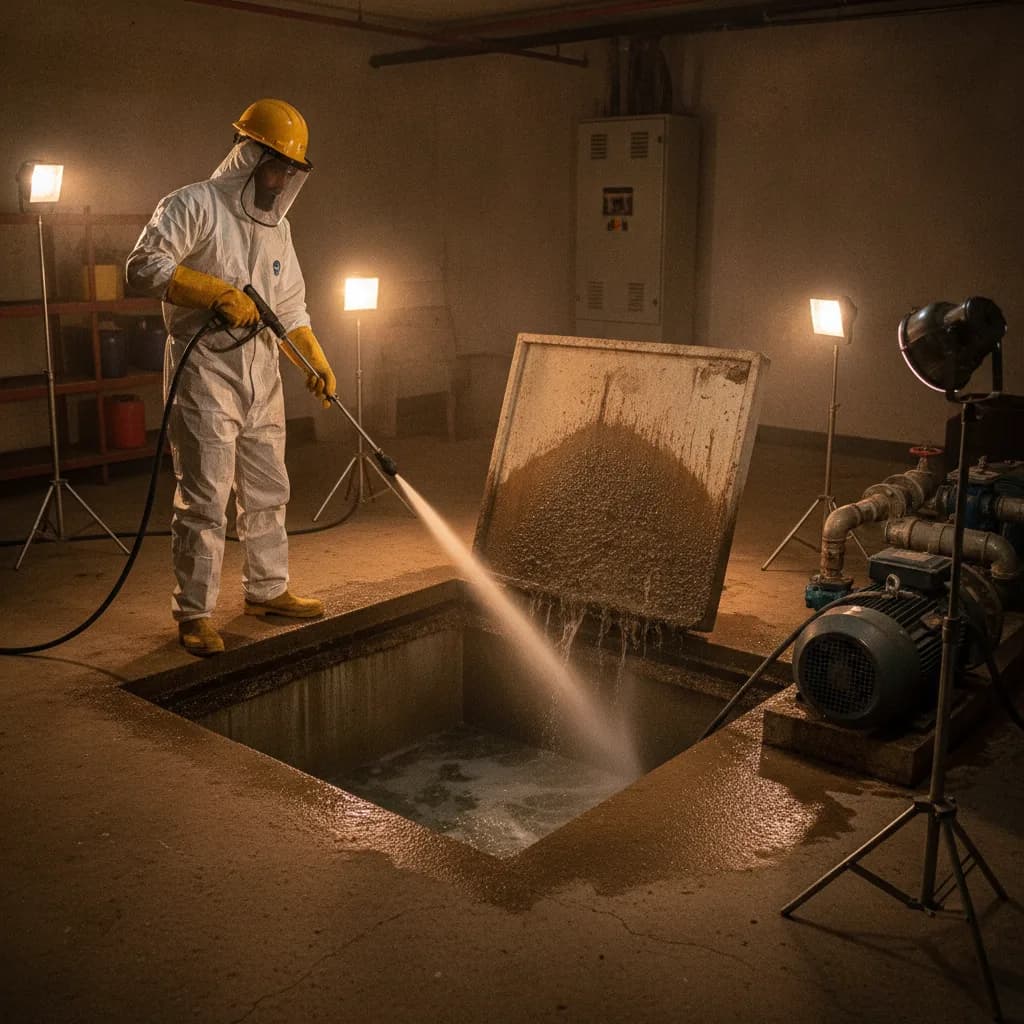
- Scrub and pressure-wash. Sludge sticks to concrete, so high-pressure jets and a vacuum pull out what a broom cannot.
- Disinfect properly. Use a potable-water-safe disinfectant, not household bleach, which leaves residue or untreated patches.
- Seal the lid. The cover should sit flush with no gaps. This is your main defence against runoff and mosquito breeding.
- Check for cracks and seepage. White mineral stains or damp patches inside point to groundwater entering. Fix these before the water table rises.
- Clear the surroundings. Make sure rainwater flows away from the sump, and clean nearby drains so water does not pool above the lid.
- Service the pump and float valve. A jammed float valve during a rainy week means overflow and contamination together.
Your Overhead Tank Checklist
Cleaning the sump but not the overhead tank protects only half your water line. The tank on your roof faces the rain directly:
- Check the lid first. Wind and rain shift loose lids, and an open tank collects leaves, dust, and larvae within days.
- Empty, scrub, and disinfect the same way as the sump. Algae grows faster in plastic tanks once humidity rises.
- Fit insect mesh on the overflow pipe. A missing mesh lets mosquitoes in and undoes the cleaning.
- Watch the water after the first big rain. If it turns cloudy or smells earthy, runoff is getting in somewhere.
Signs Your Tank Is Already Contaminated
- Water smells musty, earthy, or faintly of sewage
- Visible particles or a brown tinge in a filled bucket
- Repeated stomach upsets in the family with no other cause
- Mosquitoes near the sump lid or drains
- More than six months since the last cleaning
Any one of these before the rains is a reason to clean now, rather than mid-monsoon when contamination spreads faster and slots fill up.
DIY or Professional?
You can handle the lid checks, drain clearing, and a visual inspection yourself. The actual cleaning is another matter. A sump is a confined space with poor ventilation, and entering one without training and safety gear is genuinely dangerous. A trained team brings high-pressure jets, sludge pumps, potable-water-safe disinfectant, and the eye to spot cracks and seepage you would miss. When both tanks are due, a single water tank and sump cleaning visit covers them together.
On timing, an overhead tank takes 45 to 90 minutes and a home sump two to four hours, so doing both together is usually a half-day job depending on size and access. The window to aim for is a few weeks before the heavy spells, and if street flooding or a murky tanker delivery dirties the water mid-season, it is worth cleaning again soon after rather than waiting.
- Clean the sump and the overhead tank together before the heavy rains
- A flush lid and insect mesh on the overflow pipe are your main defences
- Cleaning one but not the other protects only half your water line
- Sump work is a confined-space job, better left to a trained team
- Musty smell, cloudy water, or a brown tinge means clean now
Want both ready before the next heavy spell? You can book a water tank and sump cleaning with KBS, trusted by 15,000+ Bengaluru homes.
Want this handled by professionals in Bengaluru? Book Water Tank Cleaning, or message us on WhatsApp.