Sump Cleaning vs Overhead Tank Cleaning in Bangalore: What's the Difference and Which One Do You Actually Need?
In many Bangalore homes the same confusion comes up: the water looks muddy or smells off, someone calls for a "water tank cleaning," but the real problem is sitting underground in the sump. Sump cleaning and overhead tank cleaning are two different jobs, priced differently, and knowing which one you need saves money and protects your family's water.
The Short Answer: Sump vs Overhead Tank
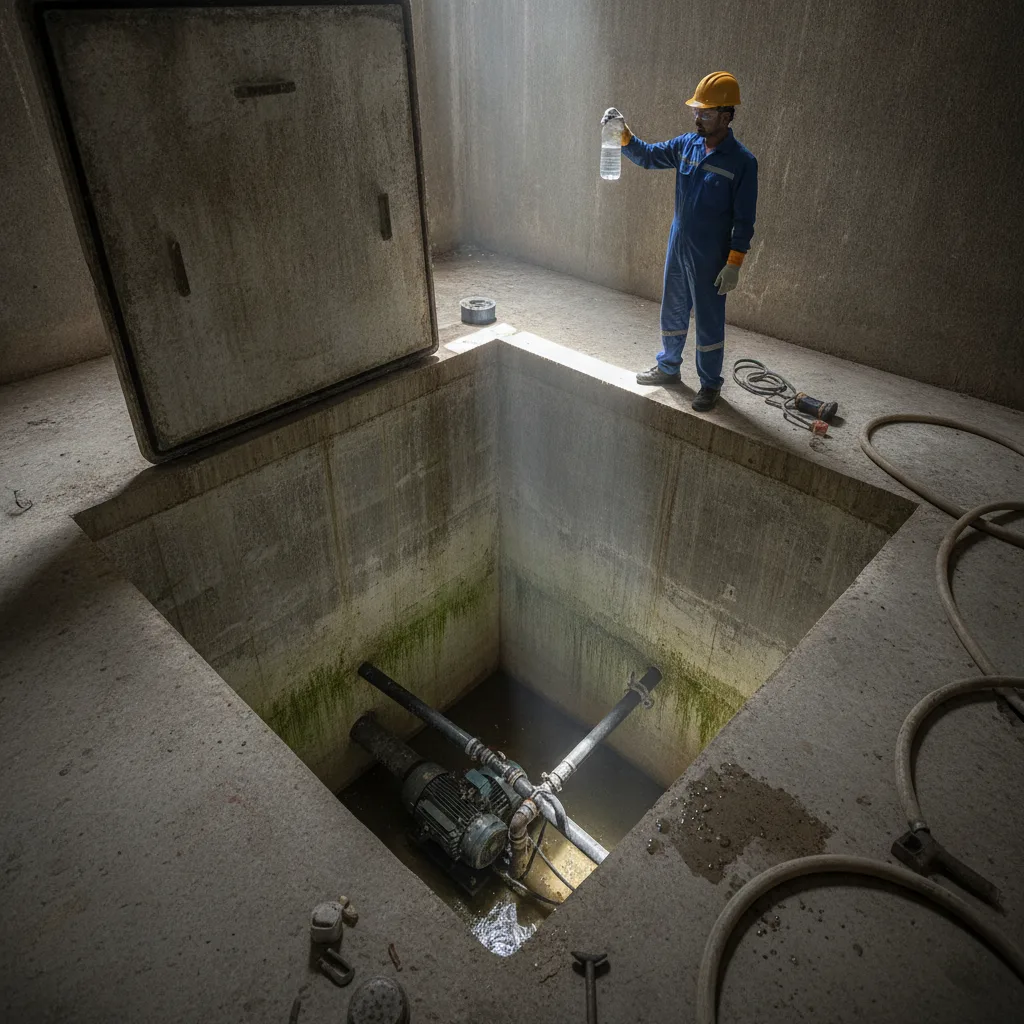
A sump is the underground or ground-level tank that receives water first, from BWSSB lines, a borewell, or tankers. An overhead tank is the plastic or cement tank on your roof that gravity-feeds your taps. Water always goes to the sump first, then gets pumped up. That order matters: if the sump is dirty, your overhead tank is refilled with dirty water every day, no matter how recently you cleaned it.
How Each One Gets Dirty
Sumps sit at ground level, so they collect trouble first. Surface water carrying mud and sewage traces seeps through hairline cracks in the lid or walls. Poorly sealed inlet pipes let in backed-up drain water. Tanker water of uneven quality adds sludge at the floor, and warm, still water then grows bacteria fast.
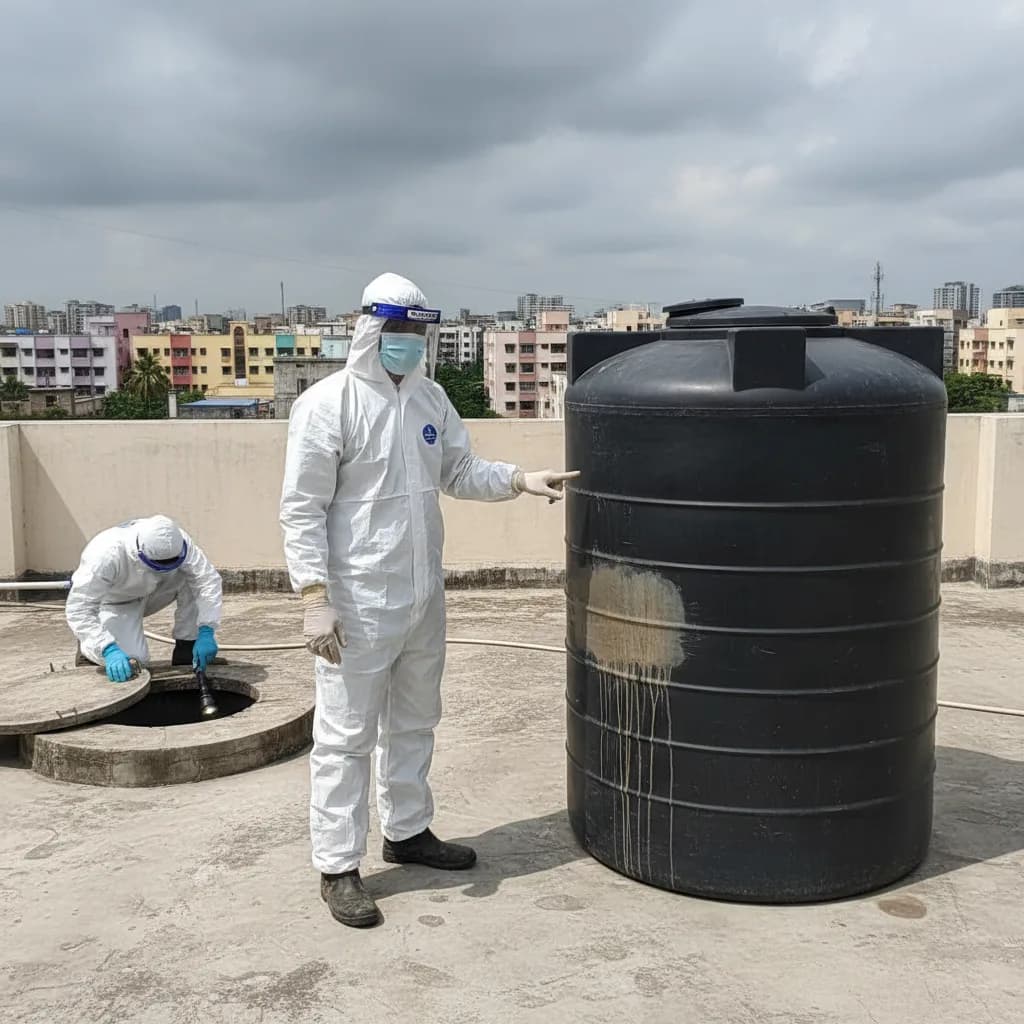
Overhead tanks have their own problems: ill-fitting or cracked lids let in debris and let mosquitoes breed, and light-coloured plastic tanks grow algae films on the inner walls. But the biggest source is the sump below, since every litre pumped up from a dirty sump carries silt and bacteria into the tank.
Process, Price, and Frequency
Overhead tank cleaning means draining, sludge removal, scrubbing, disinfection, and a rinse. It takes 45 to 90 minutes and starts at ₹599 for a standard tank.
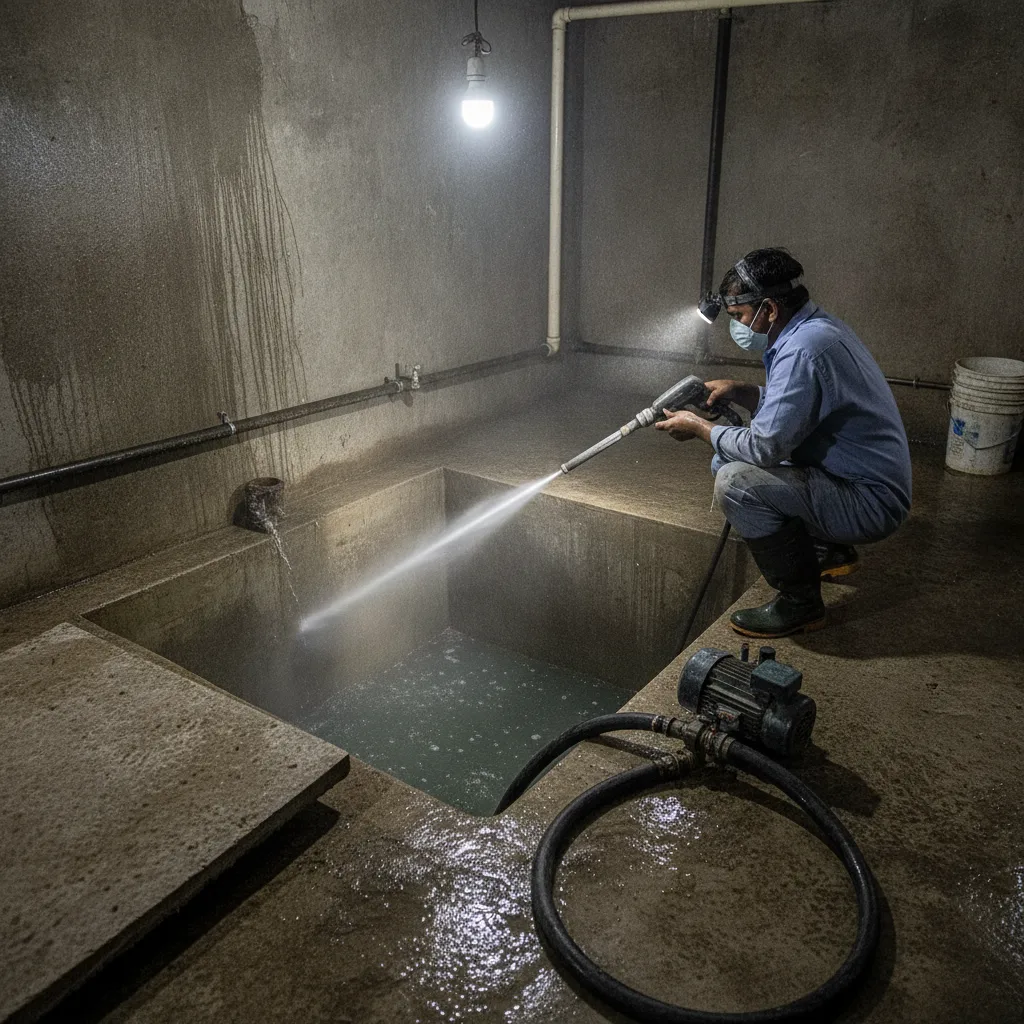
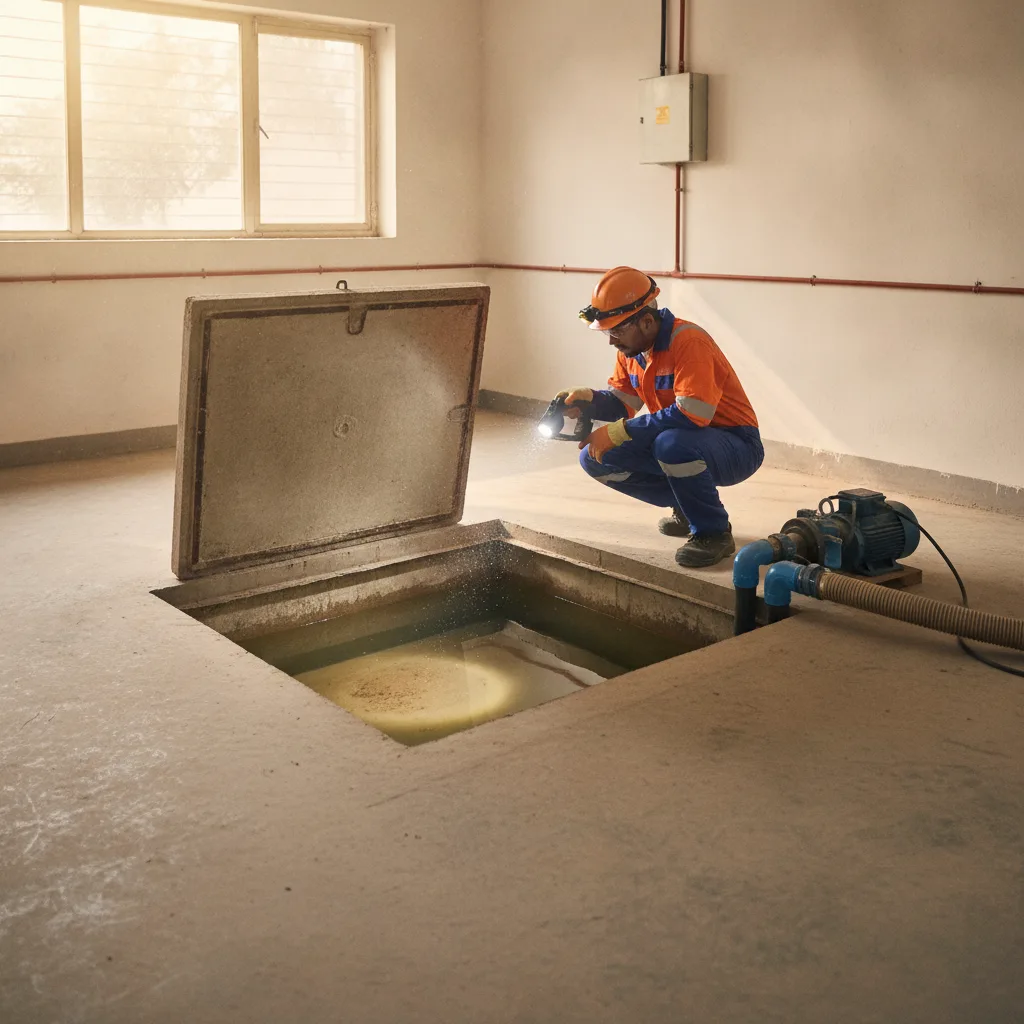
Sump cleaning is heavier: full dewatering with pumps, manual silt removal, scrubbing, disinfection, and an inlet check. It takes two to three hours and starts at ₹1,249.
As a rule, clean an overhead tank every six months, or every three to four on borewell or tanker water, and a sump every six months, or twice a year if your area floods or you have seen seepage. If both are due, a single water tank and sump cleaning visit covers them together and costs less than two separate bookings.
Which One Do You Need?
- Muddy or discoloured water: sump first, the source is almost always ground-level seepage.
- Smell or particles from one tap only: likely the overhead tank or its outlet pipe.
- Not cleaned in over a year: do both, cleaning one alone lets the dirty one re-contaminate it.
- Moving into a new home: both, plus a check of lids and overflow pipes.
Tank Material Changes the Job
Not all tanks clean the same way, and the material decides a lot. Rooftop plastic tanks, the common black or off-white ones, have smooth walls that scrub easily but grow algae films where light reaches the water, so a lighter-coloured tank often needs closer attention on the inner surface. They also crack at the lid and inlet fittings, which is where debris and mosquitoes get in.
Cement and RCC tanks are a different story. Their porous, rougher surface holds sludge and biofilm more stubbornly and needs firmer scrubbing, and a damaged waterproof lining can seep. This is also why cement or RCC tanks are quoted after a look rather than at a fixed rate, since access, condition, and lining all change the work involved.
Access matters too. A rooftop tank several floors up with a tight hatch, or a sump under a car-park slab with a small opening, takes more setup than an easily reached one. It is worth flagging difficult access when you book so the right equipment comes on the first visit.
What Overhead Tank Cleaning Costs by Size
KBS keeps overhead tank pricing all-inclusive and confirmed before the team arrives, so there is no on-site surprise. For standard plastic tanks the rates run by capacity:
| Overhead tank size | All-inclusive price |
|---|---|
| Up to 1,000 litres | ₹599 |
| 2,000 litres | ₹699 |
| 3,000 litres | ₹799 |
| 5,000 litres | ₹1,199 |
Cement and RCC tanks are quoted after a quick look, and sump cleaning starts at ₹1,249, priced after a short remote assessment. There is no GST added, since KBS works under the composition scheme, so the figure you are told is the figure you pay.
Frequently Asked Questions
Can I just clean the overhead tank and skip the sump?
Only if the sump is genuinely clean. If it is not, the pump carries its silt and bacteria straight up, and the tank is dirty again within days. When both are due, clean them together.
How do I know if water is seeping into my sump?
After heavy rain, open the lid and check the level. If it rose more than your supply explains, water is getting in. A muddy film above the waterline, a wet patch around the lid, or an earthy smell are other signs.
Does sump cleaning cost more in the rainy season?
No. KBS charges the same rates year-round: sump cleaning from ₹1,249, overhead tank from ₹599. A heavily silted sump may need extra dewatering time, which is quoted upfront, never after the work starts.
Need both checked before the next heavy spell? You can book a water tank and sump cleaning with KBS, trusted by 15,000+ Bengaluru homes.
Want this handled by professionals in Bengaluru? Book Water Tank Cleaning, or message us on WhatsApp.