Underground Water Tank Cleaning in Bangalore: Complete Guide to TDS, Bacterial Contamination & Health Risks

Most Bangalore homeowners assume their underground water tank is fine because the water looks clear. It rarely is. Underground tanks are out of sight, so nobody opens them casually, and sludge, biofilm, and bacteria build up in the dark while the water above still looks clean. This guide explains what actually happens inside the tank, how to check it, and when to call in a professional.
Why Underground Tanks Get Dirtier Faster
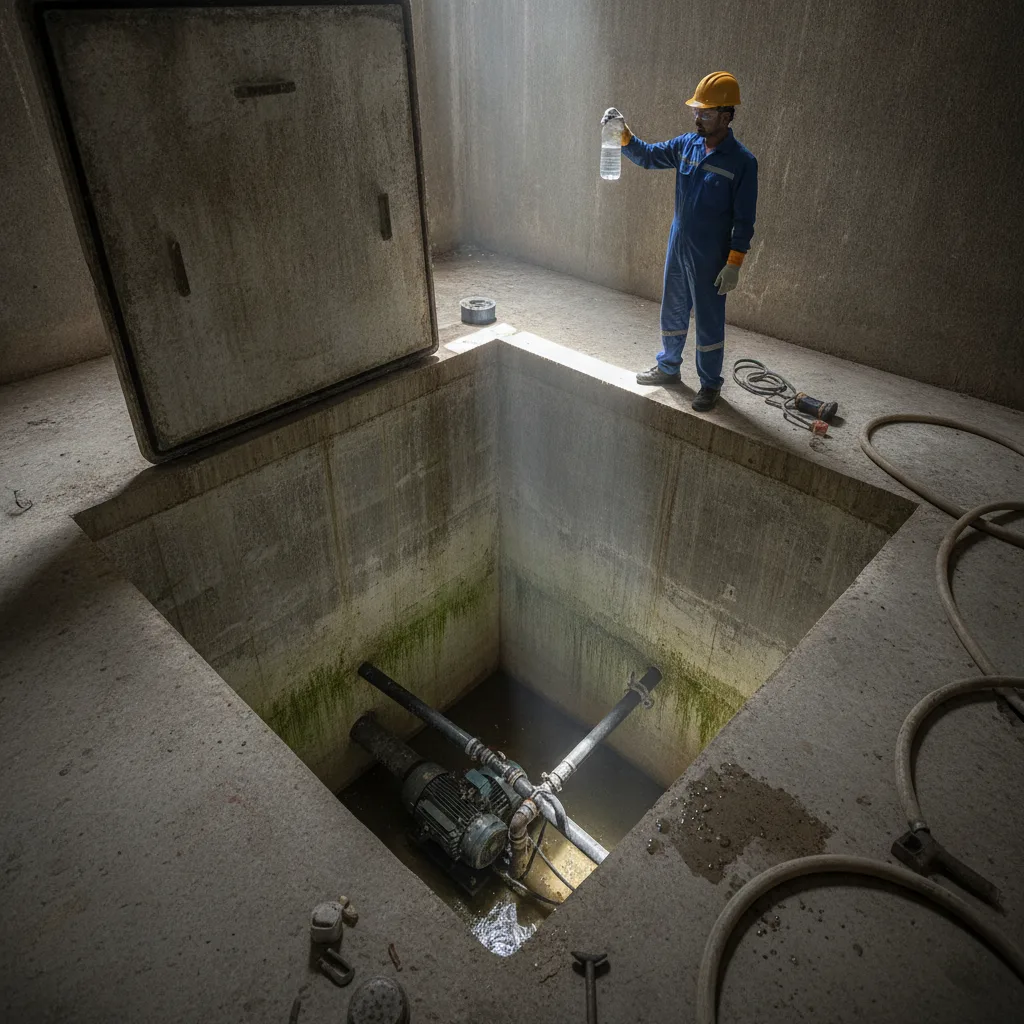
Overhead tanks get some indirect sunlight; underground tanks get none, so algae and bacteria grow unchecked. The surrounding soil can add moisture seepage, and in older buildings, minor wall cracks let contaminated groundwater leach in slowly. Underground tanks also collect sediment faster, because supply lines carry suspended particles, especially during pressure surges after maintenance work. Over 12 to 18 months, that layer grows thick enough to affect both pump performance and water quality.
TDS: What the Numbers Mean
TDS, or Total Dissolved Solids, measures the dissolved salts, minerals, and organic matter in water. The Bureau of Indian Standards recommends drinking water stay below 500 mg/L, with 2000 mg/L an upper limit only when no alternative exists. Borewell water in Bangalore routinely tests between 800 and 1400 mg/L. That water enters the tank already stressed, and when it sits in a tank lined with biofilm, bacterial activity pushes TDS higher, along with iron and hardness minerals leaching from corroded inlet pipes.
High TDS water does not just taste flat. Over time it contributes to scaling in appliances and can be hard on the body, which matters most for children and elderly members of the house.
Cleaning removes the sediment and biological matter that push TDS up, but if your source water is genuinely high, as borewell supply often is, cleaning alone will not bring it down to drinking level; a UV or RO system is needed for that.
How to Check TDS at Home
- Buy a TDS meter online, most cost under ₹500
- Draw water from the tap farthest from the overhead tank to test the underground supply
- Test in the morning before any water use for an accurate reading
- Log it monthly; a rising trend signals sediment or contamination building up
Bacterial Contamination: The Invisible Part
Coliform bacteria and E. coli are the two most common contaminants in home underground tanks. They enter through cross-connections, contaminated supply during pressure drops, or inlet and outlet pipes placed too close together during construction. The water above the biofilm can still look perfectly clear, which is exactly why appearance is a poor test.
Biofilm is the slimy layer itself, a bacterial colony that forms a protective matrix on the tank surface. Ordinary household chlorination does not break through it. Physical scrubbing during a professional clean is the only reliable way to remove it.
Signs Your Underground Tank Needs Cleaning Now
- Water smells musty or earthy even after running the tap for a minute
- TDS has jumped by more than 100 to 150 mg/L compared with six months ago
- Recurring gastric issues in the family with no clear dietary cause
- Sediment in the overhead tank soon after a clean, meaning the source is below
- More than 12 months since the last cleaning, which alone is reason enough
How a Professional Underground Tank Cleaning Works
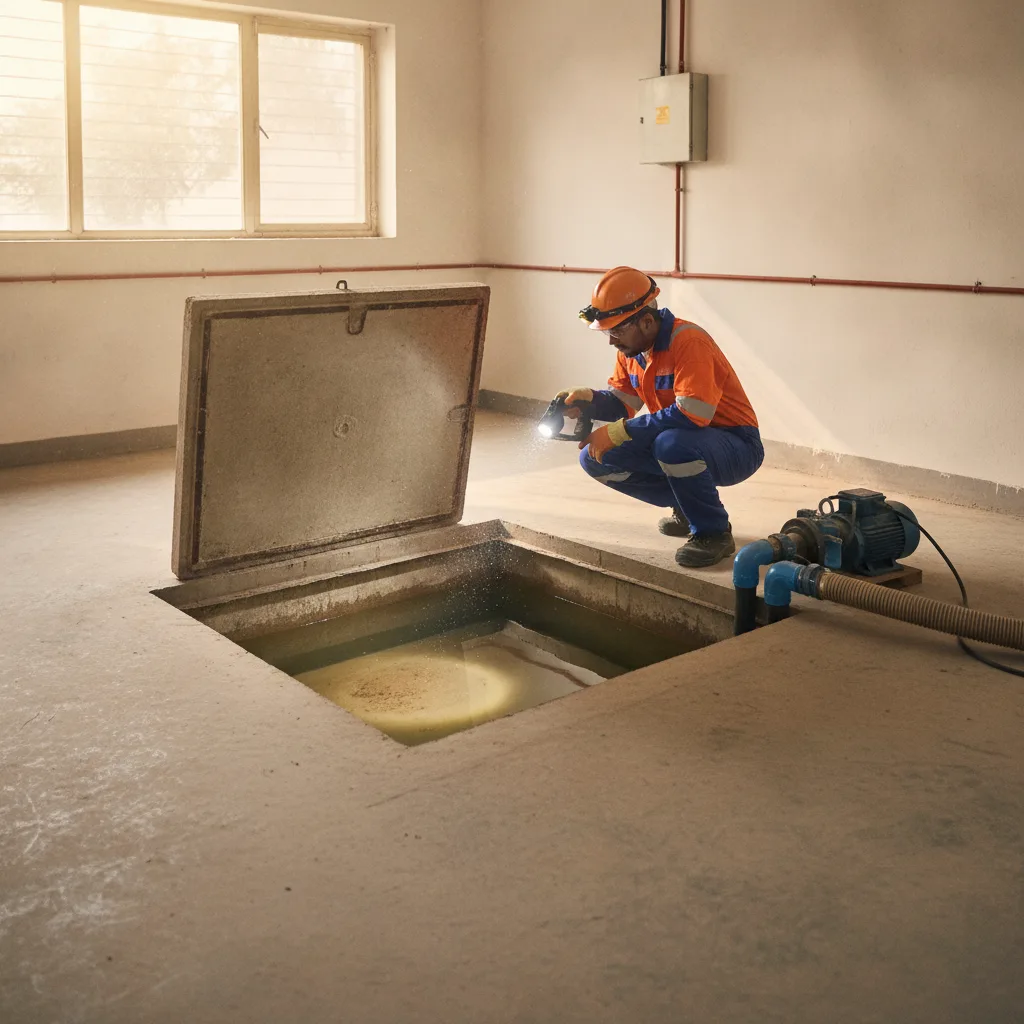
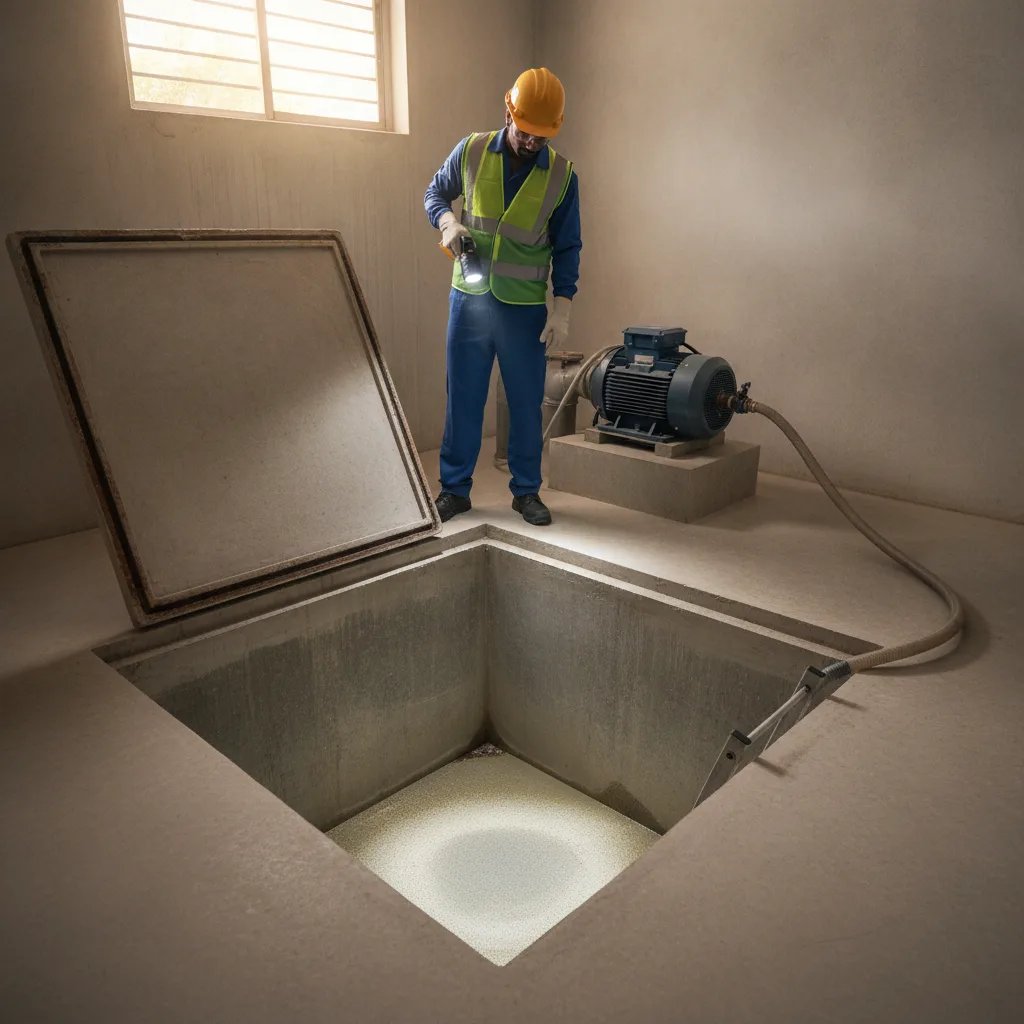
A proper service is more than pumping out the water. The tank is first drained fully with submersible pumps, and the residual sludge at the bottom is removed by hand. The walls and floor are then scrubbed with food-grade brushes and approved cleaning agents, with no acids or bleach cocktails that damage the tank lining. After scrubbing, the tank is rinsed, and a disinfection wash at the correct concentration is left to act for a set dwell time before a final rinse and refill. For a standard 5,000-litre tank the full process takes two to four hours; larger or heavily silted tanks take longer. This is what a thorough underground tank cleaning should always involve.
For a small tank below 2,000 litres with easy access, a basic drain-and-scrub is possible to do yourself, but confined-space entry carries genuine safety risks, and without the right disinfectant and technique the biofilm is only partly removed. For most underground tanks, professional service is both safer and more effective. To confirm the job was done properly, ask for a post-clean TDS reading and before-and-after photos of the tank interior, then check your tap water for odour and taste 48 hours after the refill.
How Often to Clean an Underground Tank
Twice a year suits most homes. Properties on borewell supply alone should consider every four months, given the higher TDS and sediment load. It is also worth cleaning after any major supply disruption or nearby pipeline work, since both stir up sediment. A clean before the rainy season sets a good baseline, and one after the rains clears out whatever seeped in.
- Underground tanks get dirtier faster than overhead tanks because they get no sunlight
- High TDS from borewell water is made worse by a tank lined with biofilm
- Biofilm is a bacterial layer that ordinary chlorination cannot remove, only scrubbing does
- A home TDS meter and a musty smell test tell you a lot for very little cost
- Clean underground tanks twice a year, every four months on borewell supply
If your last underground tank clean was more than a year ago, or you cannot remember it, that is your answer. You can book a water tank and sump cleaning with KBS and get it sorted properly.
Want this handled by professionals in Bengaluru? Book Water Tank Cleaning, or message us on WhatsApp.