Water Tank Cleaning Services in Bangalore: How to Choose the Right Provider
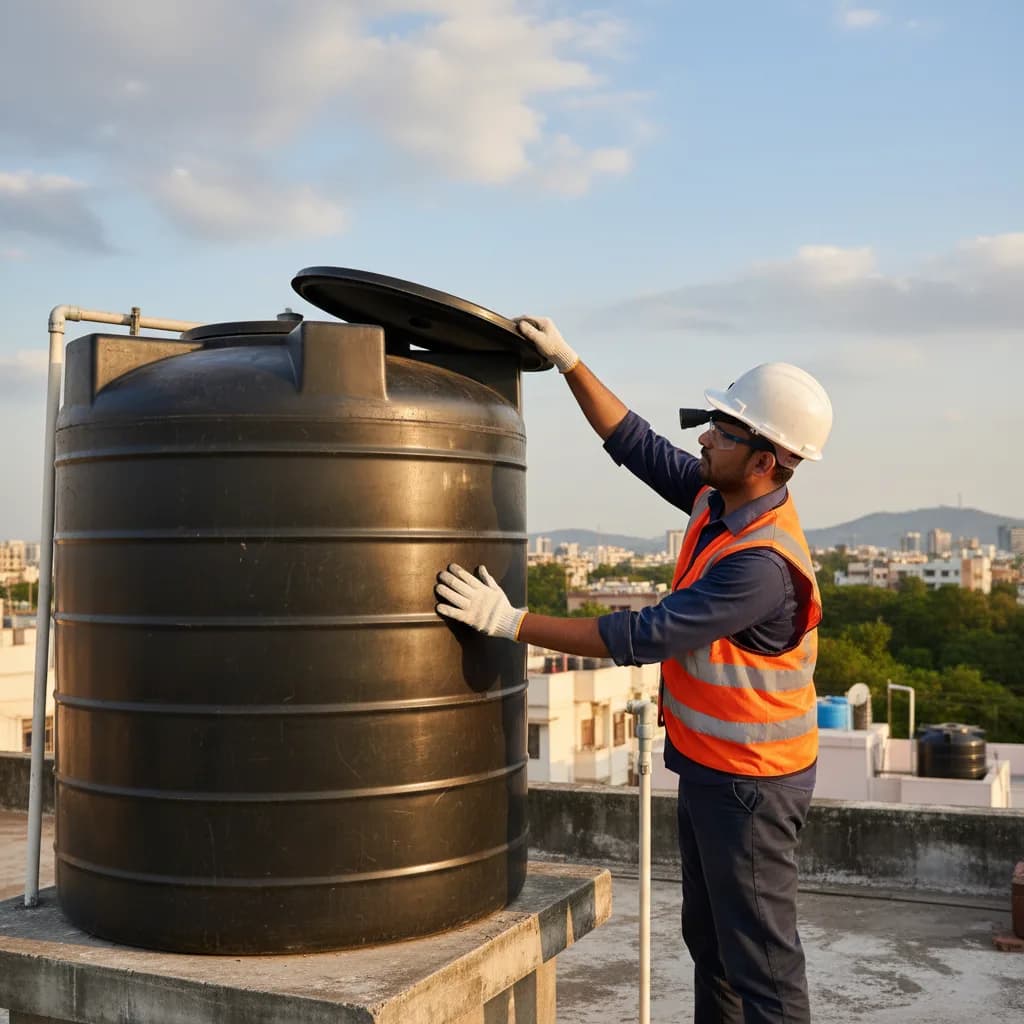
Whether your building draws from BWSSB supply or a borewell, your overhead tank and sump quietly accumulate sediment, biofilm, and bacteria over months, and choosing the right cleaning service is the most important step you can take to protect your household's water. But the market is uneven, and a poor job can leave you worse off than before. Here is how to pick a provider that actually does it right.
Why It Is Not Optional
Bengaluru's dual supply makes for a challenging storage environment. Treated water carries residual chlorine that fades inside the tank, leaving stagnant water open to bacterial regrowth, and borewell water adds iron and turbidity that coat the walls. The result is a tank that looks fine outside but harbours invisible risk within. In large complexes that share an overhead tank, a single contaminated tank can affect hundreds of residents, so regular cleaning is a baseline health need, not a luxury.
What to Check When Choosing a Provider
Food-grade, certified chemicals
A credible provider uses food-grade, BIS-approved disinfectants and can name them and share safety data. Concentration matters, too weak and bacteria survive, too strong and the residue is its own risk. Ask whether they work to IS 10500 water-quality standards after cleaning.
A transparent multi-step process
A proper job is never a single wash. It drains the tank fully, scrubs the walls, floor, and inlet-outlet zones, jets at high pressure, disinfects with a holding period, drains the disinfectant, does a final fresh-water rinse, and gives a post-clean report. Anyone skipping steps, especially the post-clean check, is cutting corners.
Real local experience
Borewell-fed tanks carry far more iron sediment than treated-supply tanks, which changes the cleaning agents and disinfection approach. Years of hands-on work with local water conditions is a genuine differentiator, not just a slogan.
Insurance and trained staff
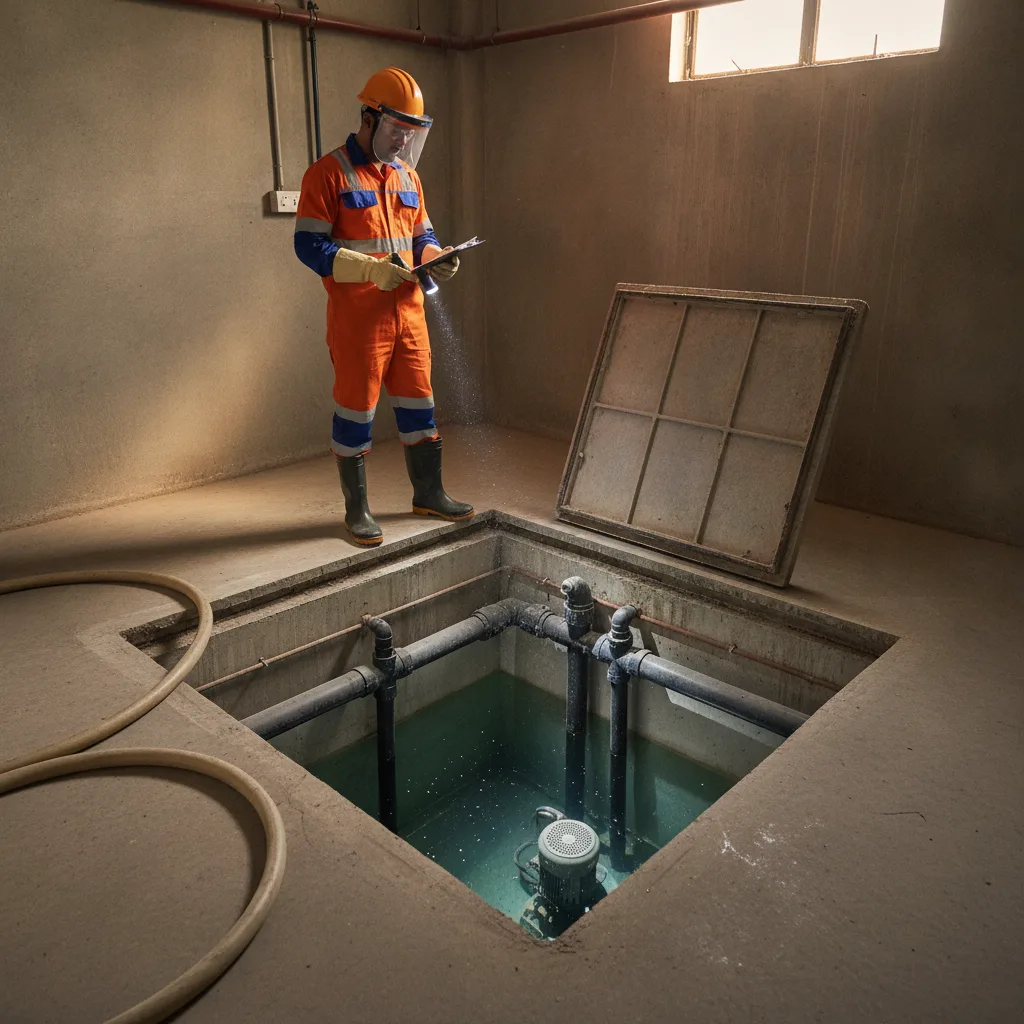
Tank cleaning involves confined-space entry, which is hazardous. Check that the provider carries liability insurance and that technicians are trained in confined-space safety and arrive with proper protective gear. Uninsured, untrained workers are a risk to everyone.
Verifiable reviews
Look at reviews for genuine, specific feedback, mentions of reports, technician names, and repeat bookings, rather than generic testimonials or star counts alone.
Why Sump Entry Is Genuinely Hazardous
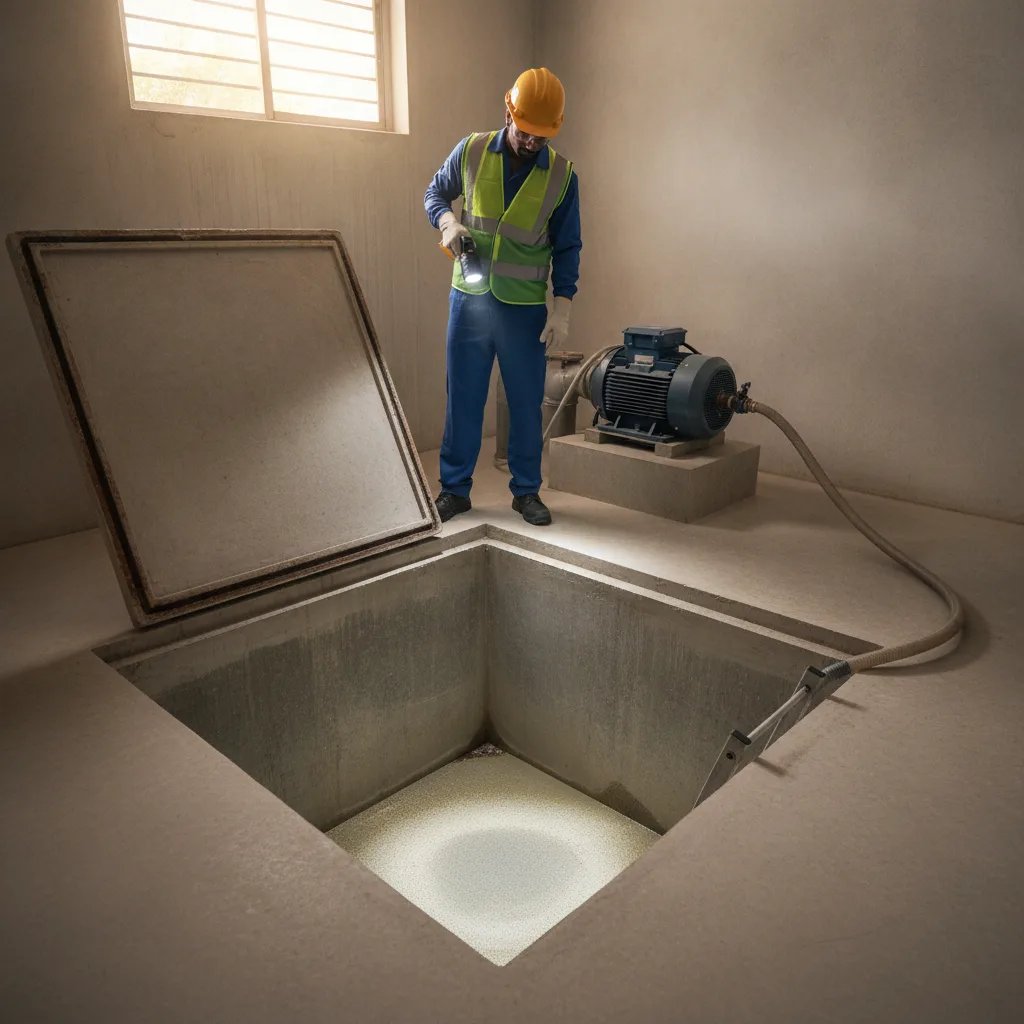
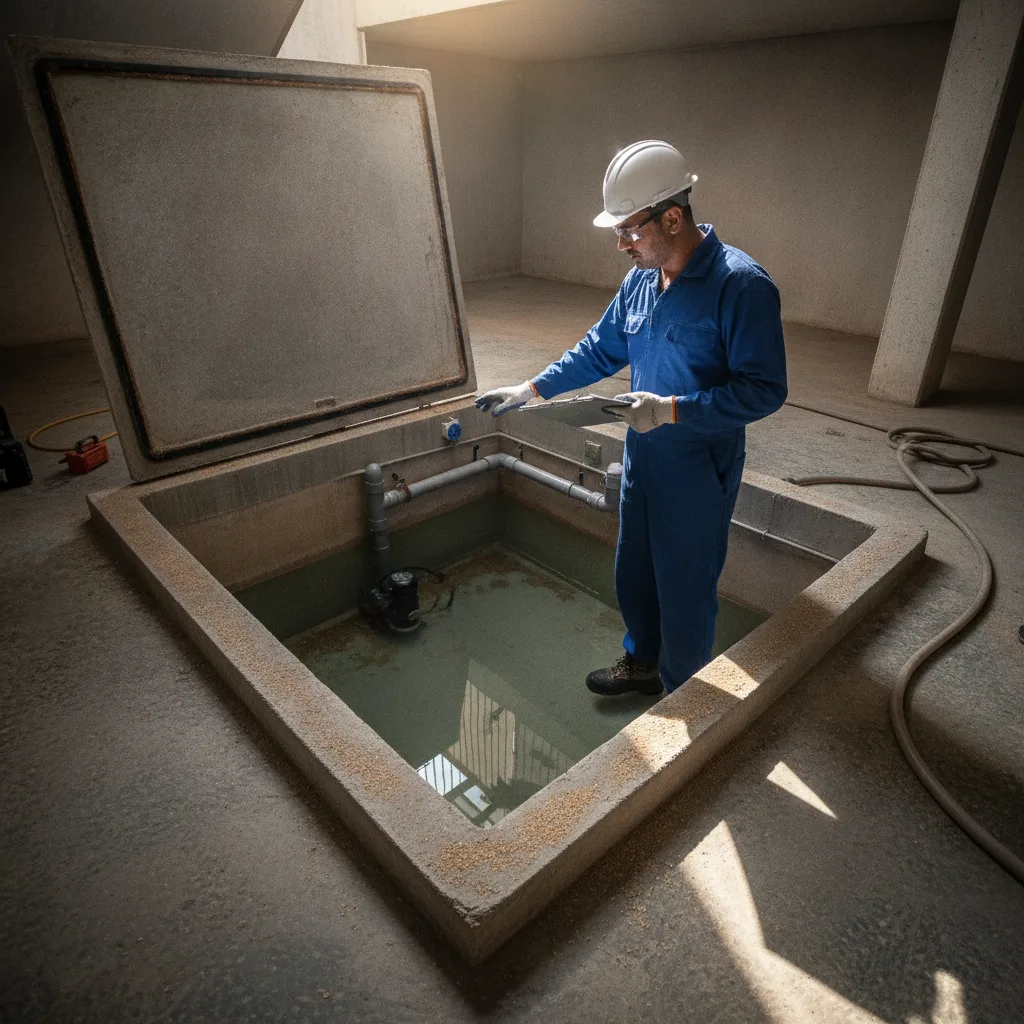
The confined-space point deserves more than a line. A sump or a large underground tank is a poorly ventilated pit, and the organic sludge at the bottom can give off gases as it breaks down, while the enclosed space can hold too little oxygen to breathe safely. Someone who climbs in without checking the air first, or without a second person watching from above, is taking a real risk, and workers being overcome inside tanks is not a rare event.
This is why a proper team ventilates the space, never sends one person in alone, and carries the right gear rather than improvising with a rope and a bucket. When you ask a provider about insurance and training, you are not being fussy, you are checking that the people going into your tank come back out safely.
Red Flags to Walk Away From
Be cautious of any provider who quotes an unusually low flat rate without seeing the tank, cannot give a written service checklist, refuses to show chemical certificates, or pressures you into same-day booking with no assessment. A poorly executed clean, with improper chemical rinsing, can leave the water worse than before. A trustworthy water tank and sump cleaning starts with a proper look and a clear scope.
How Often to Schedule
The recommendation is at least every six months, and quarterly for homes with heavy borewell dependency and a higher sediment load. A pre-monsoon clean is especially worth it, since rain, humidity, and fluctuating supply pressure all raise contamination risk through the wet months.
What Sets a Good Provider Apart
The best go beyond a single visit: a written report documenting the tank before and after, any structural concerns like cracks or faulty valves, and a recommended next interval based on your water source. A provider invested in your long-term water quality, not a one-time transaction, is the right partner.
Frequently Asked Questions
How long does a professional tank cleaning take?
For a standard 1,000-litre overhead tank, about one and a half to three hours for the full process. Larger sumps or heavy sediment take longer, and you should plan for the supply being off during the work.
Is the water safe to use right after cleaning?
Only after the disinfectant is rinsed and a technician confirms residual levels are safe. A good provider does a final flush and a basic quality check before restoring supply, so ask for written confirmation.
How do I know my tank needs cleaning now?
Discoloured water, an odd smell or taste, slimy residue on aerators and fittings, or more than six months since the last clean. Borewell-dependent homes should not wait for visible signs.
Choosing a provider? You can book a water tank and sump cleaning with KBS, trusted by 15,000+ Bengaluru homes with a post-clean report.
Want this handled by professionals in Bengaluru? Book Water Tank Cleaning, or message us on WhatsApp.