Bangalore Water Supply: Why Your Overhead Tank Needs Cleaning Every 6 Months
Most people in Bengaluru think about their water tank only when the tap runs dry or the water smells off. But the city's water reaches homes through a mix of BWSSB supply, borewells, and tankers, and all three carry sediment, bacteria, and dissolved contaminants that settle inside your overhead tank every day. By the six-month mark, a clean tank has often become a slow health risk sitting above your kitchen. Here is why the six-month schedule matters, and how to keep it.
Why the Six-Month Schedule Matters
Bengaluru does not have a single water source. Depending on your area and building, your tank might fill from BWSSB Cauvery supply, a borewell, a tanker, or a mix of all three, and each brings a different contamination profile.
- BWSSB supply is chlorine-treated, but the chlorine dissipates before the water reaches your tank, and sediment from aging pipes comes along with it.
- Borewell water is often high in hardness minerals, iron, and TDS, which precipitate out and coat the tank walls within weeks.
- Tanker water is the wildcard, with quality that varies widely between suppliers and can drop several inches of sludge into a tank within months.
This mixed-source reality is why Bengaluru tanks build up contamination faster than cities on a single clean supply. Six months is not an arbitrary figure; it is the realistic window before bacteria, algae, and mineral deposits reach levels that show up at the tap.
What Actually Builds Up Inside
People imagine a dirty tank looks brown and grimy. It rarely does. Biofilm forms first, a thin, slippery bacterial layer that attaches to the walls and multiplies quietly, odourless at first. Then fine silt and rust particles from the pipes settle at the bottom, and iron from borewell water stains the tank orange over time. If the lid has gaps or cracks, dust, bird droppings, and rain runoff add to it directly. Older buildings with twenty-year-old plumbing tend to show the worst results when the tank is finally opened, because internal pipe rust adds heavily to the load.
A water purifier does not change any of this. It treats what comes out of the tap, not the contamination building up inside the tank, and a dirty tank actually shortens the life of the purifier's filters, with some contaminants passing through once a filter is saturated. The tank still needs cleaning on schedule.
How to Actually Keep the Six-Month Schedule
Knowing you should clean every six months and doing it are two different things. A simple routine that works for most homes:
- Pick two fixed months, such as March and September, just before peak summer demand and just after the rains.
- Book at least two weeks ahead, since good providers fill up fast in summer.
- Plan for two to four hours without running water on the day; most standard tanks are done in that window.
- Ask for a post-cleaning water check, a basic visual and TDS check before sign-off.
A full clean drains the tank completely, usually 1,000 to 2,000 litres for a home overhead tank, so booking it when the tank is already at a lower level keeps that waste down.
If your building has a sump too, clean both in the same visit or week. Contamination often travels from the sump to the overhead tank through the pump, so cleaning only one gives you half the benefit. Understanding the difference between sump and overhead tank cleaning helps you plan both.
Signs Your Tank Is Overdue Right Now
- Tap water has a faint earthy or metallic smell in the morning
- A thin film forms on water left in a glass overnight
- Repeated stomach upsets at home with no obvious food cause
- Water pressure drops slightly even though the tank appears full
- The last clean was over eight months ago, or you cannot remember it
That last point is more common than people admit. Where building management changes often, maintenance records get lost. If there is no record, treat the tank as overdue and inspect it.
A Professional Clean vs a Quick Wash
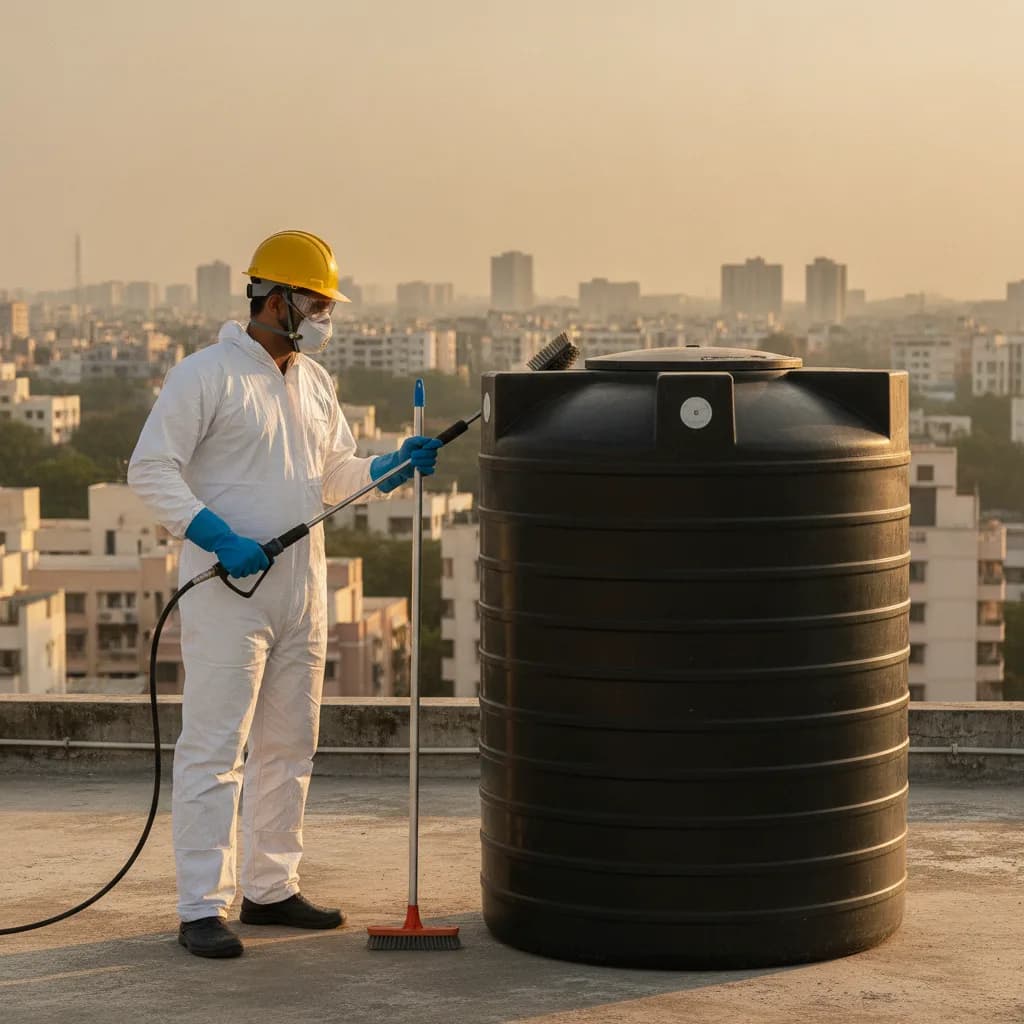
There is a real difference between a vendor who sends one person with a mop and a proper cleaning. A thorough job should include:
- Full draining of the tank before entry
- Manual scrubbing of all walls, floor, and the inlet and outlet areas
- High-pressure jetting to dislodge biofilm and scale
- Disinfection with food-grade chemicals approved for drinking water
- A final rinse and a wait before refilling
- A check of the inlet float valve and the lid seal
If a quote seems very low, or the job is described as under an hour for a standard 1,000-litre tank, question it. Cutting the disinfection defeats the whole purpose, which is exactly what a proper water tank cleaning is careful not to do.
- Bengaluru's mixed water sources make tanks dirty faster than a single clean piped supply
- Most contamination is invisible: biofilm and fine sediment, not obvious grime
- Six months is the realistic window before buildup affects water at the tap
- A quick mop is not a clean; proper disinfection is the step that matters
- Clean the sump in the same visit, since it feeds the overhead tank
Due for your six-month clean? You can book a water tank and sump cleaning with KBS and get a confirmed price before the team arrives.
Want this handled by professionals in Bengaluru? Book Water Tank Cleaning, or message us on WhatsApp.